
Required good output
State accepted pieces per hour, run length and available production hours.
Selection decision: Agree a job-based output trial rather than converting maximum m/min directly to saleable pieces.
Solution · High-speed folding
Specify a high-volume line around sustained accepted output, replenishment and collection, as well as the folder’s rated speed.
Production brief
Speed on a folding machine is not a single number. A folder only holds its rated 180 or 210 m/min if the feeder keeps up, the rollers do not slip, and the delivery does not force a stop every few thousand sheets. High-speed folding is therefore a system question: feeder continuity, transmission type, roller diameter and stack handling all have to be specified for the run length you actually have.
The SPEED high-speed platform runs at 180 m/min on the T490, T520 and T600, and 210 m/min on the T780 with its 40 mm folding rollers. Gear transmission replaces belt drive specifically because it does not slip under load, and the sealed lubrication box keeps roller speed stable across a shift.
Published configuration references · Ratings depend on the model and configuration; they are not an accepted-output guarantee for a complete line.
01 / Define the job
Start with the printed piece and the production requirement. These details help our team compare equipment and propose the process.
State accepted pieces per hour, run length and available production hours.
Selection decision: Agree a job-based output trial rather than converting maximum m/min directly to saleable pieces.
Provide the most demanding paper and multi-panel fold in your regular production.
Selection decision: Test feed stability, fold registration and handling at the proposed operating speed.
Describe loading access, pile preparation and who replenishes the feeder.
Selection decision: Review whether a compatible round-pile arrangement addresses the observed loading stops.
Provide stack size, removal intervals and the capacity of the next operation.
Selection decision: Balance the line around the slowest sustained stage.
Production requirements and the specification decisions to review for this folding job.
The most common cause of lost output is not a slow machine — it is a machine standing still while someone rebuilds the pile. A round-pile or recirculating feeder on the T600/T780 platform keeps the folder fed across the reload.
Belt drive loses a little speed under load, which shows up as fold-to-fold variation at high throughput. Gear transmission delivers higher torque with no slip, and the sealed circulating-lubrication box keeps friction, noise and wear constant over a long run.
A fast folder that delivers an unsquared stack simply moves the bottleneck downstream. Dual stack-height control and a high-speed conveying system give skew-free transport so folded signatures arrive square and countable.
02 / Plan the process
A process reference for the project discussion. The final layout and optional stages are agreed from the job drawing and sample run.
Plan stock loading and feeder access for the required run length.
Select the folder and configuration for the paper, format and production trial.
Review stack removal and downstream handoff so the delivery can keep pace.
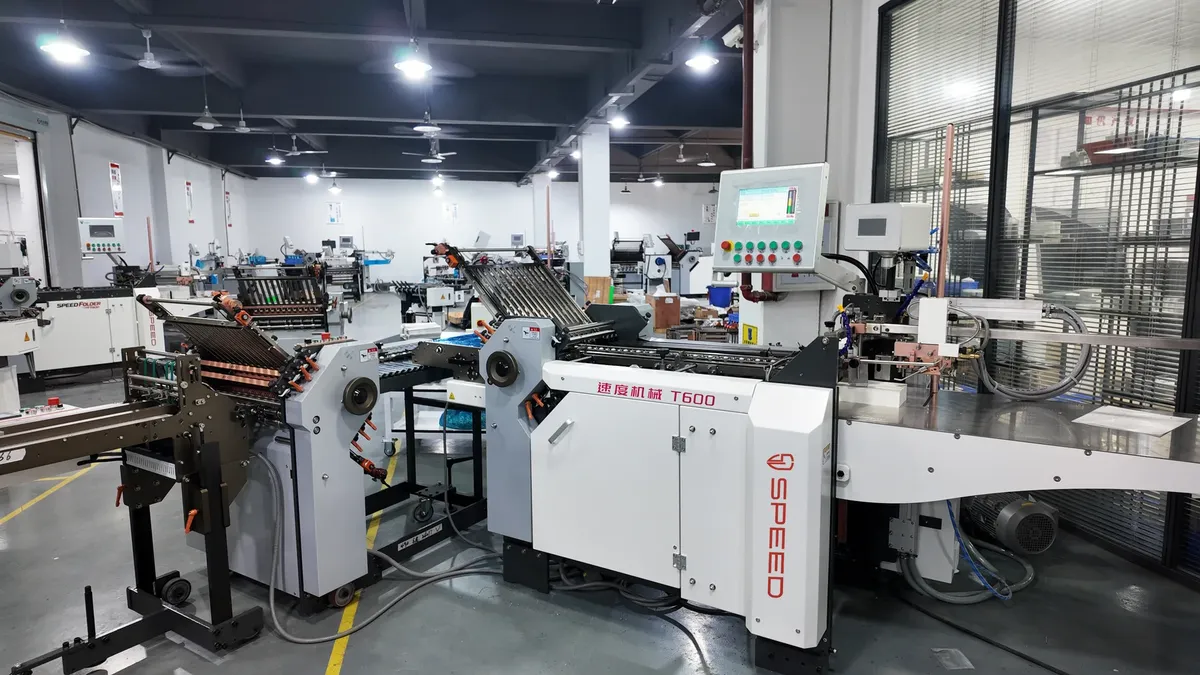
T600 (600 × 1000 mm, 750 mm pile, 180 m/min) for commercial volume; T780 (780 × 1200 mm, 40–210 gsm, 210 m/min, 5 kW) for large format and the heaviest duty cycle.
Round-pile or recirculating feeder plus suction-wheel separation; three-hole suction wheels for stable separation on coated stock.
14+6 or 12+6 plate sets for multi-panel work; the extended-delivery variant holds grip on heavy final folds.
Run your own stock through a free fold test at 100% of the target speed before the machine is specified — fold accuracy is a property of paper, plate setting and speed together.
03 / Select the equipment
Compare the linked equipment by its role. Folders and finishing modules are selected for their own operating envelope; every unit is not required for every job.
Commercial production folding
Compare sheet format, fold arrangement and delivery requirements across the regular job mix.
View specifications →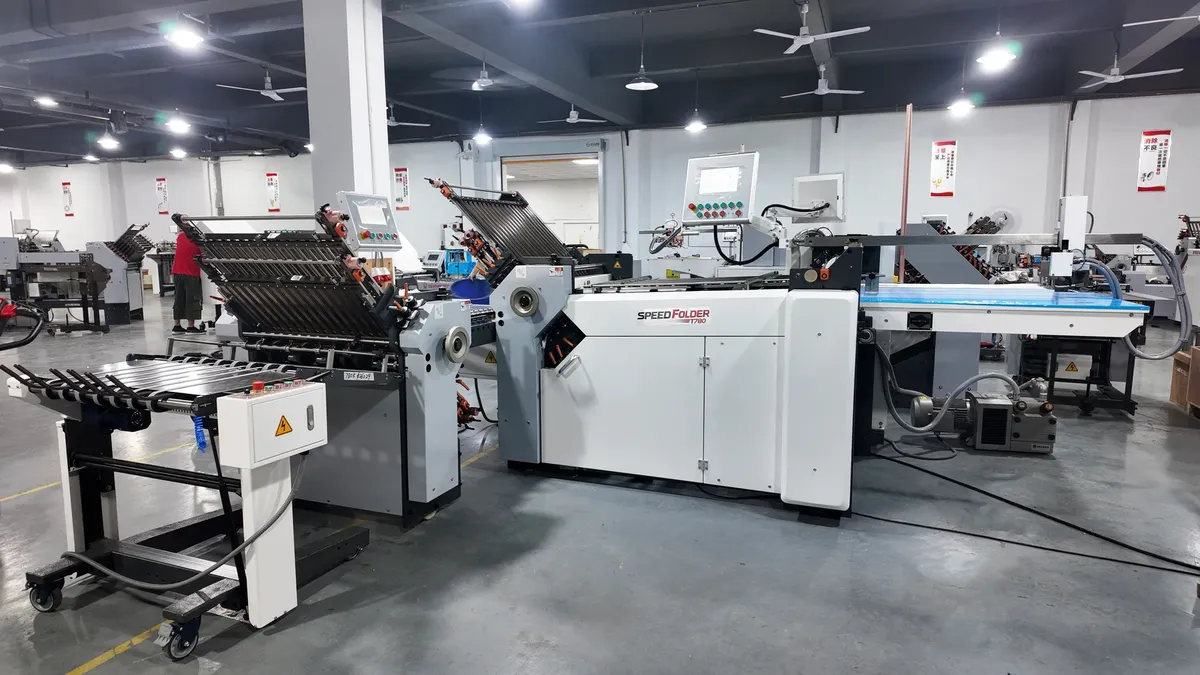
Large-format folding
Check the largest sheet, paper weight and installation envelope before choosing the layout.
View specifications →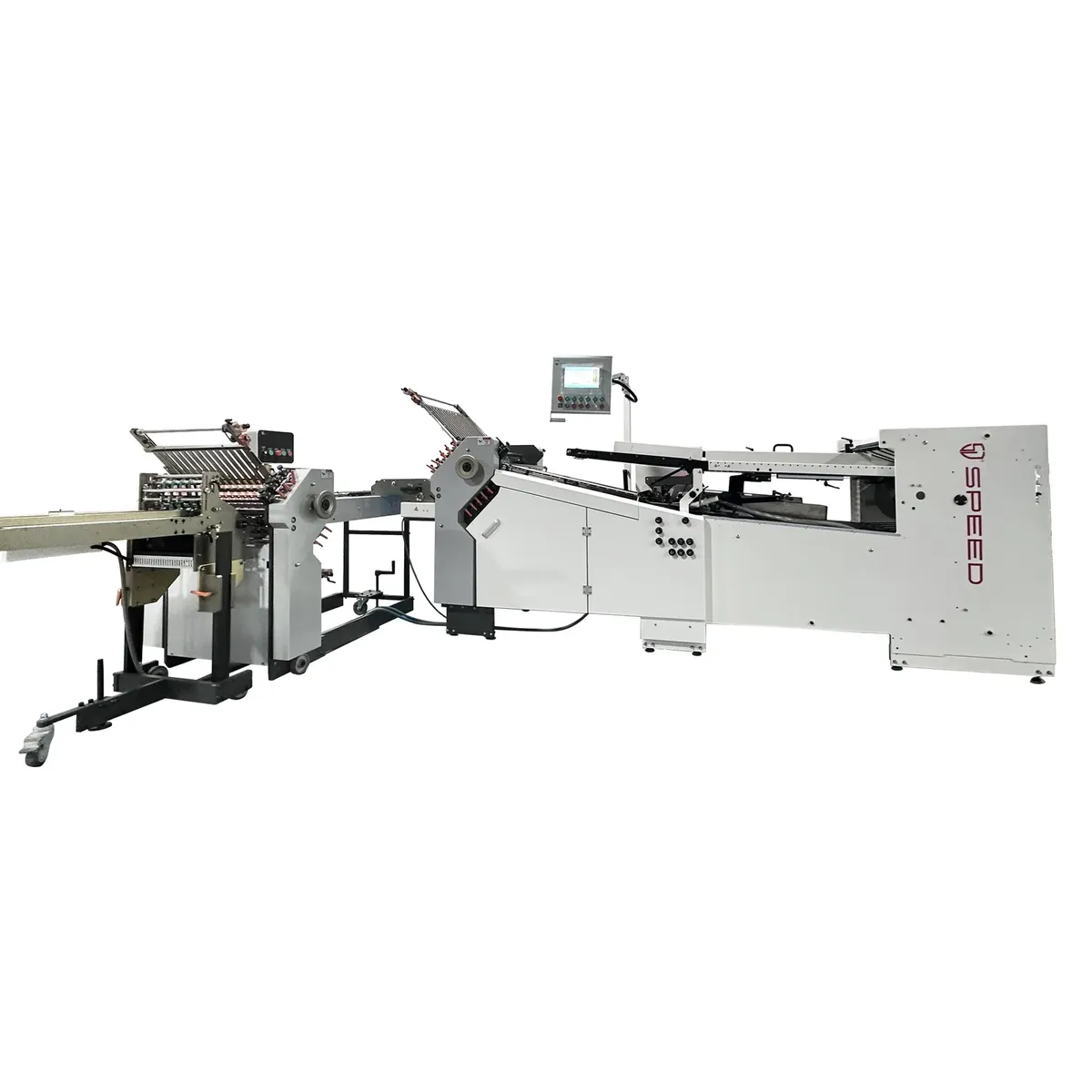
Feeding module
Review feeder compatibility and replenishment access with the selected folder.
View specifications →| Equipment | Sheet / feed / working width | Paper weight / finished thickness | Published speed |
|---|---|---|---|
| T600 | 600 × 1000 mm | 28–200 gsm | 180 m/min |
| T780 | 780 × 1200 mm | 40–210 gsm | 210 m/min |
| RP-FEEDER | On request | On request | On request |
Values refer to individual products. Actual line output depends on the stock, fold sequence, optional equipment and delivery arrangement.
Use the diagrams to describe the finished piece. The model references below come from the reviewed product overviews; the ordered plate arrangement and your stock determine the final fold capability.
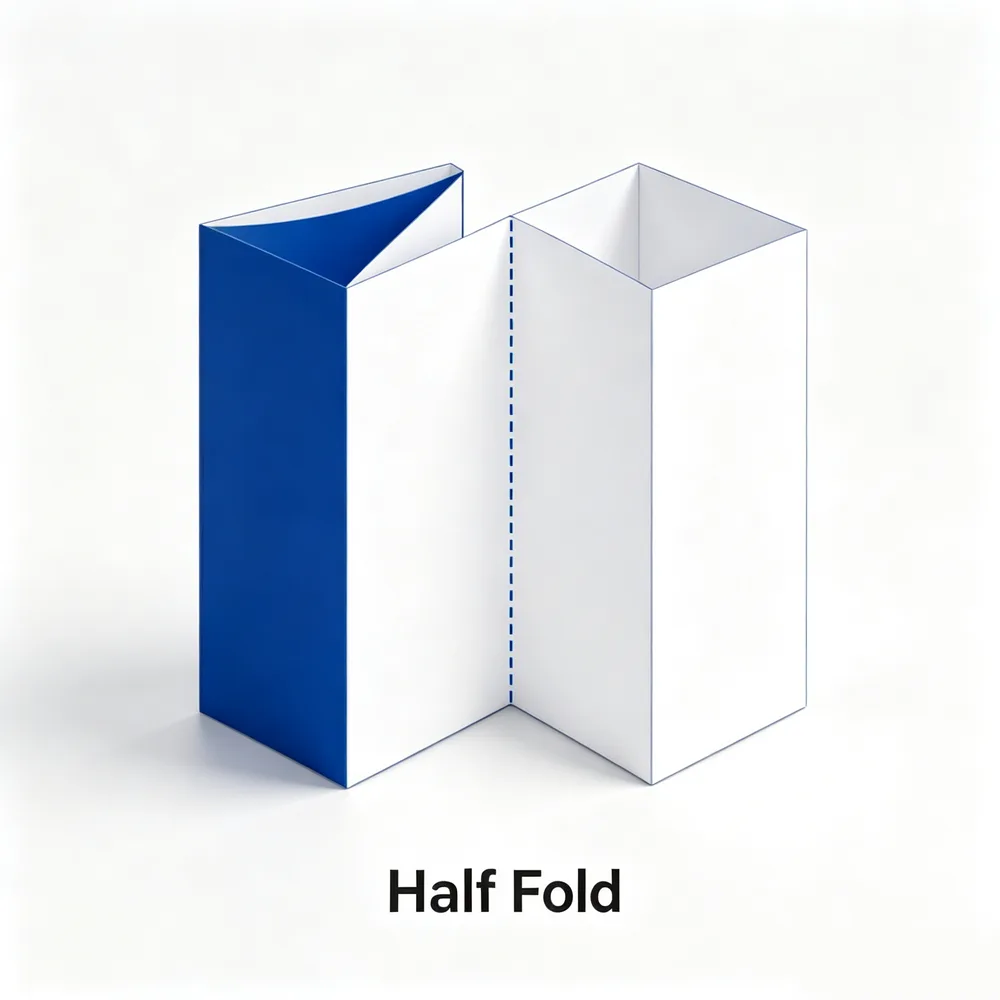
One fold, two panels — leaflets, mailers, greeting cards.
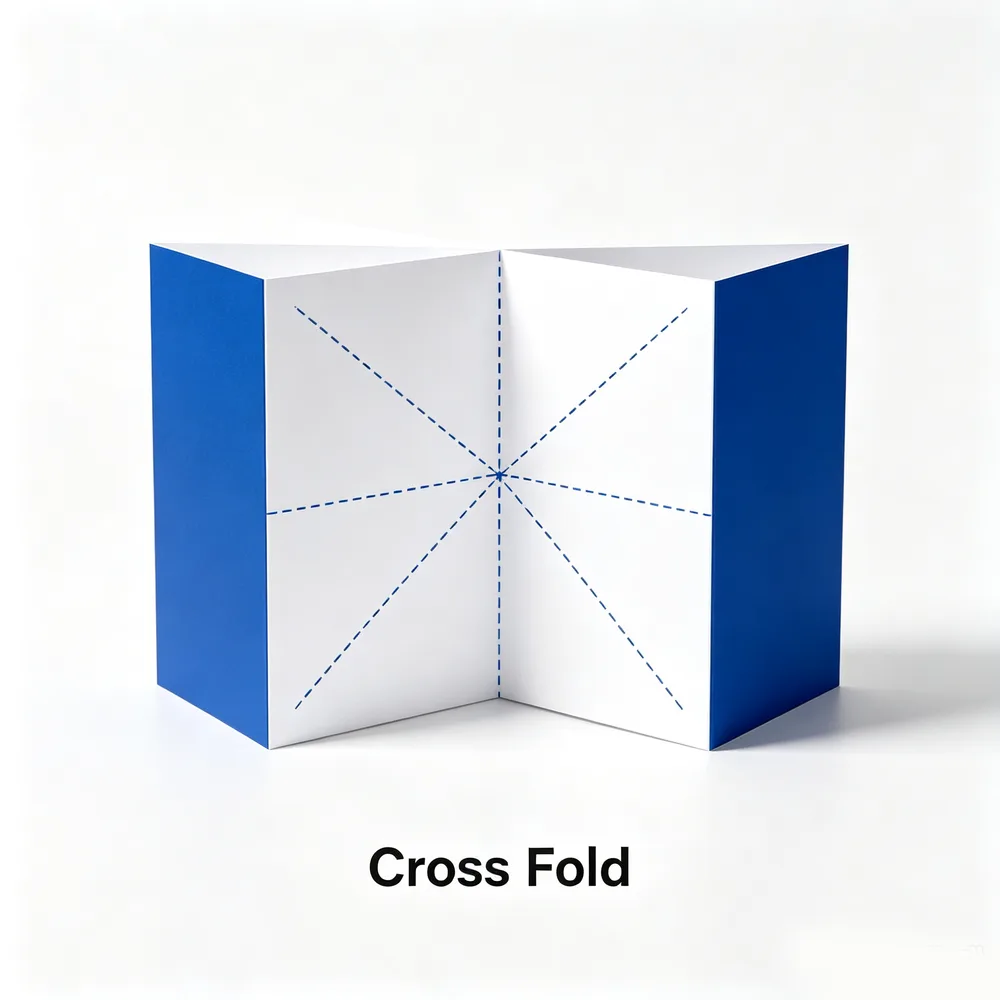
A parallel fold followed by a fold at right angles on the second unit.
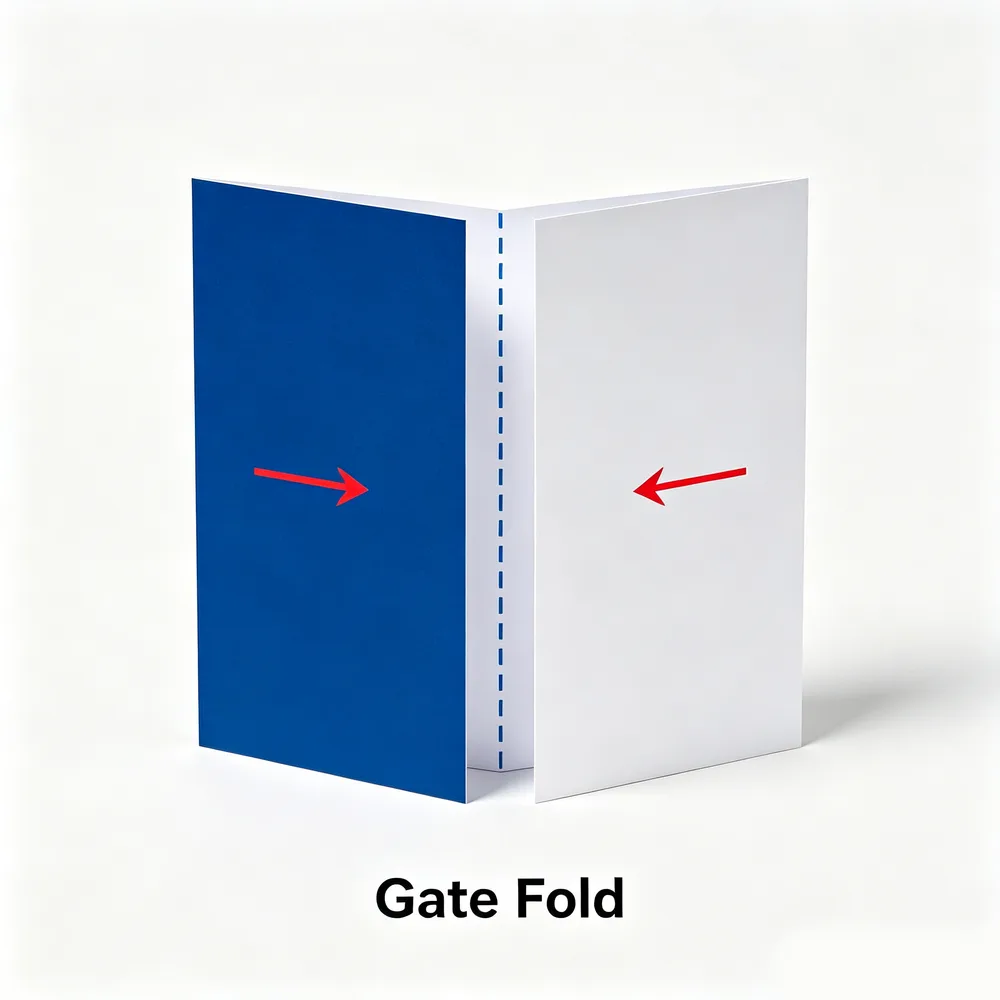
Two panels fold inward and meet in the centre — the classic programme insert.
View the related feeding, folding or finishing operation in the existing SPEED video library. Confirm the proposed configuration against your own job brief.
Booklet & brochure buckle folder in production
A T600-class buckle folder running multi-panel booklet and brochure folds — plate changeover, roller grip and stacker delivery shown end to end.
Watch on YouTube →Automatic industrial booklet folding at speed
High-speed booklet folding on an automatic feeder — servo feeding, double-sheet detection and continuous delivery under load.
Watch on YouTube →04 / Review the sample
Agree the test stock, drawing, operating conditions and acceptance criteria with our team. The checks below help structure that review.
Count conforming finished pieces over an agreed period; include loading and collection stops in the record.
Compare fold position, surface marking and delivery alignment across the run.
Record the causes and duration of stops and the rejected sheets, then review the production bottleneck.

Parallel, roll and gate folds in 100–200 gsm stock, folded square enough to stack flat.
Commercial print shops alternate between brochure, catalogue and mailer formats. Fold-pattern coverage and changeover time therefore matter alongside running speed.
T490, T600 and T780 configurations cover different sheet formats. Round-pile feeding can support longer runs on compatible T600 and T780 lines. Match the plate set and feeder to the real job mix.

Parallel and cross folds for section-sewn and perfect-bound work.
Publishing signatures require stable register through parallel and cross folds so sections collate and bind cleanly.
T600 and T780 configurations address different sheet formats. A compatible round-pile feeder can reduce stops on long batches. Set the fold pattern and feeder against the actual signature stock.
An automatic paper folding machine does three things a hand-fed folder cannot: it separates one sheet at a time from a full pile, it holds that sheet in register through every fold, and it delivers a counted, squared stack at the end. Everything that decides your unit cost — how many operators you n
Solution · Large formatLarge format folding is a different machine class, not a bigger version of a small one. Once sheets pass roughly A2, the paper behaves like a stiff plate: it needs a wider and gentler feed, larger roller diameters to avoid marking, and enough structural rigidity that the frame does not flex under a
Send the job drawing, printed stock information and production requirements. Our team can review the equipment combination and arrange the next technical discussion or sample test.
Fold-Test Sample List
Max 5 machines per fold-test request