
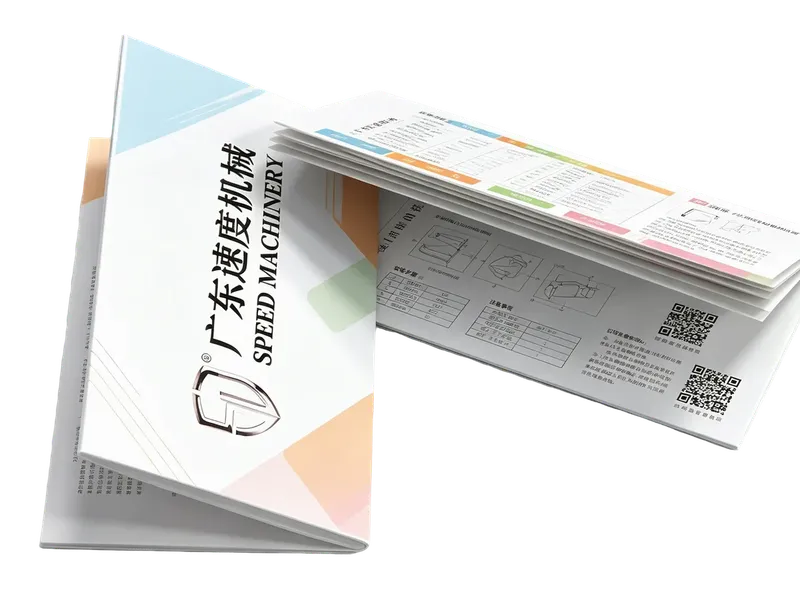
Solution · Automatic folding

Automatic Paper Folding Machines

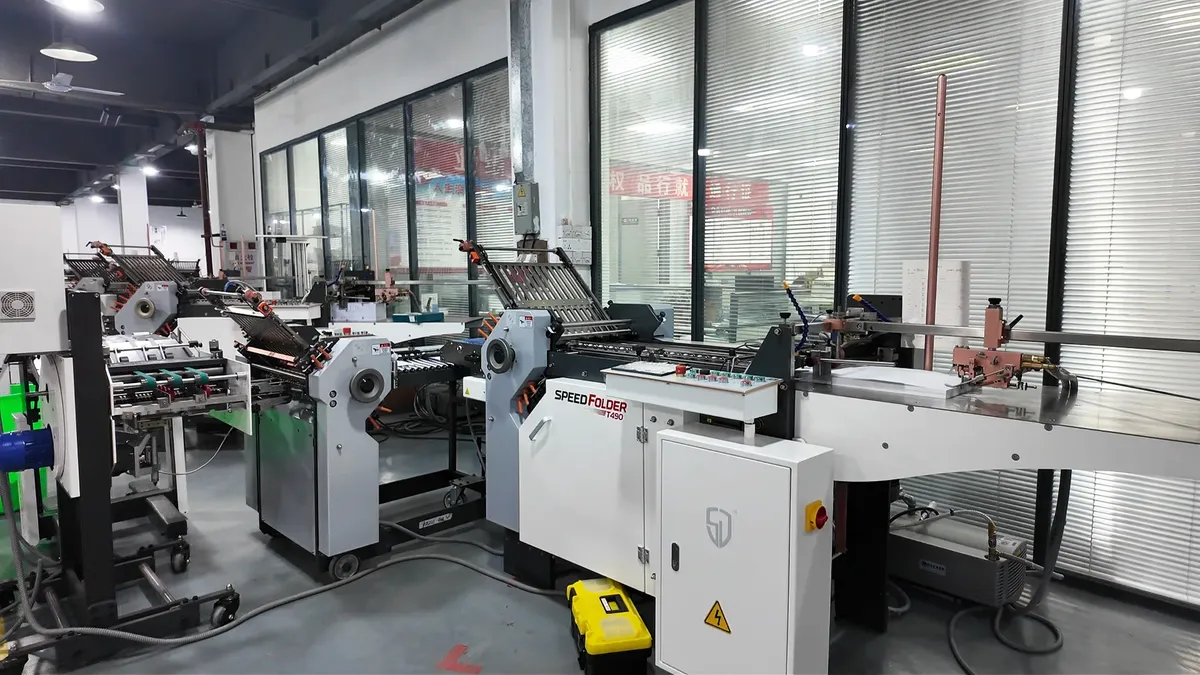
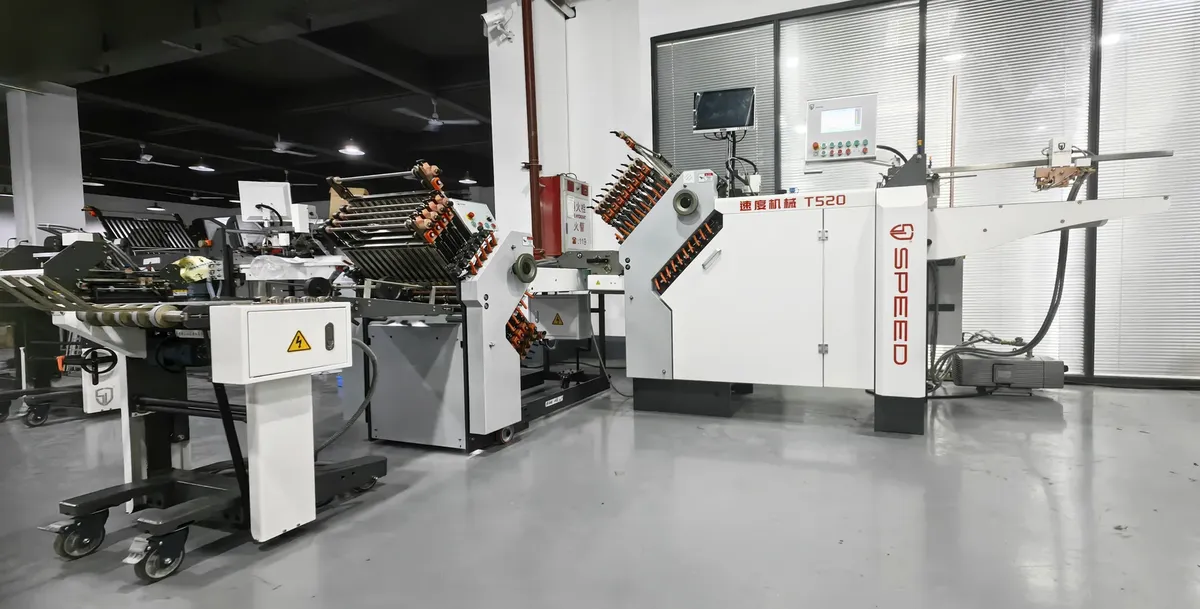
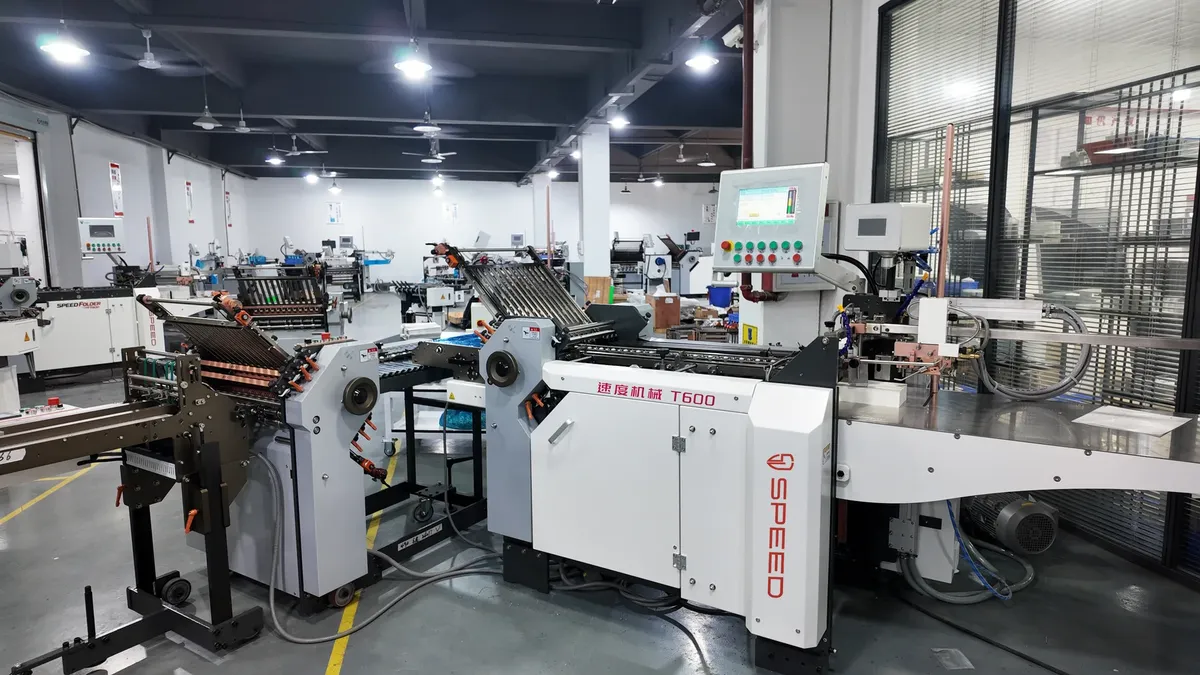
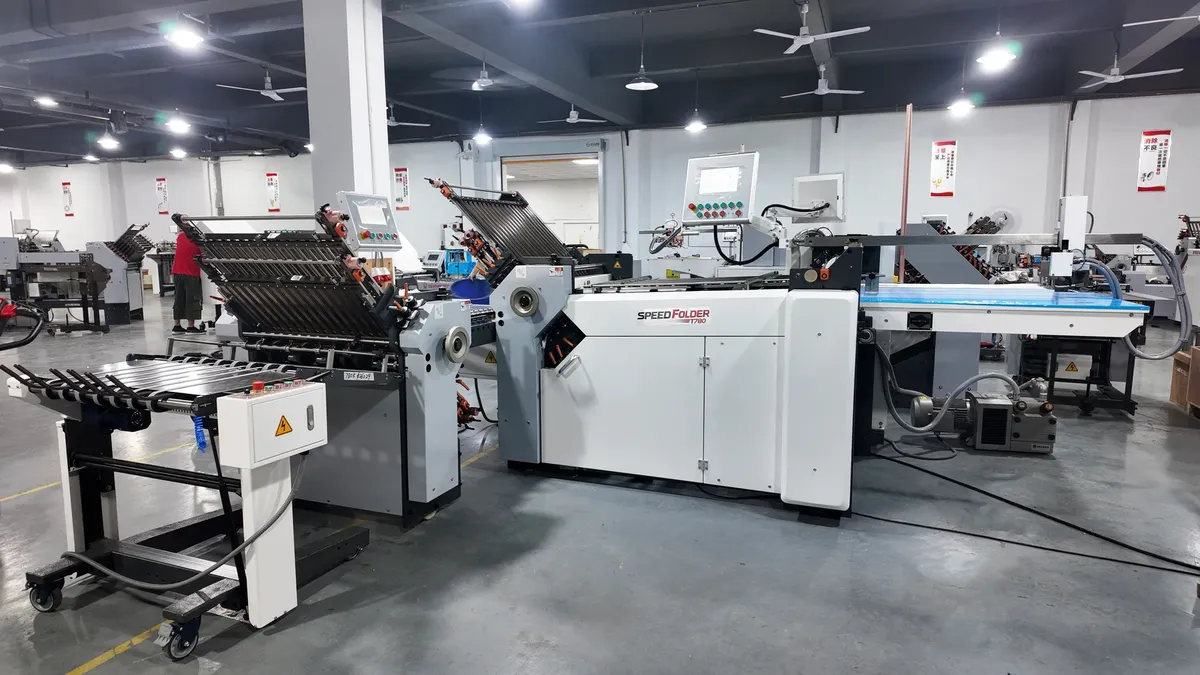
An automatic paper folding machine does three things a hand-fed folder cannot: it separates one sheet at a time from a full pile, it holds that sheet in register through every fold, and it delivers a counted, squared stack at the end.

Application reference · Select the equipment below for model specifications.

Production brief

Automatic Paper Folding Solutions

An automatic paper folding machine does three things a hand-fed folder cannot: it separates one sheet at a time from a full pile, it holds that sheet in register through every fold, and it delivers a counted, squared stack at the end. Everything that decides your unit cost — how many operators you need, how fast you can change a fold pattern, how much waste you produce — follows from those three functions.

The SPEED automatic range covers sheets from 60 × 100 mm miniature leaflets up to 780 × 1200 mm large format, with paper weights from 28 to 210 gsm depending on model. Folding speeds run from 180 m/min on the T490/T520/T600 platform to 210 m/min on the T780.

Published configuration references · Ratings depend on the model and configuration; they are not an accepted-output guarantee for a complete line.

180–210
m/min folding speed
28–210
gsm paper range
60×100
mm smallest sheet
2
folding units per machine

Production requirements

Production requirements and the specification decisions to review for this folding job.

01

Feeding consistency on mixed stock

A folder that feeds reliably on 80 gsm offset paper will double-sheet on coated stock and mis-feed on lightweight pharma paper. SPEED machines use a servo-driven high-speed feeder with three-hole suction wheels and double-sheet detection, so the separation parameters are set per job instead of being a compromise across the week.

02

Fold accuracy that survives the run

Register has to hold at the last fold, not the first. High-precision folding fences, a fully sealed circulating-lubrication box and gear transmission (instead of belt drive) remove the two main sources of drift: fence creep and roller-speed slip.

03

Changeover time between jobs

Buckle plates are independent stops, so a fold pattern change is a plate reposition rather than a tooling change. On a 10+4 or 12+6 plate machine the standard direct-mail and brochure patterns are all reachable from the same configuration.

Configuration notes

  1. Feeder

    Sheet feeding with suction-wheel separation and double-sheet detection. Review feeder configuration and replenishment access for the required batch length.

  2. Folding units

    Two folding units per machine. The first unit carries the parallel buckle plates, the second unit carries the cross-fold plates — for example 8H4W on the T490 platform or 14H6W on the T600.

  3. Control

    PLC with touch-screen control on the T780 platform; stack-height dual control is standard on the buckle series so the delivery does not have to be watched.

  4. Delivery

    Standard belt delivery, or a vertical stacker where folded panels are small enough to fan out without one.

03 / Select the equipment

Equipment and its role in the process

Compare the linked equipment by its role. Folders and finishing modules are selected for their own operating envelope; every unit is not required for every job.

Published product specifications for the linked equipment
EquipmentSheet / feed / working widthPaper weight / finished thicknessPublished speed
T490 490 × 1000 mm 35–200 gsm 180 m/min
T520 520 × 1000 mm 35–200 gsm 180 m/min
T600 600 × 1000 mm 35–200 gsm 180 m/min
T780 780 × 1200 mm 40–210 gsm 210 m/min

Values refer to individual products. Actual line output depends on the stock, fold sequence, optional equipment and delivery arrangement.

Frequently asked

What makes a folding machine "automatic"?
Automatic refers to the feed and delivery: sheets are separated from a pile by suction wheels, fed under servo control, detected for doubles, and counted and stacked automatically at the delivery. A semi-automatic folder still needs an operator to present each sheet.
How many operators does an automatic folder need?
Operator requirements depend on the selected feeder, loading workflow, delivery and job mix. Review these tasks and sustained accepted output during the sample run.
Can one automatic folder cover both commercial and pharmaceutical work?
Yes, provided the minimum sheet size is small enough. The T490 handles the 60 × 100 mm miniature end and the T600/T780 handle commercial formats; a machine used for both should be specified with the smallest sheet you actually run, not the largest.

Folded product applications

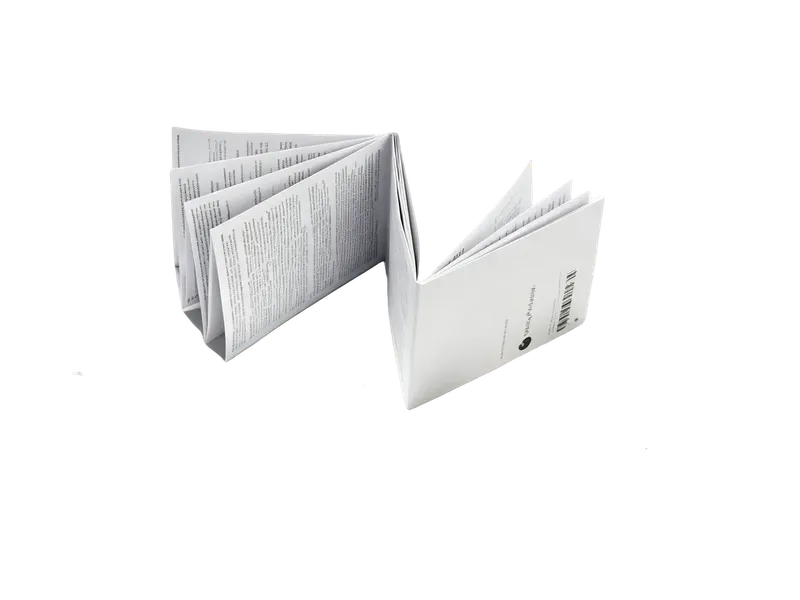
Pharmaceutical leaflets

Pharmaceutical leaflets

Folded to carton-insert size from 40–120 gsm pharma paper; the highest-volume pharmaceutical folding job.

Production considerations

Patient information leaflets must fit the carton while retaining readable multi-panel copy. Miniature sheet handling, repeatable fold position and counted delivery are the main production checks.

The T490 and T520 cover leaflet folding. Confirm the pattern on the actual stock, then specify any required knife, pressing, sealing and delivery modules against the finished sample and packaging process.
Brochures and catalogues

Brochures and catalogues

Parallel, roll and gate folds in 100–200 gsm stock, folded square enough to stack flat.

Production considerations

Commercial print shops alternate between brochure, catalogue and mailer formats. Fold-pattern coverage and changeover time therefore matter alongside running speed.

T490, T600 and T780 configurations cover different sheet formats. Round-pile feeding can support longer runs on compatible T600 and T780 lines. Match the plate set and feeder to the real job mix.

Discuss your automatic paper folding solutions project

Send the job drawing, printed stock information and production requirements. Our team can review the equipment combination and arrange the next technical discussion or sample test.