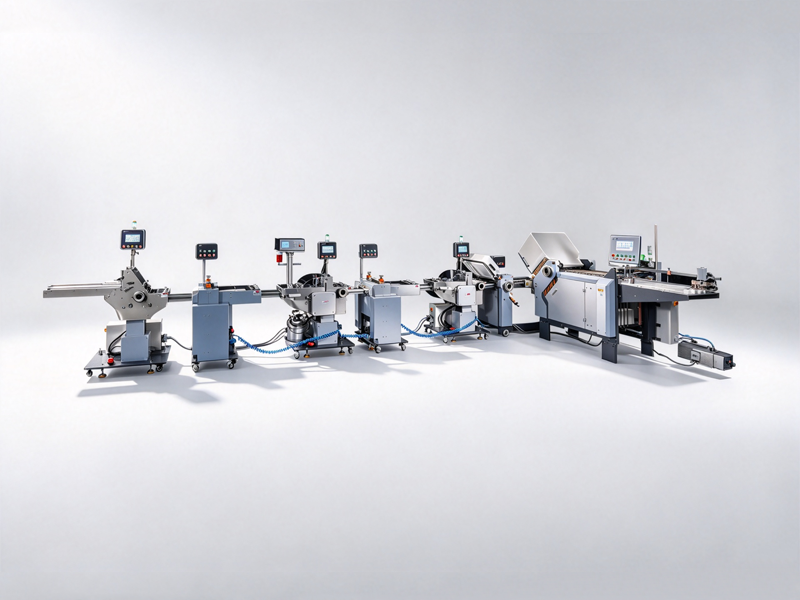
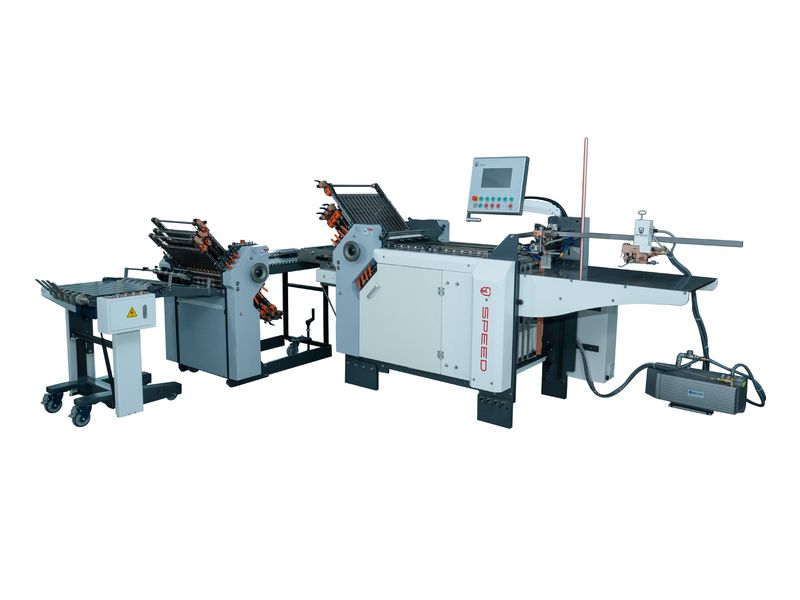
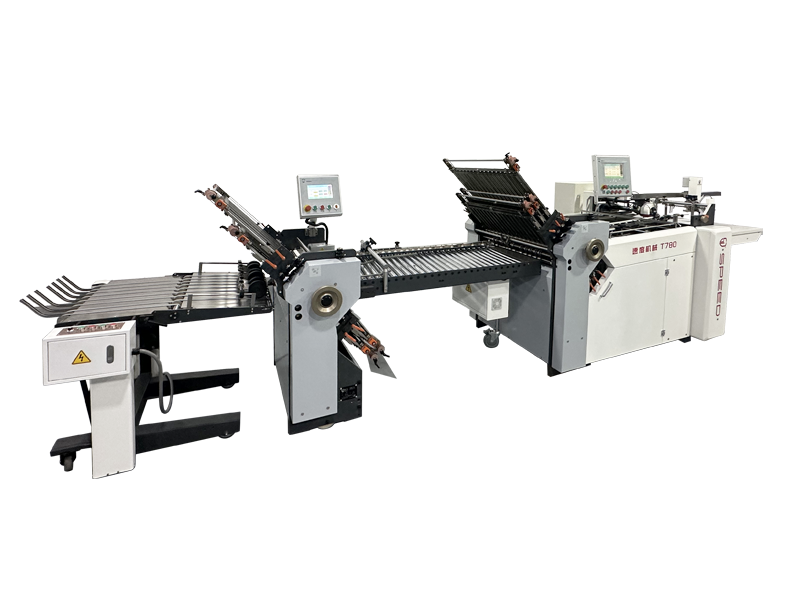
A print shop's folding machine is judged by variety, not by volume. A packaging plant folds the same insert ten thousand times; a print shop folds ten different jobs before lunch — a brochure for one customer, a flyer for the next, a booklet for a third, an insert for a fourth — each on different paper, in a different size, with a different fold. The machine that fits a print shop is the machine that changes jobs fast, folds many papers well, and delivers a stack the bindery can take without rework. That is what makes print-shop folding different from single-product folding: the question is not how fast the machine folds one job, but how well it folds the next ten.
This guide covers the print-shop job: what a print shop asks its folding machine to do, which jobs a print shop folds, which fold patterns those jobs use, which paper a print shop runs, which sheet sizes the machine has to take, which machine type fits a print shop, what changeovers cost when the jobs change all day, how pockets and knives are configured for varied work, what a print-shop run costs to run, how to judge a folded print job, and which machine fits which kind of print shop.
Where this guide gives a model specification, it gives the verified reference specification for that named model — not a generic class range — and where it gives a configuration, it gives one the user has confirmed SPEED offers.
What a Print Shop Asks Its Folding Machine to Do
A print shop is a finishing department with a press attached, and the folding machine sits at the end of that line. The press prints the sheets; the folder turns them into the finished piece — a brochure, a flyer, a booklet, an insert, a manual — and the bindery, the packing bench, or the customer takes it from there. The folder's job is to keep up with the press without becoming the bottleneck, and to fold whatever the press printed, in whatever size and paper the customer ordered, without a long setup between jobs.
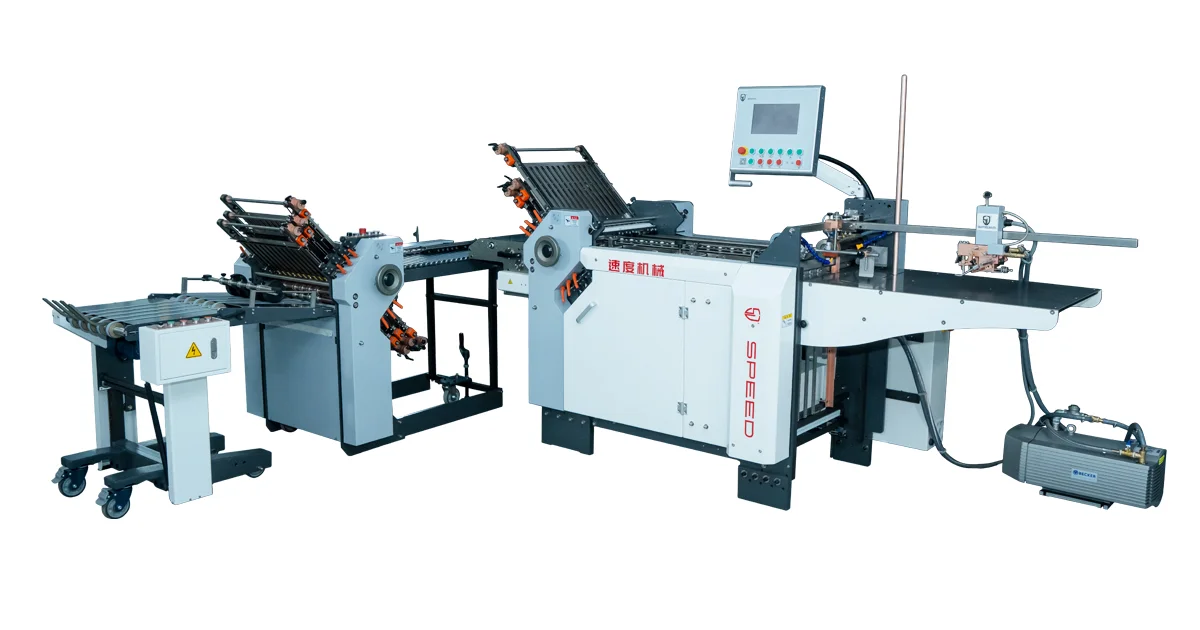
A buckle folding machine is the machine for most print-shop work. It folds the sheet in one direction, panel after panel — single, tri-fold, accordion, double parallel, roll, and gate folds — and it folds small sheets well, down to 60 × 100 mm on the T490, T520, T600 and T520 Pharma. A combination folding machine earns its place when the shop's jobs include booklets and manuals, because those jobs need a cross fold, and the cross fold needs a knife unit. A print shop that folds only brochures and flyers can run on a buckle machine alone; a print shop that also folds booklets, catalogues, and manuals needs the combination machine, or needs to send that work out.
The print-shop job also has expectations that single-product work does not. The jobs change all day, so the changeover has to be fast and repeatable. The paper changes all day, so the machine has to handle coated and uncoated stock, thin and thick sheets, offset and digital print. The sizes change all day, so the machine has to cover a wide sheet range without a long adjustment. And the finished pieces go straight to the bindery or the customer, so the fold has to be square, the crease has to be clean, and the stack has to be neat. A buyer choosing a folding machine for a print shop is choosing the machine that decides whether the finishing department keeps up with the press, and the rest of this guide is a checklist for exactly that decision.
The Jobs a Print Shop Folds
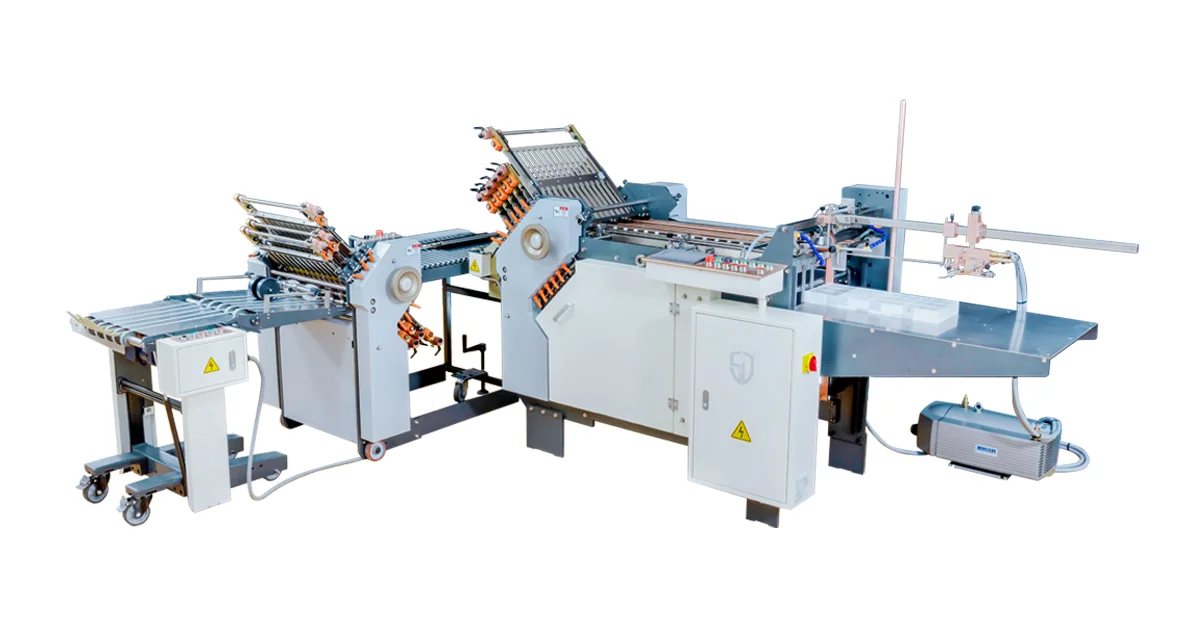
A print shop's job list is a catalogue of everything its customers order, and the folding machine has to cover the whole list. The most common is the brochure: a folded sheet that sells a product or a service, usually a tri-fold or a gate fold on coated stock, and the folding machine for brochures guide covers that job in full, including the coated-paper cracking that catches buyers out. The second is the flyer: a single-fold or tri-fold sheet for an event, a promotion, or a menu, usually a short run on lighter stock, folded fast and delivered flat. The third is the booklet: a small bound publication — a catalogue, a programme, a manual — made of signatures, and the folding machine for booklets guide covers that job in full, including the cross folds and page order that decide whether the book reads right.
The fourth is the packaging insert: a folded card or sheet packed into a product carton, judged by whether it counts right and packs cleanly, and covered in its own guide. The fifth is the instruction manual: a single folded sheet or a multi-page booklet that ships with a product, judged by whether the buyer can read it, and covered in its own guide. The sixth is the mailer: a folded piece that goes into an envelope or through the post, where the finished size and the flatness decide whether it mails cleanly. A buyer should list the jobs their shop actually folds before choosing a machine, because a machine that folds brochures well and cannot fold a booklet signature is a machine that leaves money on the table.
The job list also sets the run lengths, and print-shop runs are short. A packaging plant runs ten thousand copies of one insert; a print shop runs five hundred brochures, then three hundred flyers, then two hundred booklets, then a thousand inserts — and each job needs its own setup. A buyer whose runs are short should judge the machine on the changeover, not on the headline speed, because the machine spends more of its day changing jobs than folding them.
Fold Patterns Print Shops Use Most
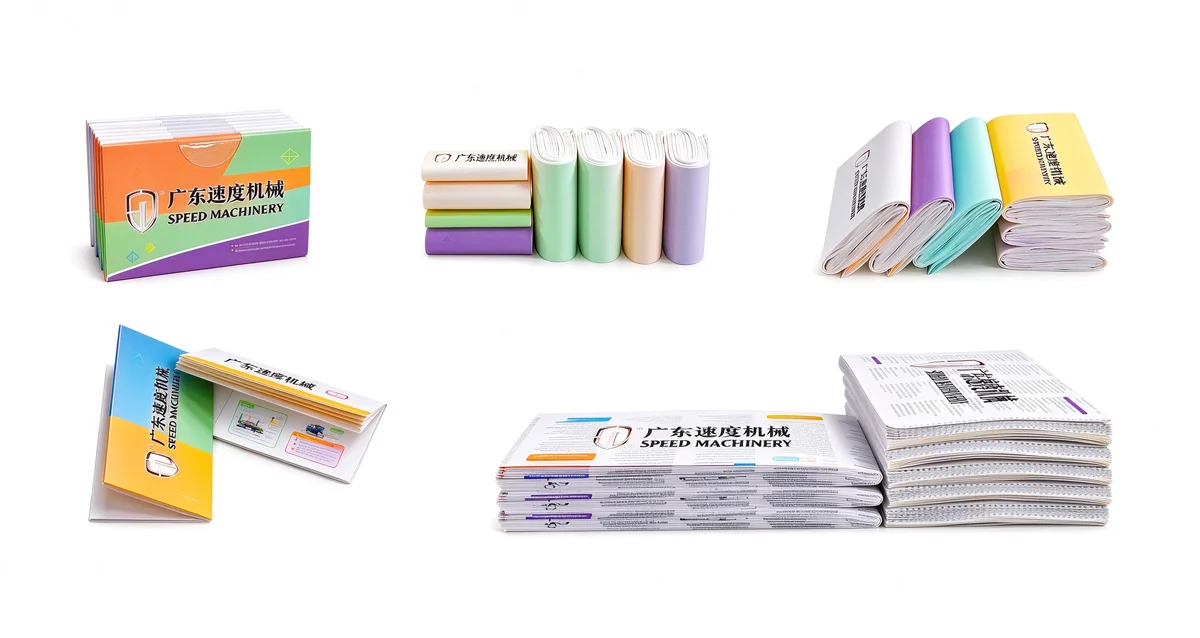
The fold pattern is the shape the finished piece takes, and a print shop uses nearly all of them. A single fold divides a sheet in half and is the pattern for flyers, cards, and simple mailers. A tri-fold divides a sheet into three panels and is the pattern for brochures, leaflets, and short guides. An accordion fold divides a sheet into equal panels that zigzag, and it is the pattern for long sheets — a wide brochure, a full instruction sheet, a leaflet that has to carry a lot of text in a small folded size. A double parallel fold folds the sheet twice in the same direction and is the pattern for a sheet that has to fold down small without a cross fold. A roll fold wraps the panels one inside another, and it is the pattern for a sheet that has to fold down very small. A gate fold folds two panels in from the sides to meet in the middle, and it is the pattern for a piece that opens to a wide centre spread — a brochure with a large image, a product sheet with a wide diagram.
The booklet and manual jobs add the cross fold to that list. The sheet is folded in one direction by the buckle plates, then turned 90 degrees and folded again by the knife unit, and that second fold is what turns a folded sheet into a signature with pages in the right order. A buyer whose shop folds booklets and manuals needs a combination machine, and should check the combination machine's minimum knife fold — 100 × 65 mm on the K780-F — against the smallest cross-fold job, because the knife has its own minimum just as the buckle plates do.
The fold pattern also decides where the print falls, and that is a check the buyer should do on the artwork, not on the machine. A headline, a price, or a QR code should never fall on a crease, and the most important panel should be the one the reader sees first. A buyer should fold a printed sample by hand, open it the way a customer would, and check that the first thing the reader sees is the first thing they need — the headline, the offer, the diagram — and not a blank panel or a page number. A fold pattern that puts the headline on a crease is a pattern to change before the machine is ordered.
Paper in a Print Shop: Coated, Uncoated and Digital Print
A print shop runs more kinds of paper in a week than a packaging plant runs in a year, and the paper is the variable that causes the most folding problems. Coated paper is the common case, because brochures and catalogues are printed on coated stock for the colour, and coated paper cracks where uncoated paper folds cleanly — which is exactly where the fold line is. Uncoated paper folds cleanly but shows the print through from the other side, and thin uncoated paper tears at the crease when it is folded many times. A folding machine that handles uncoated paper well and cracks coated paper is a machine that fails the print-shop job, and the buyer should test it on the actual coated paper their shop runs, not on plain paper.
Digital print adds a second problem. A sheet printed on a digital press carries toner rather than ink, and toner sits on the surface of the paper — which means it cracks and flakes along the fold line more readily than offset ink, especially on coated stock. A buyer whose shop runs digital work should test the machine on a digitally printed sheet, with the real toner coverage, and should fold and open the sample a few times, because a crease that cracks on the third opening is a crease that will crack in the customer's hands.
The paper range is the first number to check. The K780-F covers 28–200 gsm, the T490, T520, T600 and T520 Pharma cover 35–200 gsm, and the T780 covers 40–210 gsm. A buyer whose shop paper sits inside one of those ranges has a machine that folds it, on paper at least — but the range is a weight range, not a folding guarantee, and two papers at the same gsm can fold differently. A buyer should test the actual paper, in the actual weight, with the actual print, on the machine they are considering — and should test the thickest paper on their list, not the thinnest, because thick paper is where folding problems show up first.
Sheet Size: From Small Flyers to Large Posters
Sheet size is two numbers, not one: the largest sheet the machine takes and the smallest. Both have to fit the print shop's job list, and a print shop's list is wider than most, because it runs small flyers and large posters in the same week.
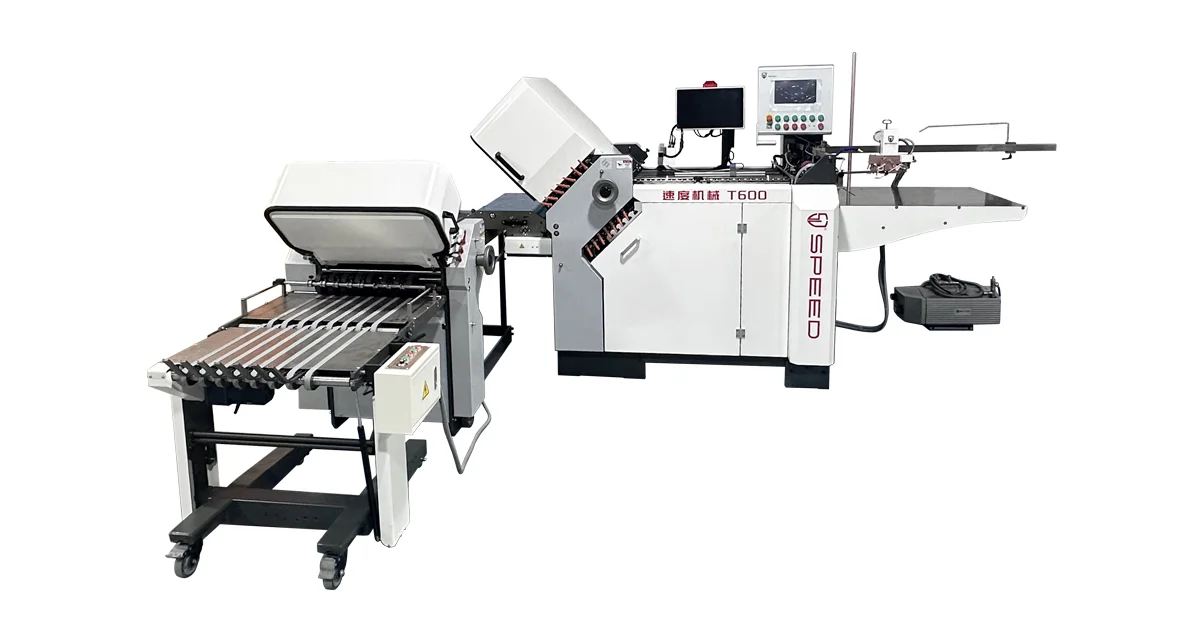
The largest sheet decides the biggest job the machine can take. The K780-F and the T780 take sheets up to 780 × 1200 mm, the T600 up to 600 × 1000 mm, the T520 up to 520 × 1000 mm, and the T490 up to 490 × 1000 mm. A buyer whose largest job — a poster, a large catalogue signature, a wide brochure sheet — is bigger than the machine's maximum cannot run that job on that machine at all, and no adjustment fixes it. The buyer should check the largest sheet on their job list against the maximum, and leave room for the next job that is a little bigger.
The smallest sheet decides the smallest job the machine can take. The T490, T520, T600 and T520 Pharma all take sheets down to 60 × 100 mm, and the K780-F and the T780 both start at 150 × 150 mm. A buyer folding small pieces — a small flyer, a card, a medicine leaflet — should look at the buckle machine first, because its 60 × 100 mm minimum covers the small pieces the combination machine cannot take. A buyer folding only larger work can live with the combination machine's 150 × 150 mm minimum, but should still check it against the smallest job on the list, because the minimum is the number that rules a job out entirely.
The minimum fold width is the third size number, and it sets the narrowest panel the machine can fold: 20 mm on the T490, T520, T600 and T520 Pharma, and 45 mm on the T780, a range of 20–45 mm across the series. A buyer whose jobs fold down to narrow panels should check it, because a panel narrower than the minimum cannot be folded on that machine. The practical rule is simple: check the largest first for a print shop, the smallest second, and the fold width third.
Buckle or Combination: Which Machine Fits a Print Shop?
For a print shop that folds brochures, flyers, and inserts, the answer is buckle. The jobs need parallel folds only, and the buckle machine folds them — single, tri-fold, accordion, double parallel, roll, and gate — on a small minimum sheet and a narrow minimum fold. The T520 or T600 is the usual starting point: 35–200 gsm, 180 m/min, a 60 × 100 mm minimum sheet, and a maximum sheet of 520 × 1000 mm or 600 × 1000 mm. The choice between them is the largest sheet the shop folds, and the buyer should not order knives for jobs that have no cross fold.
For a print shop that also folds booklets, catalogues, and manuals, the answer is combination. The booklet's signature needs a cross fold, and the cross fold needs a knife unit, and the knife unit is what a combination machine adds to a buckle machine. The K780-F is the combination model in the SPEED range, and it is the machine most full-service print shops should look at first: 28–200 gsm, a 210 m/min maximum operating speed, a 780 × 1200 mm maximum sheet, and a knife unit — 1 to 3 knives optional — for the cross fold.
The recirculating feeder machine is a third option, and it belongs to a different question. A recirculating feeder is a feeding system for high-volume runs, where the feeder keeps the paper flowing without stopping — the same job, in the tens of thousands, for a customer who reorders every month. It is relevant to a print shop with one or two long, repeat jobs, and it is not relevant to a shop whose work is all short and varied, with a different job every day. There is no recirculating feeder model specification table supplied for this guide, so no feeder-model figures are quoted here; a buyer considering that route should ask the supplier for the feeder model's own table before comparing it with anything.
The short version: buy the buckle machine for brochure, flyer, and insert work, buy the combination machine when the shop also folds booklets and manuals, and consider a recirculating feeder only when the run length justifies it. The shop's own job list — which jobs, which sizes, which run lengths — decides, not the size of the machine.
Changeovers: The Cost of Variety
Changeover time is the cost a print shop pays for variety, and it is the number the buyer should judge most carefully — even though no changeover time has been confirmed for any model, so none is quoted here. A changeover is everything the operator does between two jobs: changing the fold pattern, moving the folding pockets, adjusting the guides, changing the paper, running test sheets, and checking the first folded pieces. A shop that runs ten jobs a day pays that cost ten times, and a machine that takes twenty minutes to change over costs the shop more than three hours a day in lost folding time.
The buyer should judge a changeover on the machine they are considering, with their own jobs, rather than taking a brochure figure for it. Time the full changeover, from the last good piece of one job to the first good piece of the next, and include the test sheets — because the setup sheets are part of the cost, and thick coated paper is expensive paper to waste on setup. A buyer should also check whether the machine remembers its settings: a machine that stores the pocket positions and guide settings for a repeat job changes over faster the second time, and a shop with repeat customers should ask about that before ordering.
The other half of the changeover cost is the operator. A machine that needs an experienced operator to set up, and a second pair of hands to check the first pieces, costs more per changeover than a machine the regular operator can set up alone. A buyer should watch a changeover on the machine they are considering, with their own operator, and should ask how long it takes a new operator to learn it — because a machine that only one person in the shop can set up is a machine that stops when that person is away.
Folding Pockets and Knives for Print-Shop Work
A paper folding machine is configured for print-shop work by its folding pockets and its knives, and the buyer should match both to the job list, not to the largest number on the brochure. A folding pocket — called a buckle plate in some markets and a pocket in others — is the unit that makes one fold, and more pockets mean more folds in one pass. A knife is the unit that makes a cross fold.
SPEED's folding pockets can be configured from 4 to 20. That range is a configuration choice, not a bigger-is-better number. A buyer whose longest job needs eight folds does not need twenty pockets, and a buyer who orders twenty pockets for an eight-fold job has paid for capacity the work never uses. A buyer whose longest job needs sixteen folds, on the other hand, cannot make it on a machine configured with eight pockets. The right question is the one this guide keeps returning to: what is the longest fold pattern on the shop's job list, and how many pockets does it need? The answer to that question is the pocket count to order, and the buyer should get the configured pocket count in writing for the machine they are buying.
Knives are optional, and the same logic applies. The K780-F combination machine can be fitted with 1 to 3 knives, and the T-series machines with 1 to 10 knives. A buyer whose job list includes booklets and manuals needs the knives the signature needs, and should check the combination machine's minimum knife fold — 100 × 65 mm on the K780-F — against the smallest cross-fold job, because the knife has its own minimum just as the buckle plates do. A buyer whose jobs are parallel-fold only needs no knives at all, and should not pay for them.
Beyond pockets and knives, the buyer should look at the optional units and layouts that connect the folder to the rest of the shop. A sealing and labelling unit seals and labels the folded piece or the pack. A gluing unit applies glue where the fold pattern or the pack needs it. A waste rejection unit removes faulty sheets before binding or packing. An automatic packing machine counts, stacks, and packs the folded pieces. Right-angle layouts — 2-plate, 4-plate, 6-plate, 8-plate, and 10-plate — turn the folded piece 90 degrees so that the folder's output feeds directly into the next machine in the line, and a fast transfer device moves the folded pieces to the next stage without damage. None of these is needed by every buyer, and each of them should be decided from the job list and the floor plan, not from the brochure.
Speed, Volume and Running Costs
Speed is the number buyers look at first and should judge last, because it is the number that says least about whether the machine fits a print shop. An automatic paper folding machine in the SPEED range is rated at 180 m/min for the T490, T520, T600 and T520 Pharma, and 210 m/min for the T780 and, as a maximum operating speed, for the K780-F. Those are rated figures for a given paper and a given fold, and they say nothing about how the machine behaves on the shop's own coated paper, with the shop's own fold patterns, on a short run with a changeover at each end. No SPEED model in the supplied tables reaches 220 m/min, and a buyer comparing machines should compare rated speeds for the same job, not headline speeds for different ones.
Volume is the question speed is supposed to answer, and it is better asked directly: how many pieces per job, and how many jobs per week? A shop that runs fifty thousand copies of one brochure needs speed and a deep feeder; a shop that runs five hundred copies of twenty jobs needs fast changeovers. The maximum paper pile height is a volume figure in disguise — 550 mm on the T490, T520 and T520 Pharma, 750 mm on the T600 and T780, and 1200 mm on the K780-F — because it sets how much paper the feeder holds and therefore how often the operator reloads on a long run.
Running costs are set by four things: labour, paper waste, changeover time, and the cost of a fault that reaches the customer. Labour is the operator's time, and a machine that needs constant adjustment or hand-stacking at the delivery end costs operator hours every day. Paper waste is the cost of the sheets the folder rejects, misfeeds, or damages, and of the sheets setup takes to dial the machine in — and print-shop paper is printed paper, so every wasted sheet is a printed sheet wasted. Changeover time is the time it takes to switch from one job to the next, and no changeover time has been confirmed for any model, so none is quoted here — a buyer should time a changeover on the machine they are considering, with their own jobs, rather than taking a brochure figure for it. The cost of a fault that reaches the customer is the most expensive of the four: a brochure with a cracked fold, a booklet with its pages in the wrong order, or a carton that ships without its insert is a reprint, a support call, or a lost customer. A careful sample test and a clean delivered stack are the features that keep that cost down, and they are worth more than a headline speed figure.
Uptime is the figure that matters more than speed, and it is set by how the machine is built, how it is maintained, and how proven it is in the field. SPEED has an in-house developed gear self-lubrication system, and the gears are maintenance-free, which extends their service life. That claim covers the gears only — it does not mean the whole machine is maintenance-free, and a buyer should not read it that way. The rest of the machine still needs its normal maintenance, and the buyer should ask the supplier what that maintenance is, how often it is needed, and what it costs. No service-life figure has been confirmed for any model, and none is quoted in this guide. SPEED has 50+ global installations, which says the machine is running in real shops, on real jobs, in more than one country — and a buyer should still ask for references in their own kind of work, a commercial print shop rather than a packaging plant, because an installation count is a general figure and the buyer needs a specific one.
How to Judge a Folded Print Job
No specification sheet replaces a sample test, and a print-shop sample test is a short, specific exercise. A buyer should send the supplier the actual jobs: the real printed sheets, in the real paper weights, with the real fold patterns and the real finished sizes — not one job, but the three or four jobs the shop folds most often — and ask for folded samples back, not from a demonstration sheet, but from the shop's own material. Five checks cover most of what the samples need to show.
First, fold alignment. Open the folded piece and check that the panels line up — that the edges of the folded panels are square with each other, and that the fold lines fall where the print layout expects them. Misaligned folds cut into print, leave uneven panel widths, and make the piece look careless. A headline or a price that falls on a fold line is a failed piece, however sharp its creases are.
Second, the crease. Look at the fold line and check that the ink or toner does not crack along it, and that the paper does not split at the crease. Open and close the piece a few times and check again, because a crease that cracks on the third opening is a crease that will crack in the customer's hands. This is the test that matters most for coated paper and for digital print, and the buyer should run it on the shop's own coated and digitally printed sheets.
Third, page order. For a booklet or a manual, take a folded signature, open it, and check that the pages run in order — page 1, then page 2, then page 3 — without a page out of place and without a page upside down. Check several signatures from the same run, not just the best one, because page order that drifts across a run is a setup problem the buyer will live with.
Fourth, the finished size and the flatness. Measure the folded piece against its purpose — the envelope, the carton, the binding — with a tolerance the buyer sets in advance, and check that it sits flat. A piece that springs open in the envelope jams the mailing line, and a piece that is a millimetre too wide for its binding is a failed piece, however well it is folded.
Fifth, the condition of the delivered stack. Take a stack as it comes off the machine and check it the way the bindery would: are the edges aligned, are the folds flat, are the bottom pieces damaged, and can the operator pick up a stack without it falling apart. A machine that folds well but stacks badly is a machine the bindery will curse.
A sample test should also include the worst case, not just the best case: the thickest coated paper in the shop's range, the largest signature, the longest fold pattern, and a changeover between two different jobs, timed from the last good piece of one to the first good piece of the next. If the machine handles the worst case, it will handle the rest. If it only handles the easy case, the buyer has learned that too.
A Shortlist by Print-Shop Job
A buyer who has worked through this guide will usually find that the choice has narrowed itself to one or two machines. The shortlist below is a starting point, not a verdict — every entry still needs to be checked against the shop's own job list, and confirmed with a sample test on the shop's own paper.
A commercial print shop folding brochures, flyers, and inserts in short runs should look at the buckle T520 or T600 first: 35–200 gsm, 180 m/min, a 60 × 100 mm minimum sheet, and a maximum sheet of 520 × 1000 mm or 600 × 1000 mm. The choice between them is the largest sheet the shop folds, and the buyer should not order knives for jobs that have no cross fold.
A full-service print shop folding booklets, catalogues, and manuals alongside brochures should look at the combination K780-F first: 28–200 gsm, a 210 m/min maximum operating speed, a 780 × 1200 mm maximum sheet, and a knife unit — 1 to 3 knives optional — for the cross fold. Its 150 × 150 mm minimum sheet and 100 × 65 mm minimum knife fold are the numbers to check first, against the smallest booklet on the list.
A small print shop folding short runs of flyers, cards, and leaflets should look at the buckle T490 first: 35–200 gsm, 180 m/min, a 60 × 100 mm minimum sheet, and a maximum sheet of 490 × 1000 mm. The choice is the smallest machine that covers the job, because a small shop's jobs are small pieces and do not need a large machine.
A wide-format print shop folding large posters, large catalogues, and wide brochures should look at the buckle T780: 40–210 gsm, 210 m/min, and a 780 × 1200 mm maximum sheet. Its 150 × 150 mm minimum sheet rules it out for small work, so a shop that folds both large and small pieces needs to check the smallest job first.
A print shop with pharmaceutical customers folding leaflets and inserts for medicine cartons should look at the buckle T520 Pharma: 35–200 gsm, 180 m/min, a 60 × 100 mm minimum sheet standard, or 100 × 120 mm with waste rejection, and a maximum sheet of 520 × 1000 mm. The waste rejection unit is the option to check first, because a faulty sheet in a medicine carton is a carton that ships without its instructions.
A print shop with one or two long, repeat jobs should ask about a recirculating feeder machine, and should ask the supplier for the feeder model's own specification table before comparing it with anything, because no feeder-model figures are quoted in this guide.
Common Mistakes When Choosing a Folding Machine for Printing
The first mistake is buying on speed alone. A headline speed — 180 m/min, 210 m/min — is a rated figure for a given paper and a given fold, and it says nothing about how the machine changes jobs, handles coated paper, or delivers a stack the bindery can take. A machine that folds fast and takes twenty minutes to change over is slower, in shop terms, than a machine that folds a little slower and changes over in five. Judge the machine on the changeover and the folded piece, not on the speed figure.
The second mistake is testing on one job and buying for ten. A demonstration on the supplier's brochure paper proves the machine folds brochures — it does not prove it folds the shop's coated catalogues, digital flyers, and booklet signatures. Send the three or four jobs the shop folds most often, and judge the samples on each one.
The third mistake is testing on plain paper and buying for printed paper. Print-shop paper is printed, often in full colour, and the ink or toner coverage along the fold line is heavy — which is exactly where cracking shows. Send the real printed sheets, with the real ink and toner coverage, and judge the samples on the fold line.
The fourth mistake is buying a machine that cannot take the largest job. The maximum sheet size is the number that rules a print-shop job out entirely, and for a print shop it is the number to check first, because a shop's largest job — a poster, a large catalogue signature — is the job that outgrows the machine. The T490's 490 × 1000 mm maximum is the smallest in the range, and a buyer whose largest job is bigger than that needs a larger machine.
The fifth mistake is skipping the changeover test. A machine that folds well and changes over slowly is a machine that costs the shop hours a day, and a buyer who never times a changeover will discover that cost after the machine is installed. Time the full changeover, from the last good piece of one job to the first good piece of the next, including the test sheets.
The sixth mistake is quoting a generic accuracy figure as a machine specification. No accuracy figure appears in the SPEED specification tables supplied for this guide, and no figure should be quoted for any model — not in a purchase order, not in a product description, and not in an advertisement. If a supplier quotes an accuracy figure, ask for the table it comes from.
Final Notes
A folding machine for printing is judged by variety, not by volume. The machine has to change jobs fast, fold coated and digital paper without cracking, cover the shop's whole sheet range, and deliver a stack the bindery can take — and a buyer who chooses on speed alone, tests on one job, or skips the changeover test will buy a machine that folds and a finishing department that falls behind. A buyer who lists their jobs, checks the largest sheet first, matches the pocket count and the knives to the longest fold pattern, tests the real printed paper, and times a changeover between two real jobs will buy the right machine.
If you run a print shop, send SPEED Machinery your job list, sheet sizes, paper weights, fold patterns, and run lengths, and ask for the final specifications for a machine configured for that work, including the pocket count, the knives, and the options your shop needs. A sample test on your own paper will tell you more than any specification sheet — including this one.
Frequently asked
What folding machine is best for a print shop?
It depends on which jobs the shop folds. For a shop folding brochures, flyers, and inserts — parallel folds only — a buckle folding machine is the right tool, and the T520 or T600 is the usual starting point. For a shop that also folds booklets, catalogues, and manuals, a combination folding machine is the right tool, because those jobs need a cross fold, and the K780-F is the combination model in the SPEED range.
Can one machine handle all the jobs in a print shop?
It can, provided the machine's range covers the whole job list. A combination machine folds brochures, flyers, inserts, booklets, and manuals, because its buckle section handles the parallel folds and its knife section handles the cross folds. The buyer should check the range against the smallest and the largest jobs on the list — the combination machine's 150 × 150 mm minimum sheet may rule out the smallest pieces, so a shop folding very small inserts may need a buckle machine as well.
What paper weight do print shops use?
Print shops run a wide range of paper, from thin flyer stock to thick catalogue covers, and the buyer should check the machine's paper range against the actual paper used — not against a generic range. The K780-F's verified reference range is 28–200 gsm, the T490, T520, T600 and T520 Pharma cover 35–200 gsm, and the T780 covers 40–210 gsm. A buyer whose shop paper is at either end of a range should test it with a sample run, because thin paper tears at the crease and thick coated paper cracks along it.
How do I handle coated paper without cracking?
Test the machine on the actual coated paper the shop runs, with the actual print, and check the fold line after opening and closing the piece a few times. Coated paper cracks where uncoated paper folds cleanly, and digital toner cracks more readily than offset ink, so the sample test should use the shop's own coated and digitally printed sheets. If the crease cracks, the buyer should ask the supplier about scoring or creasing options before ordering — and should not accept a machine that only folds plain paper well.
How do I choose between a buckle machine and a combination machine for a print shop?
Buy the buckle machine if the shop's jobs need parallel folds only, and buy the combination machine if the shop also folds booklets, catalogues, and manuals that need a cross fold. The seven decisions in how to choose a paper folding machine run in the same order for print shops as for any other buyer: list the jobs, choose the machine type, match the paper range, match the sheet size, check the fold patterns and the configuration, judge speed, uptime and running costs, and test with a sample before buying.