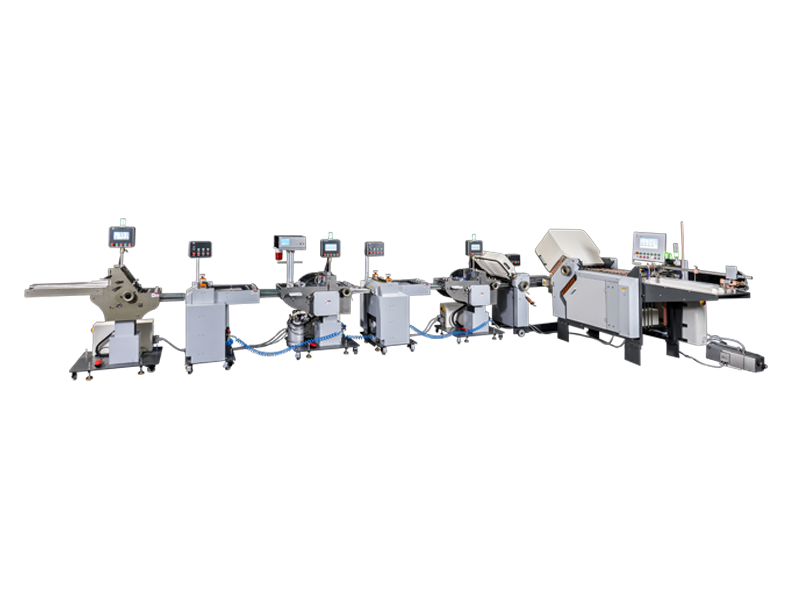
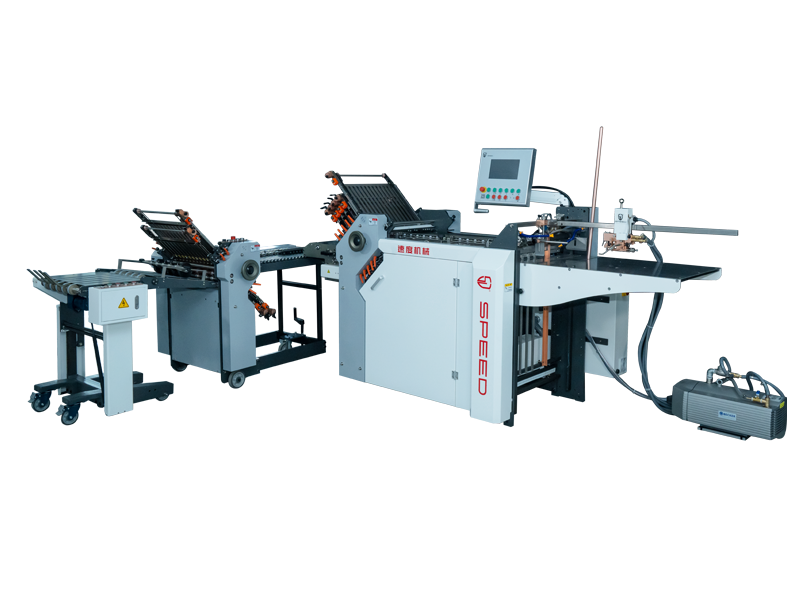
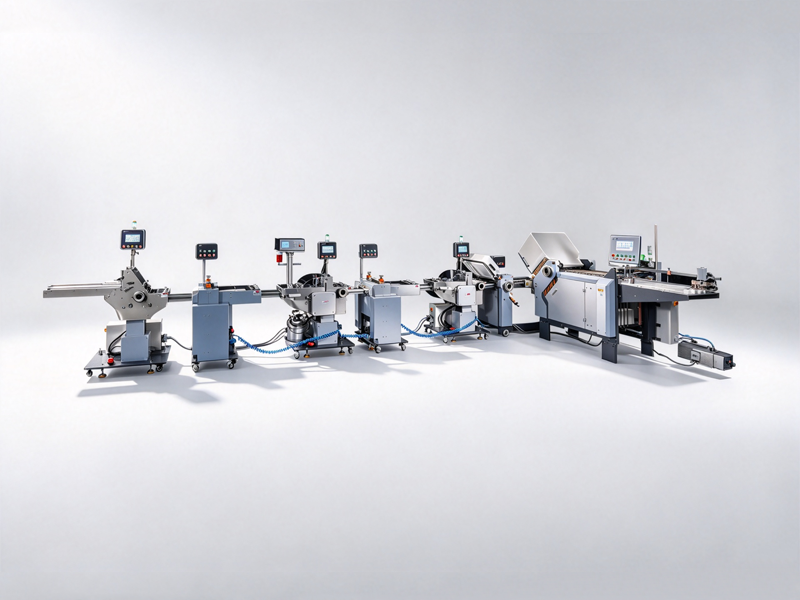
A pharmaceutical insert folding machine folds the printed insert that goes inside a medicine carton — the folded directions for use, the patient information leaflet, or the product insert that the patient finds when the carton is opened. The insert starts as a large printed sheet and ends as a small, neat, multi-panel piece that fits the carton, opens cleanly, and stays legible after packing, shipping, and storage.
That last step — going inside the carton — is what makes insert work different from leaflet work in general. A leaflet can be folded well and still fail as an insert if it is the wrong finished size for the carton, if it cannot be counted and stacked cleanly for the packing line, or if a faulty piece slips through and is packed with the medicine.
This guide is for buyers who fold pharmaceutical inserts for packing lines, and for print and packaging shops taking on pharma insert work for the first time. It explains what an insert is, how it differs from a leaflet and an outsert, which fold patterns inserts use, which specifications decide whether a machine fits the job, how waste rejection, counting, and stacking work on a packing line, and how to judge a machine with a sample test before you commit.
Where this guide gives a model specification, it gives the verified reference specification for that named model — not a generic class range.
What Is a Pharmaceutical Insert Folding Machine?
A pharmaceutical insert folding machine is not a separate kind of folding technology. It is a buckle folding machine — in most cases — configured and equipped for pharmaceutical inserts. The folding itself works the same way as on any buckle machine: the sheet is fed in, pushed against a stop in a buckle plate so that it buckles, and then caught by folding rollers that press the fold flat. Repeat that through several plates and one large sheet becomes a small multi-panel insert.
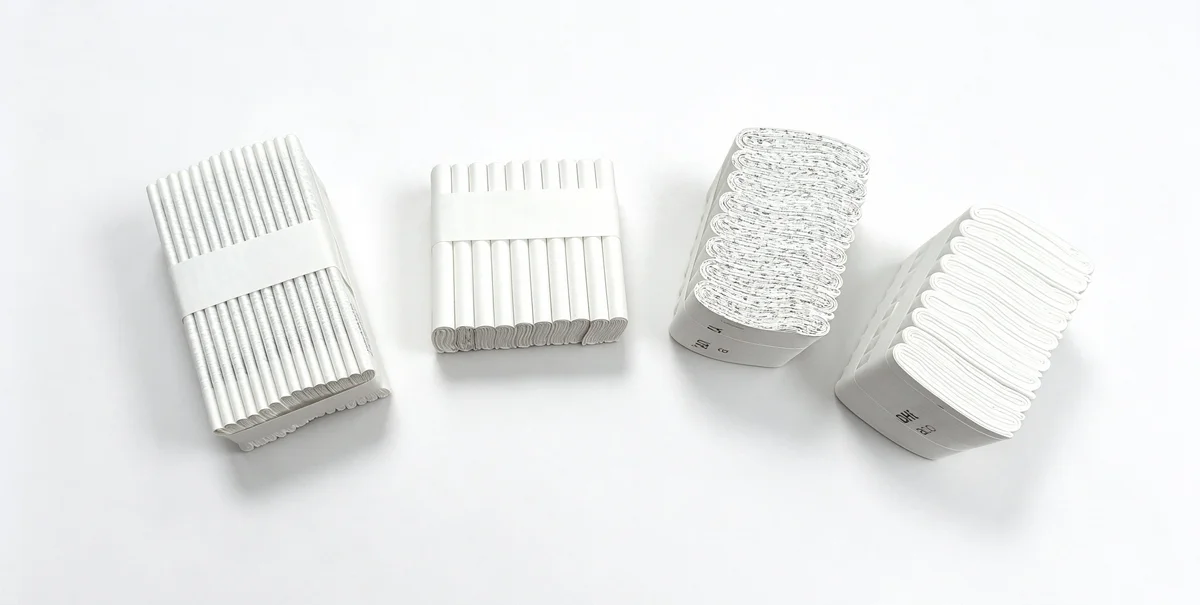
What makes it a pharmaceutical insert folder is the setup around that process: a small minimum sheet size, so it can take the small finished formats insert work needs; a paper range that covers the thin papers inserts are printed on; a waste rejection option, so faulty sheets are removed instead of packed; and a delivery and stacking system that counts the folded inserts and presents them in neat stacks for the packing line, without marking, tearing, or crushing them.
Most pharmaceutical inserts are parallel-fold work, not cross-fold work. The sheet is folded several times in the same direction, panel after panel, until it reaches its finished size. That is buckle folding territory. A combination folding machine, which adds a knife unit for a cross fold, is the right tool only when the insert's fold pattern genuinely includes a cross fold — which is uncommon for a standard drug insert, but does happen on larger inserts folded down from a big sheet in two directions. Buying a combination machine for plain parallel-fold inserts means paying for a knife unit the job does not use, and accepting a larger minimum sheet size than a buckle machine built for the same work.
Insert vs Leaflet vs Outsert: What's the Difference?
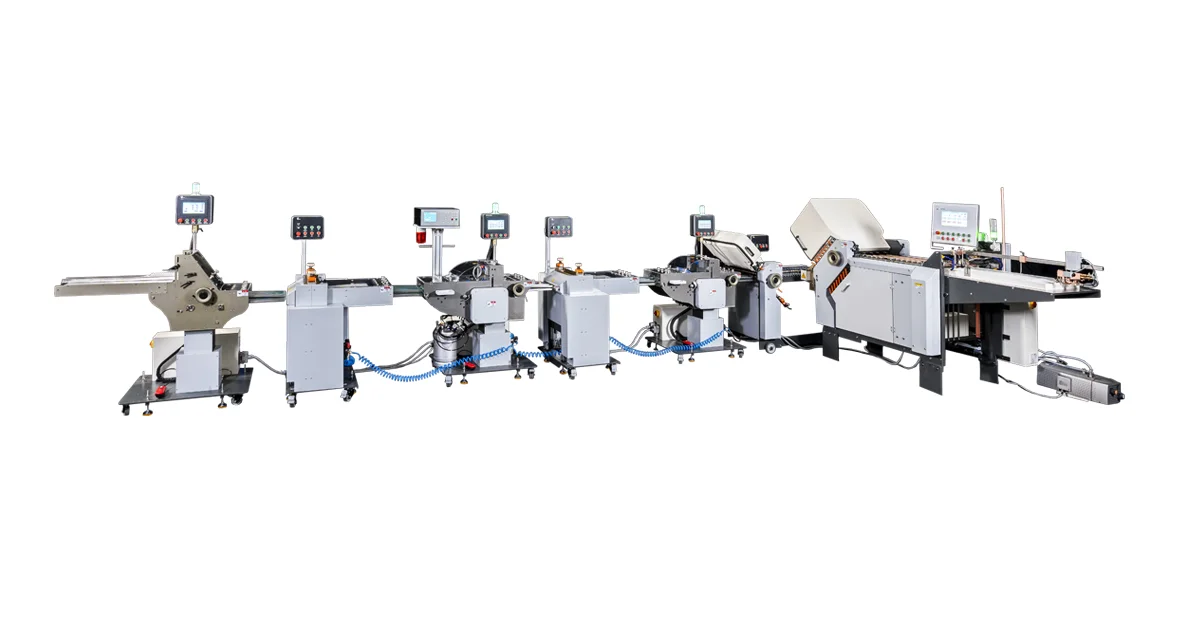
Buyers use three words for what is often the same piece of paper, and the difference matters because it decides what the packing line expects from the folded piece. A pharmaceutical leaflet is the folded directions for use — the document itself, judged by whether it opens cleanly and reads clearly. A pharmaceutical insert is that same folded document viewed as a packed component: it has to fit a specific carton, be counted in a specific quantity, and arrive at the packing line in stacks the operator or the cartoning machine can feed without jamming. An outsert is an insert attached to the outside of a carton or bottle, rather than placed inside it — often a folded leaflet glued or banded to the pack, where the finished size and the fold pattern are set by the outside of the pack rather than the inside.
In practice, the leaflet term and the insert term overlap heavily, and a buyer should check the machine against the finished size and fold pattern, not against the name on the brochure. The outsert term is the one to keep separate: an outsert has to survive handling on the outside of the pack, so its fold has to hold together without a carton around it, and its finished size is set by the pack it sits on. A machine that folds inserts well will usually fold outserts well too, provided the finished size and the fold pattern are within its range — but the buyer should confirm that with the supplier, using the outsert's own finished size, rather than assuming it.
The practical point for a buyer is this: when a customer says "insert", ask for the carton it goes into, the quantity per carton, and how the inserts arrive at the packing line — loose in a box, stacked in bundles, or fed straight from the folder. Those three answers decide more about the machine than the word "insert" on its own, because they decide the finished size, the counting, and the stacking the machine has to deliver.
Fold Patterns Used for Pharmaceutical Inserts
Pharmaceutical inserts use parallel folds — folds made in the same direction, one after another. The fold styles a buckle machine supports include single, tri-fold, accordion, double parallel, roll, and gate folds, and pharma inserts draw on most of them.
The accordion fold, also called a concertina or zigzag fold, is the workhorse of pharma inserts. The sheet folds back and forth, panel after panel, like a fan. It is compact, it opens in one pull, and it scales well: add another panel and the insert gets longer without getting harder to open. Most multi-page drug inserts a buyer will see are accordion folds, or accordion folds with a final fold that brings the strip down to carton size.
The roll fold wraps each panel inside the previous one, like a roll. It produces a neat, narrow finished piece, and it is a good choice when the insert has to slide into a tight carton. The trade-off is that the inner panels end up slightly narrower than the outer ones, so the print layout has to allow for that — a detail the print buyer and the folding buyer should agree on before the job runs.
The double parallel fold folds the sheet in half, then in half again in the same direction. It is a simple, robust pattern for inserts that need four panels from one sheet, and it is often the right choice for shorter inserts where an accordion fold would be more machine setup than the job needs.
The tri-fold divides the sheet into three panels, and the single fold is one fold down the middle. Both appear in pharma work for short inserts, patient cards, and the simpler inserts that accompany a product rather than carrying the full directions for use. The gate fold — two outer panels folding inward to meet in the middle — is less common for drug inserts, but it appears on promotional inserts and on inserts where the opening experience matters.
The cross fold is the exception that proves the rule. A cross fold turns the sheet 90 degrees and folds it again, and it belongs to book signatures and catalogues, not to standard pharma inserts. If a buyer's insert genuinely needs a cross fold, that is the one case where a combination folding machine earns its place in a pharma shop. Otherwise, the parallel-fold patterns above are the whole job, and a buckle machine is the right tool.
Before choosing a machine, a buyer should list the fold patterns in their actual job mix, with the finished size of each. That list — not a brochure — decides which machine fits. If every pattern on the list is a parallel fold, the buyer is shopping for a buckle machine. If a cross fold is on the list, the buyer needs to look at combination machines as well, and to check the combination machine's minimum sheet and minimum knife fold against the smallest insert, because the combination machine's minimums are larger.
Paper, Sheet Size and Speed: The T520 Pharma Verified Specs
The specifications that decide a pharma insert purchase are paper range, minimum and maximum sheet size, minimum fold width, and speed — in that order. The table below gives the verified reference specifications for the T520 Pharma Packaging Series, with the other SPEED buckle and combination models alongside for comparison. All figures are the reference specifications supplied for the named models; final specifications are subject to the confirmed customised order.
Specification | ||||
|---|---|---|---|---|
Paper range | 35–200 gsm | 35–200 gsm | 40–210 gsm | 28–200 gsm |
Speed | 180 m/min | 180 m/min | 210 m/min | 210 m/min max |
Max. sheet size | 520 × 1000 mm | 490 / 520 / 600 × 1000 mm | 780 × 1200 mm | 780 × 1200 mm |
Min. sheet size | 60 × 100 mm standard; 100 × 120 mm with waste rejection | 60 × 100 mm | 150 × 150 mm | 150 × 150 mm |
Min. fold width | 20 mm | 20 mm | 45 mm | — |
Folding roller diameter | 32 mm | 32 mm | 40 mm | — |
Max. paper pile height | 550 mm | 550 / 550 / 750 mm | 750 mm | 1200 mm |
Voltage | 380 V | 380 V | 380 V | 380 V |
Overall dimensions | 4650 × 1100 × 1500 mm | 4650 × 1100–1200 × 1500 mm | 4300 × 1700 mm (height: see note) | 4800 × 1700 × 1950 mm |
Certification | CE Certificate | CE Certificate | CE Certificate | CE Certificate |
Two notes on this table. First, the T780's overall height as printed in the source table is out of line with the other models and has not been quoted here — confirm it with the supplier before using it for floor planning. Second, the T520 Pharma table lists a second dimensions value in the same cell with no label; only the first value, 4650 × 1100 × 1500 mm, is quoted here. The second value should be confirmed with the supplier before it is used for anything.
Read the table as a buyer, not as a catalogue. The T520 Pharma's 35–200 gsm range covers the thin papers inserts are printed on. Its 60 × 100 mm minimum sheet is the number that makes it a pharma machine: it takes the small formats that the T780 and the K780-F, both starting at 150 × 150 mm, cannot. Its 180 m/min speed is the rated speed for that model — fast enough for insert runs, and a figure to test with a real job rather than to compare against a rival's headline speed. Its 20 mm minimum fold width sets the narrowest panel the machine can fold, which matters when an insert design calls for narrow panels. And its 550 mm maximum paper pile height sets how much paper the feeder holds, which decides how often the operator reloads on a long run.
The comparison also shows what not to buy for this job. The T780 is a faster, larger machine — 210 m/min and a 780 × 1200 mm maximum sheet — but its 150 × 150 mm minimum sheet rules it out for small inserts. The K780-F is the most capable machine in the range for mixed work, with a 28–200 gsm range and a 210 m/min maximum operating speed, but its minimum sheet is also 150 × 150 mm, and its minimum knife fold is 100 × 65 mm. For a shop whose pharma inserts are small, the smaller buckle machine is the better tool — the bigger machines are better machines for other jobs.
One more distinction matters for this article, and it is easy to get wrong. A listing that folds pharmaceutical inserts is not automatically a T520 Pharma machine. The ordinary T520 buckle series shares the T520 Pharma model's 35–200 gsm range, 180 m/min speed, and 520 × 1000 mm maximum sheet, and it can fold inserts — but the pharma-configured model is the one with the waste rejection option and the pharma minimum-sheet figures quoted in this guide. A buyer should confirm which model a supplier is quoting, and which options are fitted, rather than assuming that any T520 that folds inserts is the pharma model.
Waste Rejection, Counting and Stacking on a Packing Line
A pharmaceutical insert folding machine earns its place in a packing line at the delivery end, not the folding end. Three features decide whether it fits a packing line: waste rejection, counting, and stacking. Each one is worth checking separately, because a machine can fold perfectly and still fail the packing line on any of the three.
Waste rejection is the feature that removes faulty sheets before they reach the packing line. A waste rejection unit, usually a sensor or a marking system that detects a misfeed, a double sheet, or a sheet out of position, diverts the faulty piece out of the run instead of folding it and passing it on. The T520 Pharma's minimum sheet size with waste rejection fitted is 100 × 120 mm, larger than its 60 × 100 mm standard minimum — a detail that matters when a buyer's smallest insert is between those two sizes, because the buyer then has to choose between the smallest format and the rejection feature. Waste rejection is not a quality guarantee on its own; it catches feeding errors, not printing errors, and a buyer should ask the supplier exactly what the system detects and what it cannot detect, rather than assuming it catches every fault.
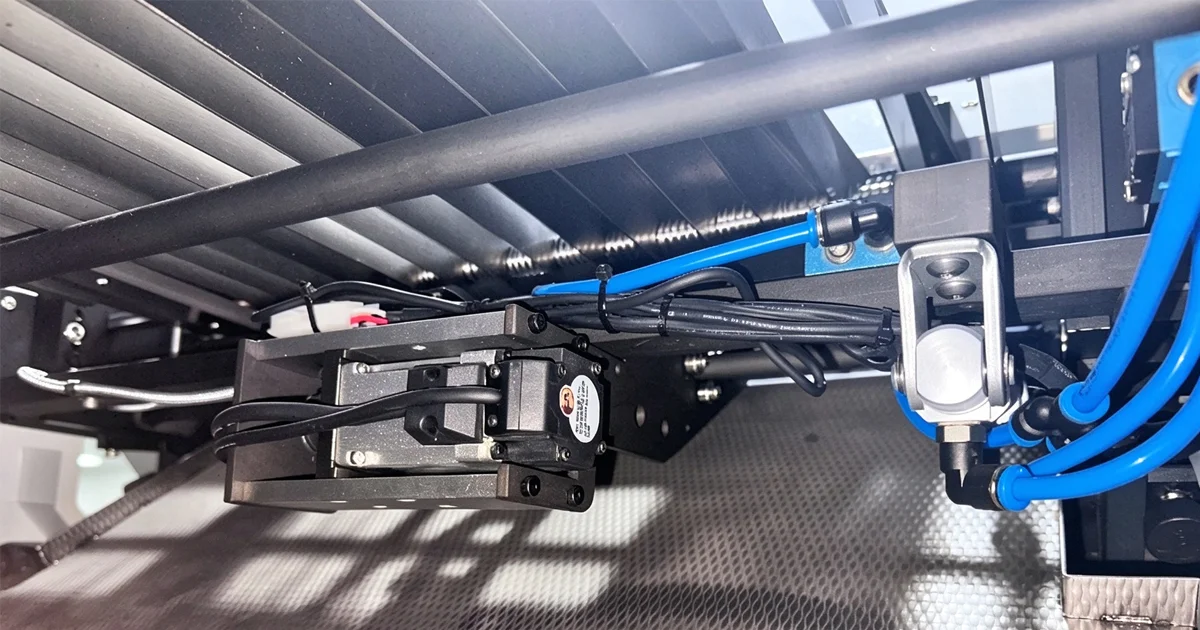
Counting is the second feature, and it is the one packing lines feel most directly. A pharma packing line works in counted quantities — a set number of inserts per carton batch, per box, or per shift — and a folder that counts as it delivers lets the packing operator check the count without recounting by hand. A buyer should ask whether the counting is by the folder itself or by an add-on counter, what the count accuracy is in practice on thin insert paper, and how the operator resets the count between jobs. A counter that miscounts on thin paper is worse than no counter at all, because it creates a false count that the packing line trusts.
Stacking is the third feature, and it is the one that decides whether the folded inserts arrive usable. Inserts that leave the folder in a tangled pile, with curled edges or crushed folds, slow the packing line down and damage the inserts. A good delivery system presents the inserts in neat, even stacks, with the folds aligned and the edges square, so the operator can pick up a stack and feed it straight into the packing process. A buyer judging a machine should look at the delivered stack, not just the folded piece: pick up a stack of fifty, check whether the edges line up, whether the folds are flat, and whether the bottom pieces are crushed by the weight of the pieces above them. If the stack is not clean, the machine's folding quality does not matter, because the packing line will be fighting the stack all day.
How to Judge Insert Quality Before You Commit
No specification sheet replaces a sample test, and a pharma insert sample test is a short, specific exercise. A buyer should send the supplier the actual job: the real printed sheet, in the real paper weight, with the real fold pattern and the real finished size, and ask for folded samples back — not from a demonstration sheet, but from the buyer's own material. Five checks cover most of what the sample needs to show.
First, finished size. Measure the folded insert against the carton it goes into, with a tolerance the buyer sets in advance. A folded insert that is a millimetre too wide for its carton is a failed insert, however well it is folded, and the buyer should measure the sample rather than trusting the machine's setting.
Second, fold alignment. Open the insert and check that the panels line up — that the edges of the folded panels are square with each other, and that the fold lines fall where the print layout expects them. Misaligned folds cut into print, leave uneven panel widths, and make the insert look careless. Check several samples from the same run, not just the best one, because alignment that drifts across a run is a setup problem the buyer will live with.
Third, crease quality. A good fold is a sharp, flat crease that holds the panel in place without cracking the print. On thin insert paper, a crease that is too tight cracks the ink; a crease that is too loose lets the insert spring open in the carton. Open and close the sample a few times and check whether the ink cracks along the fold line — that is the test that matters for thin, heavily printed insert paper.
Fourth, the condition of the delivered stack. Take a stack as it comes off the machine and check it the way a packing operator would: are the edges aligned, are the folds flat, are the bottom pieces damaged, and can the operator pick up a stack without it falling apart. A machine that folds well but stacks badly is a machine the packing line will curse.
Fifth, the count. Ask the supplier to fold a counted quantity — say, five hundred inserts — and check the count by hand. If the count is right, the buyer has a baseline. If it is wrong, the buyer has learned something important about the counting system before paying for it.
A sample test should also include the worst case, not just the best case: the thinnest paper in the buyer's range, the smallest finished size, and the longest fold pattern. If the machine handles the worst case, it will handle the rest. If it only handles the easy case, the buyer has learned that too.
Buckle or Combination: Which Machine Fits Insert Work?
For most pharmaceutical insert work, the answer is buckle. The insert's fold patterns are parallel folds, the finished sizes are small, and the buckle machine's minimum sheet size — 60 × 100 mm on the T520 Pharma — is the figure that makes the job possible. The combination machine's knife unit, which adds the cross fold, is a capability the standard insert job does not use, and its 150 × 150 mm minimum sheet size rules out the small inserts that are the core of the work.
The combination machine earns its place in exactly two cases. The first is the cross-fold insert: an insert folded down from a large sheet in two directions, where the cross fold is part of the pattern. The second is a mixed shop: a shop that folds pharma inserts and also folds book signatures, catalogues, or large-format work, where one machine has to cover both. In that case the buyer should check the combination machine's minimums against the smallest insert first — the 150 × 150 mm minimum sheet and the 100 × 65 mm minimum knife fold — because a machine bought for mixed work that cannot take the smallest insert is a machine that needs a second machine beside it.
The recirculating feeder machine is a third option, and it belongs to a different question. A recirculating feeder is a feeding system for high-volume runs, where the feeder keeps the paper flowing without stopping. It is relevant to a buyer whose insert runs are long and continuous, and it is not relevant to a buyer whose insert runs are short and varied. There is no recirculating feeder model specification table supplied for this guide, so no feeder-model figures are quoted here; a buyer considering that route should ask the supplier for the feeder model's own table before comparing it with anything.
The short version: buy the buckle machine for insert work, buy the combination machine for cross-fold inserts or mixed work, and consider a recirculating feeder only when the run length justifies it. The buyer's own job list — fold patterns, finished sizes, run lengths — decides, not the size of the machine.
Running Costs and Packing-Line Integration
A pharmaceutical insert folding machine's running costs are set by four things: labour, paper waste, changeover time, and the cost of a fault that reaches the packing line. Each one is worth pricing before the purchase, because the cheapest machine on the invoice is rarely the cheapest machine in the packing line.
Labour is the operator's time. A machine that needs constant adjustment, frequent reloading, or hand-stacking at the delivery end costs operator hours every day, and on a packing line those hours are the difference between a line that runs and a line that waits. The T520 Pharma's 550 mm maximum paper pile height is a labour figure in disguise: it sets how much paper the feeder holds, and therefore how often the operator reloads. A buyer should ask how the machine behaves on a long run, not just how fast it folds.
Paper waste is the cost of the sheets the folder rejects, misfeeds, or damages. Thin insert paper is unforgiving: a misfeed that tears a sheet, a double feed that folds two sheets together, or a setup that needs fifty sheets to dial in, all cost paper that the buyer has already printed. Waste rejection reduces the cost of a fault reaching the packing line, but it does not reduce the paper the machine itself wastes, and a buyer should ask for the setup waste on a changeover — how many sheets it takes to get the machine running right — because that number, multiplied by the number of changeovers in a year, is a real cost.
Changeover time is the time it takes to switch the machine from one insert job to the next: new sheet size, new fold pattern, new finished size. A pharma shop that runs many short insert jobs will change over often, and a machine that takes an hour to change over costs more in lost production than a machine that takes twenty minutes, even if the faster-changing machine costs more to buy. A buyer should time a changeover on the machine they are considering, with their own job, rather than taking a brochure figure for it.
The cost of a fault that reaches the packing line is the most expensive of the four, and the hardest to price in advance. An insert that is the wrong size, miscounted, or faulty and packed inside a carton is a carton that has to be opened, checked, and repacked — or, in the worst case, a batch that has to be recalled. Waste rejection, counting, and a clean delivered stack are the features that keep that cost down, and they are worth more than a headline speed figure. A buyer who has never priced a repack should ask their packing line what one costs, and then judge the waste rejection option against that number.
Packing-line integration is the last question, and it is the one to ask before the machine is ordered, not after it arrives. How do the folded inserts get from the folder to the packing line — by hand, by trolley, or by a conveyor — and does the folder's delivery height and stack size fit that route? Does the folder's output match the packing line's speed, or will inserts pile up at the delivery end? A machine that folds faster than the packing line can use it is a machine that creates a pile of inserts waiting to be packed, and a pile of inserts waiting to be packed is a pile of inserts getting damaged. The buyer should match the folder to the packing line's real speed, not to the folder's rated speed.
Buyer Checklist: 7 Questions Before You Order
This checklist is for the buyer to take to the supplier, with the buyer's own job in hand. If any answer is not in writing, it has not been answered.
- What is the smallest finished insert this machine folds, and what is the smallest sheet it takes? Check the answer against the buyer's own smallest insert, and against the 100 × 120 mm minimum with waste rejection fitted on the T520 Pharma, not just the 60 × 100 mm standard minimum.
- Which fold patterns in my job list does it fold, and which does it not? Bring the list — accordion, roll, double parallel, tri-fold, single, gate — and get a yes or a no for each, with the finished size of each.
- What does the waste rejection system detect, and what does it miss? Get the answer in writing, and confirm whether the minimum sheet size changes when waste rejection is fitted.
- How does it count, and how accurate is the count on my thinnest paper? Ask for a counted sample run on the buyer's own material, and check the count by hand.
- What does the delivered stack look like after a long run? Ask to see a stack of at least a hundred inserts as they come off the machine, and check the edges, the folds, and the bottom of the stack.
- How long does a changeover take, and how many sheets does setup waste? Time it on the buyer's own job, and price the setup waste across a year of changeovers.
- What are the final specifications for the machine as configured for my order? The figures in this guide are reference specifications; the final specifications are subject to the confirmed customised order, and the buyer should get the final figures for the exact configuration — including which options are fitted — in writing before paying.
Common Mistakes When Buying a Pharma Insert Folder
The first mistake is buying on speed alone. A headline speed — 180 m/min, 210 m/min — is a rated figure for a given paper and a given fold, and it says nothing about how the machine behaves on the buyer's own thin insert paper, with the buyer's own fold pattern, on a long run. A machine that folds fast and stacks badly is slower, in packing-line terms, than a machine that folds a little slower and delivers clean stacks. Judge the machine on the delivered stack and the count, not on the speed figure.
The second mistake is buying a machine that cannot take the smallest insert. The minimum sheet size is the number buyers check last and regret most, because it is the number that rules a job out entirely. The T780 and the K780-F are larger, faster, more capable machines than the T520 Pharma, and both start at 150 × 150 mm — which rules out the small inserts that are the core of pharma work. Check the minimum first, not last.
The third mistake is assuming that any machine that folds inserts is the pharma model. An ordinary T520 buckle machine shares the T520 Pharma model's paper range, speed, and maximum sheet size, and it can fold inserts — but the pharma-configured model is the one with the waste rejection option and the pharma minimum-sheet figures in this guide. Confirm the model and the options fitted, in writing, before ordering.
The fourth mistake is skipping the sample test on the buyer's own material. A demonstration on the supplier's paper, with the supplier's fold pattern, proves the machine folds — it does not prove it folds the buyer's insert. Send the real sheet, in the real paper, with the real fold pattern, and judge the samples on the five checks in this guide.
The fifth mistake is treating the packing line as an afterthought. The folder is bought for the packing line, and the packing line decides whether the purchase works. Check the delivery height, the stack size, the counting, and the route from the folder to the packing line before the machine is ordered, not after it arrives.
The sixth mistake is quoting a generic accuracy figure as a machine specification. No accuracy figure appears in the SPEED specification tables supplied for this guide, and no figure should be quoted for any model — not in a purchase order, not in a product description, and not in an advertisement. If a supplier quotes an accuracy figure, ask for the table it comes from.
Final Notes
A pharmaceutical insert folding machine is a buckle folding machine judged by the packing line it serves. The folding is the easy part to specify; the finished size, the fold pattern, the waste rejection, the count, and the delivered stack are the parts that decide whether the purchase works. A buyer who lists their fold patterns and finished sizes, tests a sample on their own material, checks the minimum sheet size before the speed, and gets the final specifications for the exact configuration in writing will buy the right machine. A buyer who buys on a headline speed and a generic accuracy figure will buy a problem.
If you fold pharmaceutical inserts for a packing line, or you are taking on pharma insert work for the first time, send SPEED Machinery your insert's finished size, fold pattern, paper weight, and carton size, and ask for the final specifications for a machine configured for that job. A sample test on your own material will tell you more than any specification sheet — including this one.
Frequently asked
How is a pharmaceutical insert different from a pharmaceutical leaflet?
A pharmaceutical leaflet is the folded directions for use as a document; a pharmaceutical insert is that document as a packed component, judged by whether it fits its carton, is counted correctly, and arrives at the packing line in clean stacks. The two terms overlap heavily, and the same machine usually folds both — the difference is what the buyer checks: the leaflet is checked for readability, the insert is checked for finished size, count, and packing-line delivery as well.
Can a buckle folding machine fold pharmaceutical inserts?
Yes — most pharmaceutical inserts are parallel-fold work, and a buckle folding machine is the standard tool for parallel folds. The T520 Pharma Packaging Series is a buckle machine configured for this work, with a 35–200 gsm paper range, a 180 m/min speed, a 520 × 1000 mm maximum sheet, and a 60 × 100 mm minimum sheet (100 × 120 mm with waste rejection fitted). A combination machine is needed only when the insert's fold pattern includes a cross fold.
What fold patterns do pharmaceutical inserts use?
Accordion, roll, double parallel, tri-fold, single, and gate folds — all parallel folds. The accordion fold is the most common for multi-page drug inserts, because it scales by adding panels and opens in one pull. The roll fold suits tight cartons, and the double parallel fold suits short four-panel inserts. Cross folds are uncommon for standard inserts and belong to book signatures and catalogues.
What paper weight do pharmaceutical inserts use?
Inserts are printed on thin paper, and the buyer should check the machine's paper range against the actual paper used — not against a generic range. The T520 Pharma's verified reference range is 35–200 gsm, and the K780-F's is 28–200 gsm. A buyer whose insert paper is at the thin end of a range should test it with a sample run, because thin paper is where feeding and folding problems show up first.
How do I choose between a T520 Pharma and an ordinary T520 for insert work?
The ordinary T520 buckle series shares the T520 Pharma model's 35–200 gsm range, 180 m/min speed, and 520 × 1000 mm maximum sheet, and it can fold inserts. The pharma-configured model is the one with the waste rejection option and the pharma minimum-sheet figures — 60 × 100 mm standard, 100 × 120 mm with waste rejection — quoted in this guide. Confirm which model and which options the supplier is quoting, in writing, before ordering.