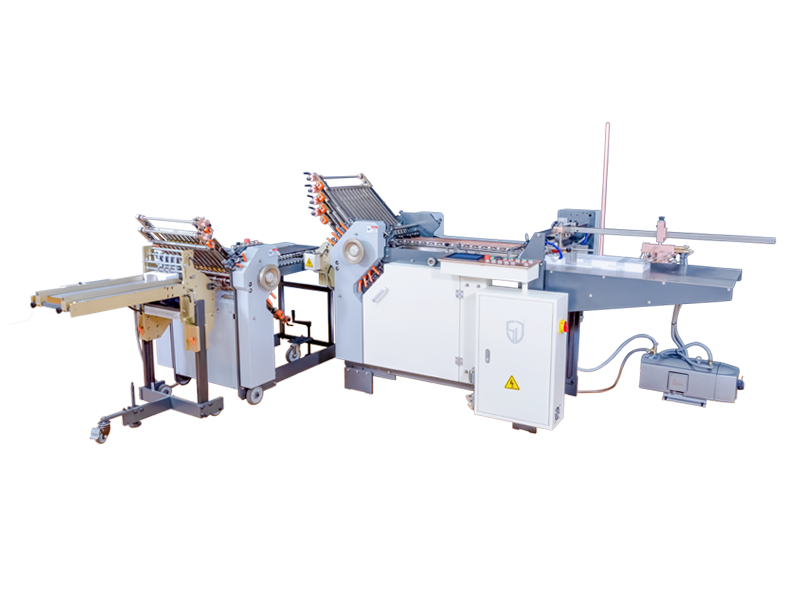
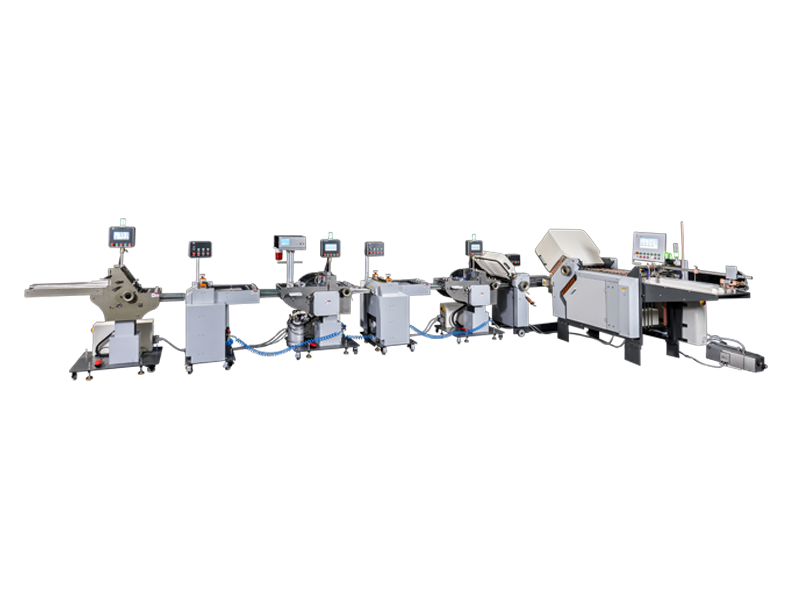
A pharmaceutical leaflet folding machine is a folding machine set up for one demanding job: taking a printed drug leaflet — often a large sheet of thin paper covered in small print — and folding it down into a small, neat insert that fits inside a medicine carton. The finished insert may be only a few centimetres across, yet it has to open cleanly, read clearly, and survive packing, shipping, and storage without coming apart or becoming unreadable.
That combination — a large sheet, thin paper, many panels, and a very small finished size — is what separates pharma leaflet work from ordinary leaflet work. A machine that folds brochures well can still fail on pharma leaflets, not because it is a bad machine, but because it was never set up for small minimum sizes, thin paper, and the consistency a pharmaceutical customer expects from every single piece in the run.
This guide is for buyers who fold pharmaceutical leaflets and inserts, and for print and packaging shops that are taking on pharma work for the first time. It explains what makes pharma leaflets different, which fold patterns they use, which specifications actually decide whether a machine fits the job, what waste rejection does and what it costs, and how to judge a machine with a sample test before you commit. Where this guide gives a model specification, it gives the verified reference specification for that named model — not a generic class range.
What Is a Pharmaceutical Leaflet Folding Machine?
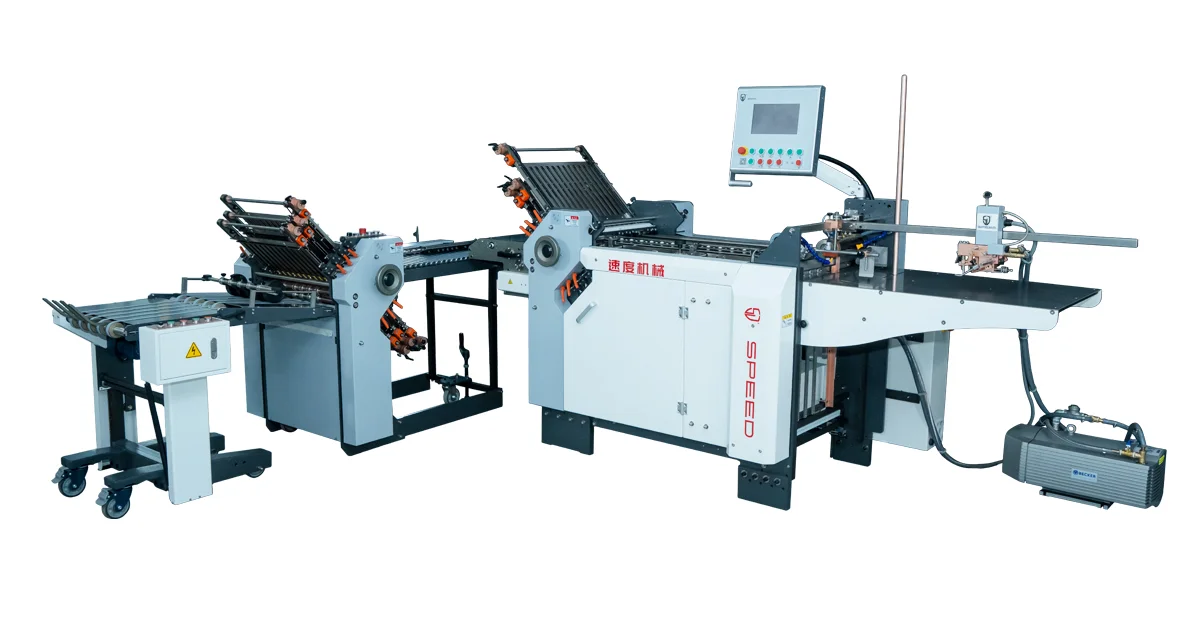
A pharmaceutical leaflet folding machine is not a separate kind of folding technology. It is a buckle folding machine — in most cases — configured and equipped for pharmaceutical leaflets and inserts. The folding itself works the same way as on any buckle machine: the sheet is fed in, pushed against a stop in a buckle plate so that it buckles, and then caught by folding rollers that press the fold flat. Repeat that through several plates and one large sheet becomes a small multi-panel leaflet.
What makes it a pharmaceutical leaflet folder is the setup around that process: a small minimum sheet size, so it can take the small finished formats pharma work needs; a paper range that covers the thin papers leaflets are printed on; a waste rejection option, so faulty sheets are removed instead of packed; and a feeder and delivery that handle thin paper without marking, tearing, or double-feeding it.
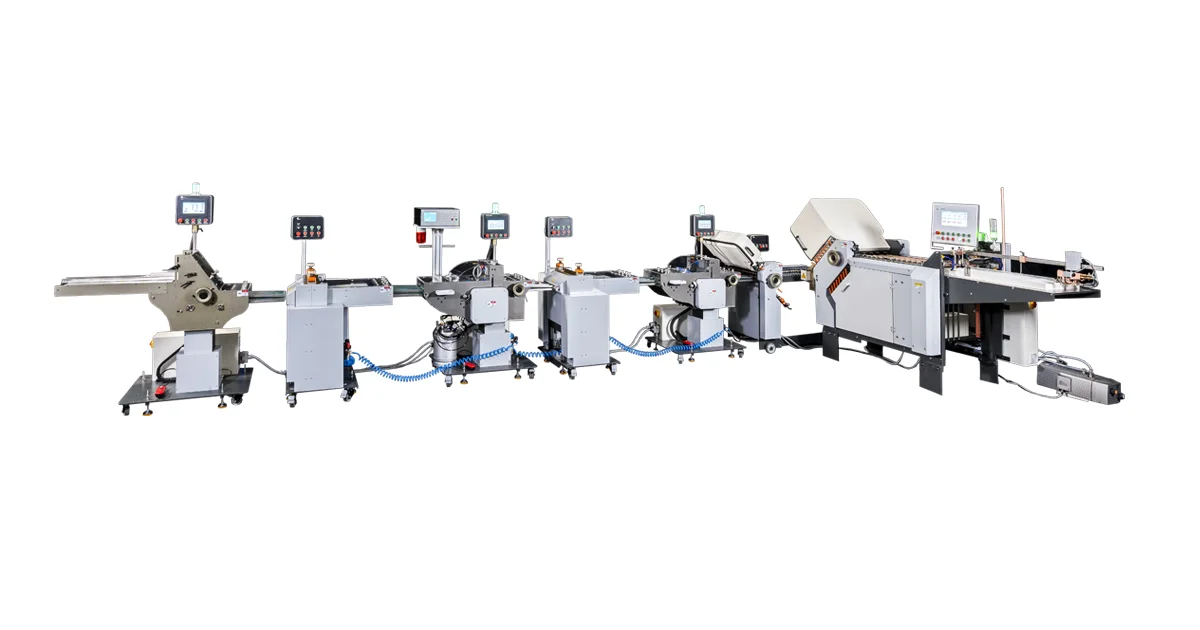
Most pharma leaflets are parallel-fold work, not cross-fold work. The sheet is folded several times in the same direction, panel after panel, until it reaches its finished size. That is buckle folding territory. A combination folding machine, which adds a knife unit for a cross fold, is the right tool only when the leaflet's fold pattern genuinely includes a cross fold — which is uncommon for a standard drug insert. Buying a combination machine for plain parallel-fold leaflets means paying for a knife unit the job does not use, and accepting a larger minimum sheet size than a buckle machine built for the same work.
The words matter here, because buyers search with several of them. A pharmaceutical leaflet folder, a leaflet folding machine for pharma, and a pharma leaflet folding machine all describe the same job. A pharmaceutical insert folding machine is the same machine bought for inserts rather than loose leaflets — in practice the two terms overlap, and a buyer should check the machine against the finished size and fold pattern, not against the name on the brochure. A folding machine for pharmaceutical packaging is the wider term: it covers leaflets and inserts folded for packing lines, and it is the term a packaging buyer is most likely to use when the leaflets are one part of a larger pharmaceutical packaging job.
Why Pharma Leaflets Are Harder to Fold Than Ordinary Leaflets
Four things make pharmaceutical leaflets harder to fold than a brochure or a flyer, and each one points at a specification a buyer should check rather than assume.
Thin paper. Drug leaflets are printed on thin paper so that a large amount of text fits into a small carton. Thin paper is less forgiving in a folder: it marks more easily, tears more easily at the crease, and is more likely to double-feed or skew if the feeder is not set up for it. The paper range a machine is rated for is therefore a first check, not a detail. The T520 Pharma model, for example, is rated at 35–200 gsm, which covers the thin papers leaflets use as well as heavier insert stocks. A machine whose rated range starts higher may fold brochures perfectly and still struggle with the thinnest leaflet paper in the job mix — ask for the bottom of the range, not just the top.
Many panels from one sheet. A pharma leaflet is often one large sheet folded six, eight, or more times into a small finished piece. Every additional fold adds another chance for the panels to drift out of alignment, for the crease to crack on coated or heavily printed paper, and for the finished size to vary from piece to piece. The number of panels is decided by the fold pattern and the sheet size, not by the machine alone — but the machine has to hold its settings across a long run, and the buyer has to be able to set it up for that pattern without a long changeover every time the leaflet changes.
A very small finished size. This is the specification buyers most often overlook, and the one that causes the most failed purchases. A machine's maximum sheet size tells you the largest sheet it can take; it says nothing about the smallest finished leaflet it can produce. For pharma work the minimum sheet size is often the deciding number. The T520 Pharma model takes sheets down to 60 × 100 mm as standard, which is small enough for the compact inserts pharma customers order. A machine with a 150 × 150 mm minimum sheet — the figure for both the T780 buckle series and the K780-F combination machine — can be an excellent machine and still be the wrong machine for a small leaflet, because it simply cannot take the job's smallest format.
Consistency across the whole run. A brochure run can tolerate a few imperfect pieces; a pharmaceutical run cannot be treated the same way. The leaflet is a regulated part of the product: it has to be complete, legible, and identical from the first piece to the last, because the patient and the pharmacist rely on it. That is why waste rejection exists on pharma-configured machines, and why a buyer should judge a machine by a sample run of their own leaflets rather than by a catalogue speed figure. Speed is easy to print; a whole run of identical, undamaged leaflets is what the customer actually pays for.
Fold Patterns Used for Pharmaceutical Leaflets
Pharmaceutical leaflets use parallel folds — folds made in the same direction, one after another. The fold styles a buckle machine supports include single, tri-fold, accordion, double parallel, roll, and gate folds, and pharma leaflets draw on most of them.
The accordion fold, also called a concertina or zigzag fold, is the workhorse of pharma leaflets. The sheet folds back and forth, panel after panel, like a fan. It is compact, it opens in one pull, and it scales well: add another panel and the leaflet gets longer without getting harder to open. Most multi-page drug leaflets a buyer will see are accordion folds, or accordion folds with a final fold that brings the strip down to carton size.
The roll fold wraps each panel inside the previous one, like a roll. It produces a neat, narrow finished piece, and it is a good choice when the leaflet has to slide into a tight carton. The trade-off is that the inner panels end up slightly narrower than the outer ones, so the print layout has to allow for that — a detail the print buyer and the folding buyer should agree on before the job runs.
The double parallel fold folds the sheet in half, then in half again in the same direction. It is a simple, robust pattern for leaflets that need four panels from one sheet, and it is often the right choice for shorter inserts where an accordion fold would be more machine setup than the job needs.
The tri-fold divides the sheet into three panels, and the single fold is one fold down the middle. Both appear in pharma work for short inserts, patient cards, and the simpler leaflets that accompany a product rather than carrying the full directions for use. The gate fold — two outer panels folding inward to meet in the middle — is less common for drug leaflets, but it appears on promotional inserts and on leaflets where the opening experience matters.
The cross fold is the exception that proves the rule. A cross fold turns the sheet 90 degrees and folds it again, and it belongs to book signatures and catalogues, not to standard pharma leaflets. If a buyer's leaflet genuinely needs a cross fold, that is the one case where a combination folding machine earns its place in a pharma shop. Otherwise, the parallel-fold patterns above are the whole job, and a buckle machine is the right tool.
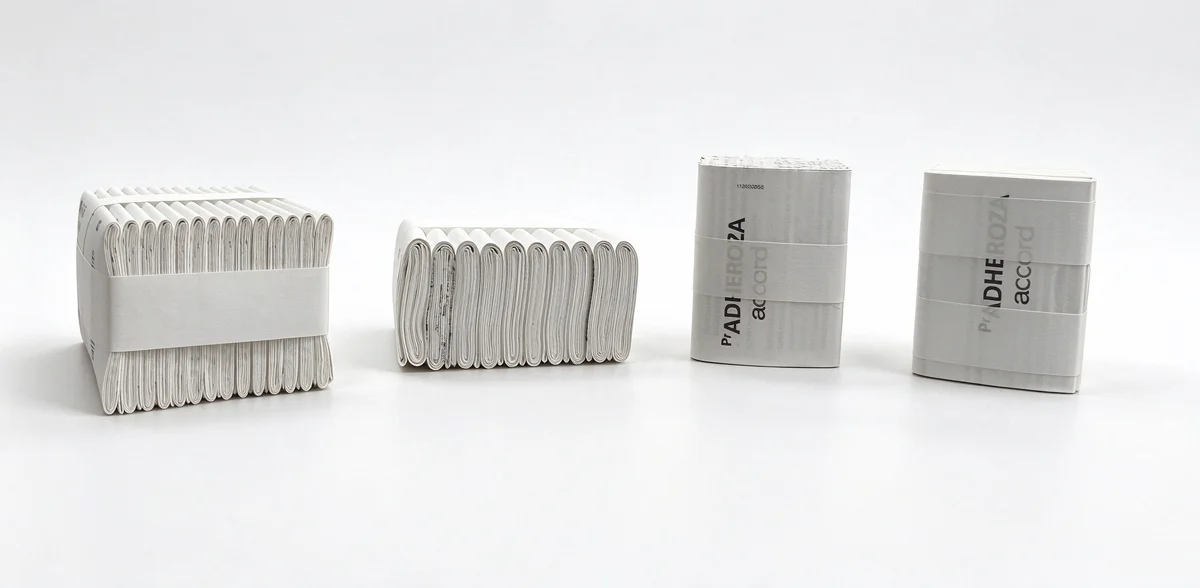
Before choosing a machine, a buyer should list the fold patterns in their actual job mix, with the finished size of each. That list — not a brochure — decides which machine fits. If every pattern on the list is a parallel fold, the buyer is shopping for a buckle machine. If a cross fold is on the list, the buyer needs to look at combination machines as well, and to check the combination machine's minimum sheet and minimum knife fold against the smallest leaflet, because the combination machine's minimums are larger.
Paper, Sheet Size and Speed: The T520 Pharma Verified Specs
The specifications that decide a pharma purchase are paper range, minimum and maximum sheet size, minimum fold width, and speed — in that order. The table below gives the verified reference specifications for the T520 Pharma Packaging Series, with the other SPEED buckle and combination models alongside for comparison. All figures are the reference specifications supplied for the named models; final specifications are subject to the confirmed customised order.
Specification | ||||
|---|---|---|---|---|
Paper range | 35–200 gsm | 35–200 gsm | 40–210 gsm | 28–200 gsm |
Speed | 180 m/min | 180 m/min | 210 m/min | 210 m/min max |
Max. sheet size | 520 × 1000 mm | 490 / 520 / 600 × 1000 mm | 780 × 1200 mm | 780 × 1200 mm |
Min. sheet size | 60 × 100 mm standard; 100 × 120 mm with waste rejection | 60 × 100 mm | 150 × 150 mm | 150 × 150 mm |
Min. fold width | 20 mm | 20 mm | 45 mm | — |
Folding roller diameter | 32 mm | 32 mm | 40 mm | — |
Max. paper pile height | 550 mm | 550 / 550 / 750 mm | 750 mm | 1200 mm |
Voltage | 380 V | 380 V | 380 V | 380 V |
Overall dimensions | 4650 × 1100 × 1500 mm | 4650 × 1100–1200 × 1500 mm | 4300 × 1700 mm (height: see note) | 4800 × 1700 × 1950 mm |
Certification | CE Certificate | CE Certificate | CE Certificate | CE Certificate |
Two notes on this table. First, the T780's overall height as printed in the source table is out of line with the other models and has not been quoted here — confirm it with the supplier before using it for floor planning. Second, the T520 Pharma table lists a second dimensions value in the same cell with no label; only the first value, 4650 × 1100 × 1500 mm, is quoted here. The second value should be confirmed with the supplier before it is used for anything.
Read the table as a buyer, not as a catalogue. The T520 Pharma's 35–200 gsm range covers the thin papers leaflets are printed on. Its 60 × 100 mm minimum sheet is the number that makes it a pharma machine: it takes the small formats that the T780 and the K780-F, both starting at 150 × 150 mm, cannot. Its 180 m/min speed is the rated speed for that model — fast enough for leaflet runs, and a figure to test with a real job rather than to compare against a rival's headline speed. Its 20 mm minimum fold width sets the narrowest panel the machine can fold, which matters when a leaflet design calls for narrow panels. And its 550 mm maximum paper pile height sets how much paper the feeder holds, which decides how often the operator reloads on a long run.
The comparison also shows what not to buy for this job. The T780 is a faster, larger machine — 210 m/min and a 780 × 1200 mm maximum sheet — but its 150 × 150 mm minimum sheet rules it out for small leaflets. The K780-F is the most capable machine in the range for mixed work, with a 28–200 gsm range and a 210 m/min maximum operating speed, but its minimum sheet is also 150 × 150 mm, and its minimum knife fold is 100 × 65 mm. For a shop whose pharma leaflets are small, the smaller buckle machine is the better tool — the bigger machines are better machines for other jobs.
Waste Rejection — What It Does and the Trade-Off
Waste rejection is the option that separates a pharma-configured folder from a general buckle folder, and it is the option buyers should understand before they price a machine.
In plain terms, waste rejection removes faulty sheets from the run before they reach the finished stack. A sheet that misfeeds, doubles up, or fails to fold correctly is diverted out of the line instead of being packed with the good leaflets. For pharmaceutical work that matters twice over: a faulty leaflet packed into a medicine carton is a quality failure, and finding it means opening cartons, not just reprinting a page. Removing the fault at the folder is cheaper than finding it at the packing line, and it is the reason pharma buyers treat waste rejection as a requirement rather than an accessory.
The trade-off is in the minimum sheet size. On the T520 Pharma model, the standard minimum sheet is 60 × 100 mm, but with waste rejection fitted the minimum sheet becomes 100 × 120 mm. The rejection mechanism needs a larger sheet to handle reliably, so the smallest formats the machine can take get larger. A buyer therefore has to check both numbers against the job mix: if the smallest leaflet in regular production is smaller than 100 × 120 mm, the buyer has to choose between waste rejection and that format — or confirm with the supplier whether the smallest jobs can run without the rejection unit fitted, and what that means for quality control on those jobs.
Three questions to ask the supplier about waste rejection, before ordering: which faults does it detect on this model — misfeed, double sheet, or fold failure; where do the rejected sheets go, and can the operator see and count them; and what is the minimum sheet size with the unit fitted, measured on the buyer's own smallest leaflet, not on a sample sheet. The answers to those three questions are worth more than a brochure line that says waste rejection is included.
A related option on the buckle series is the CCD vision inspection system, listed as optional equipment alongside the independent knife and the vertical stacker. Vision inspection and waste rejection solve different parts of the same problem — inspection finds the fault, rejection removes it — and a buyer planning high-volume pharma work should ask how the two work together on the model they are buying, rather than assuming one implies the other.
How to Judge Fold Quality Before You Commit
No catalogue figure tells a buyer whether a machine folds their leaflets well. The supplied specification tables carry no folding-accuracy figure at all, and a buyer should not accept an accuracy claim — in an article, an advertisement, or a sales conversation — that the supplier cannot support with a measured figure for that model. The honest way to judge fold quality is a sample test: send the supplier the actual leaflets, on the actual paper, and ask for folded samples back.
A useful sample test has five checks, and a buyer can do all five at a table with a ruler and the folded samples:
Finished size, piece to piece. Measure ten folded leaflets from the same run. They should all measure the same. Variation in finished size is the first sign that the machine is not holding its settings, and it is the variation that causes jams at the packing line, where the carton expects every insert to be the same size.
Panel alignment. Open the leaflet and look at the panels. The folds should sit where the print design expects them — the panels even, the text not running into the crease, the fold lines parallel to each other. Drift from panel to panel usually means the buckle plates or the feed need adjustment for that paper, not that the machine is the wrong machine — but a machine that cannot be adjusted to hold alignment on the buyer's paper is the wrong machine.
Crease quality. The crease should be sharp and clean, with no cracking on the printed surface and no tearing at the edges. Thin paper creases well when it is folded correctly and cracks when it is forced; heavily printed or coated paper is the hardest case, so include the hardest paper in the sample test, not just the easiest.
Marking and damage. Look at the printed surface under a good light. Roller marks, scuffs, or smudging on the print are a reason to question the setup, the roller condition, or the machine's suitability for that paper. A leaflet that arrives at the carton marked is a leaflet the customer will reject.
Behaviour across the run. Ask how the samples were made — a short, carefully watched test run proves less than a longer run at working speed. If the supplier can run a longer sample, check the first pieces against the last pieces. A machine that starts well and drifts as it warms up or as the pile drops is a machine that will need more operator attention in production than its brochure suggests.
Keep the folded samples and the test notes. They are the baseline for the acceptance test when the machine is installed: fold the same leaflets again on the delivered machine and compare. If the installed machine cannot match the samples the supplier sent, that is a conversation to have before the machine is signed off, not after the first production run.
Buckle or Combination: Which Machine Fits Pharma Work?
For most pharmaceutical leaflet work the answer is a buckle folding machine, and the reasons are the ones this guide has already covered: pharma leaflets are parallel-fold work, the finished sizes are small, and the buckle machine's minimum sheet size is smaller. The T520 Pharma model exists for exactly that job — a buckle machine with a 60 × 100 mm minimum sheet, a 35–200 gsm range, and waste rejection as an option.
A combination folding machine earns its place in a pharma shop in two cases. The first is when the leaflet's fold pattern includes a cross fold — a fold at 90 degrees to the parallel folds. That is uncommon for a standard drug insert, but it happens on larger leaflets and on inserts that are folded down from a big sheet in two directions. The second is when the shop folds both pharma leaflets and book work, and wants one machine for both. A combination machine folds book signatures and catalogues as well as leaflets, so a mixed shop can buy one machine instead of two — provided the shop checks the combination machine's minimums against its smallest leaflet first. The K780-F's minimum sheet of 150 × 150 mm and minimum knife fold of 100 × 65 mm rule out the smallest pharma formats, so a mixed shop with very small leaflets may still need a buckle machine for the pharma work and a combination machine for the books.
The third machine type, the recirculating feeder folding machine, solves a different problem again: feeding thin paper continuously at volume for long runs and mass production. A pharma buyer with very long runs of a single leaflet should ask about feeder capacity and continuous running, and should read the recirculating feeder buying guide alongside this one — but the feeder type does not change which fold the leaflet needs, and it should not be confused with a fold type.
A simple decision rule covers most buyers: list the fold patterns and finished sizes, as above. Parallel folds only, small finished sizes — buy a buckle machine configured for pharma, and check the minimum sheet first. Cross fold in the pattern, or book work in the same shop — look at a combination machine, and check its minimums against the smallest leaflet. Long runs of one thin-paper leaflet at volume — ask about the feeder and about continuous running as well as about the fold.
Running Costs and Practical Checks
The purchase price is only part of what a pharmaceutical leaflet folding machine costs, and the rest of the cost is decided by practical details that are easy to overlook in a brochure comparison.
Changeover time. Pharma shops change jobs often — different leaflets, different sizes, different fold patterns, sometimes several times a day. A machine that takes an hour to change over between leaflets costs more in lost production than a machine that takes twenty minutes, even if the slower machine was cheaper to buy. Ask the supplier how long a changeover takes on the buyer's own jobs, and whether the settings for a repeat job can be recorded and recalled.
Feeder capacity. The maximum paper pile height decides how often the operator reloads. The T520 Pharma model holds a 550 mm pile; the K780-F holds 1200 mm. On a long run, the taller pile means fewer stops — but only if the thin leaflet paper feeds reliably from a full pile, which is another thing the sample test should prove. A tall pile that double- feeds is worse than a short pile that feeds cleanly.
Power and floor space. The T520 Pharma model runs on 380 V, as do the other models in the range, and its footprint is 4650 × 1100 × 1500 mm. Check the power supply, the floor space including access around the machine and space for the paper pile and the finished stack, and the delivery route into the building before ordering — a machine that cannot be installed where the work happens is a machine that has to be re-planned at the buyer's expense.
Options that matter. The buckle series lists an independent knife, a vertical stacker, and a CCD vision inspection system as optional equipment. For pharma work the options worth pricing are waste rejection and vision inspection first, and a stacker that handles small finished leaflets without crushing them second. An option that sounds useful in general but does not fit the buyer's smallest leaflet is not a bargain at any price.
Support after delivery. Ask what installation, training, and after-sales support are included, and whether the supplier offers a sample folding test before the order — a supplier that tests the buyer's leaflets before the sale is a supplier that expects the machine to be judged on the buyer's work. Keep the name and contact of the support team with the machine's manual, not in an email thread that will be lost when the operator changes.
Buyer Checklist: 7 Questions Before You Order
Use this checklist in the conversation with the supplier, and write the answers down against the buyer's own jobs — not against a generic leaflet.
- What is our smallest finished leaflet, and what is our largest sheet? Check both against the machine's minimum and maximum sheet sizes. For the T520 Pharma model the figures are 60 × 100 mm minimum as standard, 100 × 120 mm with waste rejection, and 520 × 1000 mm maximum. If any regular job falls outside those figures, the machine does not fit — no matter how good its other numbers look.
- What paper do we actually fold? List the lightest and heaviest papers in the job mix, in gsm, and check both ends against the machine's rated range. The T520 Pharma range is 35–200 gsm. Include the thinnest paper, not just the average.
- Which fold patterns do we need? List them from real jobs — accordion, roll, double parallel, tri-fold, single fold — and confirm the machine is set up for each. If a cross fold is on the list, the buyer is looking at a combination machine, not a buckle-only machine.
- Do we need waste rejection, and what does it cost us in minimum size? Confirm which faults it detects, where rejected sheets go, and the minimum sheet size with it fitted — then check the smallest leaflet against that number, not the standard minimum.
- Can we see folded samples of our own leaflets? Send the actual paper and the actual print, and judge the samples with the five checks in the previous section. Do not order on the strength of a brochure sample folded from different paper.
- What is the rated speed on our paper — and at what cost in consistency? The T520 Pharma model is rated at 180 m/min. Ask what speed the supplier expects on the buyer's thinnest paper, and whether that speed holds across a full run. A headline speed that only holds for a short test is not a production speed.
- What is included after delivery? Installation, operator training, a first maintenance visit, spare parts availability, and who to call when the machine stops. Write the answers into the order, not just into an email.
Common Mistakes When Buying a Pharma Leaflet Folder
Buying on maximum sheet size. The largest sheet a machine takes is the least important number for pharma work, and it is the number buyers quote most often. The minimum sheet size decides whether the machine can fold the leaflets the shop actually produces. Check the minimum first.
Buying on speed alone. A faster machine that cannot hold fold quality on thin paper is slower in practice than a slower machine that runs cleanly all day, because every faulty leaflet has to be found, removed, and re-run. Judge speed together with the sample test, not instead of it.
Accepting an accuracy figure without evidence. If a specification, an advertisement, or a sales claim gives a folding accuracy figure, ask what it was measured on and how. The supplied specification tables for these models carry no accuracy figure, and a buyer should treat any such figure as unproven until the supplier supports it. The sample test is the evidence that matters.
Forgetting waste rejection until after the order. Waste rejection changes the minimum sheet size, and it is much cheaper to decide before ordering than to add afterwards — if it can be added afterwards at all. Decide on it with the smallest leaflet on the table.
Ordering the combination machine for parallel-fold work. A combination machine is a good machine bought for the wrong reason when the job is parallel folds only. It costs more, it takes more floor space, and its minimum sheet size is larger. Buy the buckle machine for the buckle job, and spend the difference on the options that actually help pharma work.
Not testing the hardest job. Suppliers test with easy paper when they are allowed to. Send the thinnest paper, the most heavily printed sheet, and the smallest finished size — the jobs that will fail first in production — and judge the machine on those.
Final Notes — SPEED Machinery only here
SPEED Machinery makes three types of high-speed automatic paper folding machine: buckle, combination, and recirculating feeder. The pharma-configured type — the T520 Pharma Packaging Series in this guide — is the buckle machine for pharmaceutical leaflets and inserts, rated at 35–200 gsm, 180 m/min, a maximum sheet of 520 × 1000 mm, and a minimum sheet of 60 × 100 mm as standard, or 100 × 120 mm with waste rejection.
SPEED Machinery is a China-based manufacturer of high-speed automatic paper folding machines, with CE-certified products and ISO-certified management. Its team provides pre-sales selection consultation, sample folding tests, installation, training, and after-sales support.
Contact SPEED Machinery for a tailored recommendation and quotation — share the paper specifications, the finished folded size, the fold pattern, and the target output, and they will suggest the most suitable model for the pharmaceutical work.
Frequently asked
What is a pharmaceutical leaflet folding machine?
A pharmaceutical leaflet folding machine is a folding machine configured for drug leaflets and inserts — usually a buckle folding machine with a small minimum sheet size, a paper range covering thin leaflet papers, and a waste rejection option. It folds a large printed sheet down into a small multi-panel leaflet that fits inside a medicine carton.
What is the difference between a pharmaceutical leaflet folding machine and a pharmaceutical insert folding machine?
In practice, very little. Both terms describe a machine that folds drug leaflets and inserts for pharmaceutical packaging. The leaflet term is used more for the folded directions for use, and the insert term more for the piece packed inside the carton — but they are often the same piece of paper. Check the machine against the finished size and fold pattern, not against the name.
What paper weight can a pharmaceutical leaflet folding machine handle?
It depends on the model. The T520 Pharma Packaging Series is rated at 35–200 gsm, which covers the thin papers drug leaflets are printed on as well as heavier insert stocks. Check the lightest paper in the job mix against the bottom of the machine's rated range, not just the heaviest paper against the top.
What is the smallest leaflet a pharmaceutical leaflet folding machine can fold?
It depends on the model and on whether waste rejection is fitted. The T520 Pharma model takes sheets down to 60 × 100 mm as standard, and 100 × 120 mm with waste rejection. Always check the smallest finished leaflet against the minimum sheet size with the options fitted as they will be used in production.
Do I need a combination folding machine for pharmaceutical leaflets?
Usually not. Most pharmaceutical leaflets use parallel folds only — accordion, roll, double parallel, tri-fold — and a buckle folding machine is the right tool for those. Choose a combination folding machine only when the leaflet's fold pattern includes a cross fold, or when the same machine must also fold book signatures and catalogues.