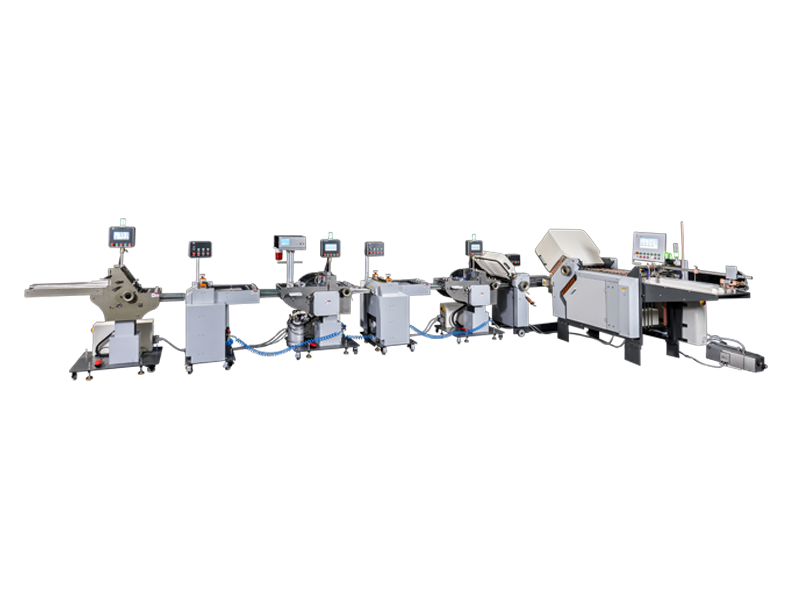
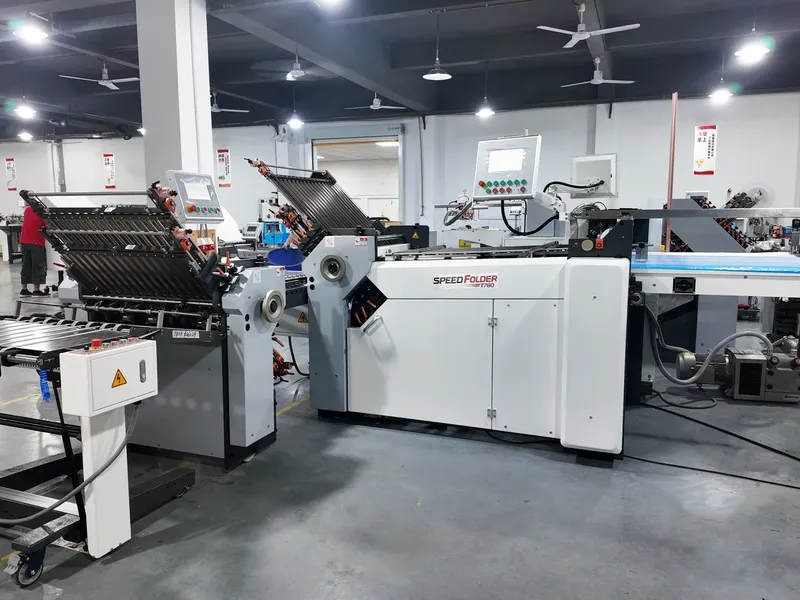
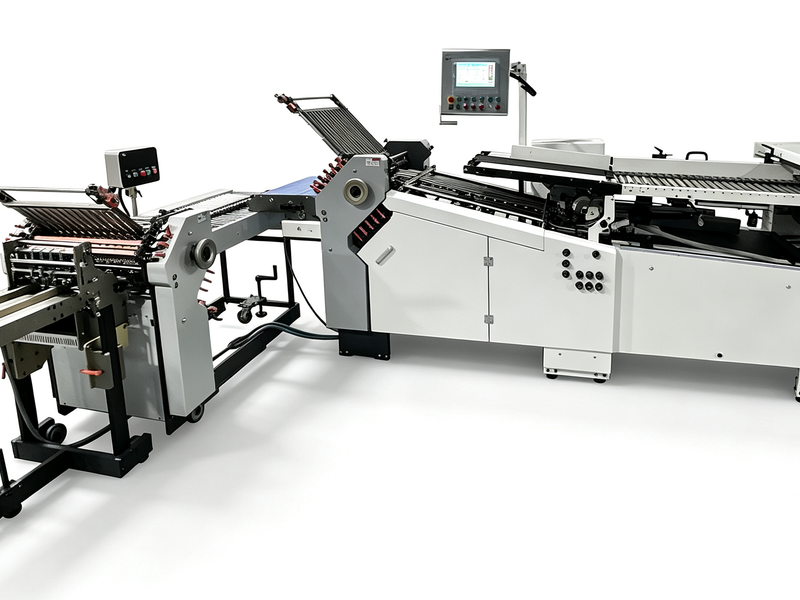
For packaging manufacturers, commercial printers, and pharmaceutical converters, folding is rarely the bottleneck — until it is. When daily output rises to tens or hundreds of thousands of sheets, manual or semi-automatic folding becomes slow, inconsistent, and expensive.
A recirculating feeder paper folding machine is designed specifically for this scenario. It combines continuous, high-speed feeding with buckle and knife folding to deliver stable, repeatable results on long runs. This guide explains how it works, which specifications actually matter, and how to select a model that fits your products, paper, and throughput targets — and it is explicit throughout about which figures are verified for a named SPEED model, which are generic industry ranges, and which have not been supplied at all, so nothing in it can be mistaken for a model specification it is not.
What Is a Recirculating Feeder Paper Folding Machine?
Definition
A recirculating feeder paper folding machine is an industrial automatic paper folding machine that uses a looped, continuously circulating feeder to separate and deliver single sheets into the folding unit without stopping the production flow.
Unlike a conventional pile feeder, which feeds from a static stack and requires frequent reloading and adjustment, a recirculating feeder keeps paper moving through a closed feeding path. This reduces downtime, minimises double-feeding and misfeeding, and maintains consistent sheet separation at high speed.
It is widely used for mass production of folded leaflets, instruction manuals, pharmaceutical inserts, brochures, and packaging inserts where accuracy, speed, and long uninterrupted runs are critical.
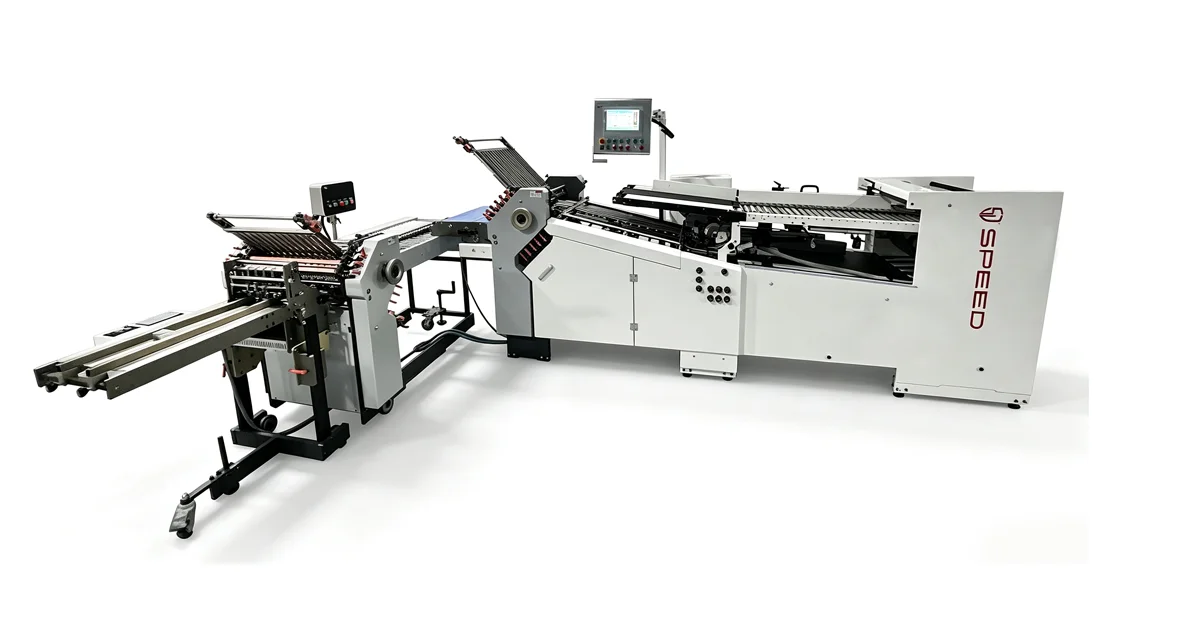
How It Works: The Core Working Principle
The working process of a recirculating feeder paper folding machine can be divided into four continuous stages:
1. Sheet Separation Sheets are loaded into the feeder and separated one by one by vacuum suction cups, air blowers, and friction rollers. The recirculating design ensures the next sheet is already positioned while the previous sheet is being folded.
2. Sheet Transport Separated sheets are conveyed by belts and rollers to the folding section at a controlled speed. Side guides and sensors align each sheet to prevent skewing.
3. Buckle Folding The sheet enters a folding plate (buckle plate). When the leading edge hits the adjustable stop, the paper buckles and is caught by a pair of folding rollers, creating the first fold. Multiple plates can be configured in sequence for parallel, gate, or accordion folds.
4. Knife Folding and Delivery For cross folds or complex patterns, a folding knife pushes the sheet between a second set of rollers. The finished product is then delivered to a stacking conveyor, shingled belt, or pressing unit for counting and packing.
Because feeding, folding, and delivery run simultaneously, the machine can hold a steady production rhythm on long runs — but the speed it holds on your paper, with your fold, is a figure to confirm by a sample test, not by a brochure maximum. No speed figure is quoted for the recirculating feeder model in this guide, because no recirculating feeder model specification table has been supplied. For comparison only, the verified maximum speeds on SPEED's other models are 180 m/min for the T490–T600 buckle series and the T520 Pharma series, and 210 m/min for the T780 buckle series and the K780-F combination machine — those are the folding units' rated speeds, not the feeder model's.
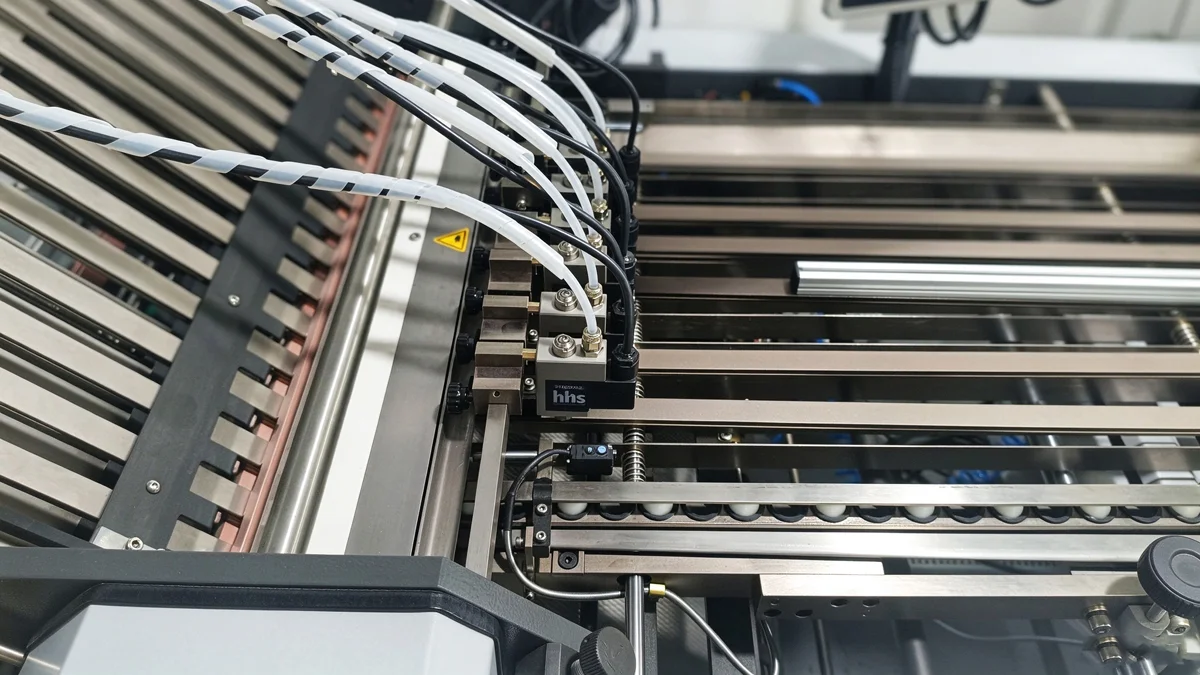
Recirculating Feeder vs. Pile Feeder vs. Friction Feeder
Feeding System | Best For | Speed | Stability | Changeover |
|---|---|---|---|---|
Mass production, thin and coated paper | Very high | Excellent | Fast | |
Large-format, heavy paper | High | Good | Moderate | |
Small batches, simple folds | Medium | Moderate | Fast |
For buyers running long jobs with lightweight or coated paper — typical in pharmaceutical and packaging insert production — the recirculating feeder offers the best balance of speed and feeding reliability. The table above is a qualitative comparison of feeder types, not a specification table: it gives no speed, sheet-size, or paper-weight figure for any named model.
Core Components of an Automatic Paper Folding Machine
Understanding the main components helps buyers compare machines beyond the brochure speed.
1. Recirculating Feeding Unit
The heart of the system. It includes a feed table, vacuum suction head, air separator, and recirculating belt. Its job is to separate sheets cleanly, even at high speed, and to handle thin paper without frequent adjustment.
Look for adjustable suction strength, double-sheet detection, and automatic pile height control. Do not accept a paper-weight range for this unit from a brochure alone: ask the supplier to state it in writing for the named feeder model, and to demonstrate it with your thinnest and your heaviest paper. For reference, the verified paper ranges on SPEED's folding models are 28–200 gsm (K780-F), 35–200 gsm (T490–T600 and T520 Pharma), and 40–210 gsm (T780) — those describe the folding models, and the feeder model's own range still needs to be confirmed.
2. Folding Rollers
Hardened steel or polyurethane-coated rollers apply even pressure to create sharp, consistent creases. Roller diameter, hardness, and pressure adjustment directly affect fold quality, especially for coated and thick paper. On the verified buckle tables, the folding roller diameter is 32 mm for the T490–T600 series and the T520 Pharma series, and 40 mm for the T780 series.
3. Buckle Folding Plates
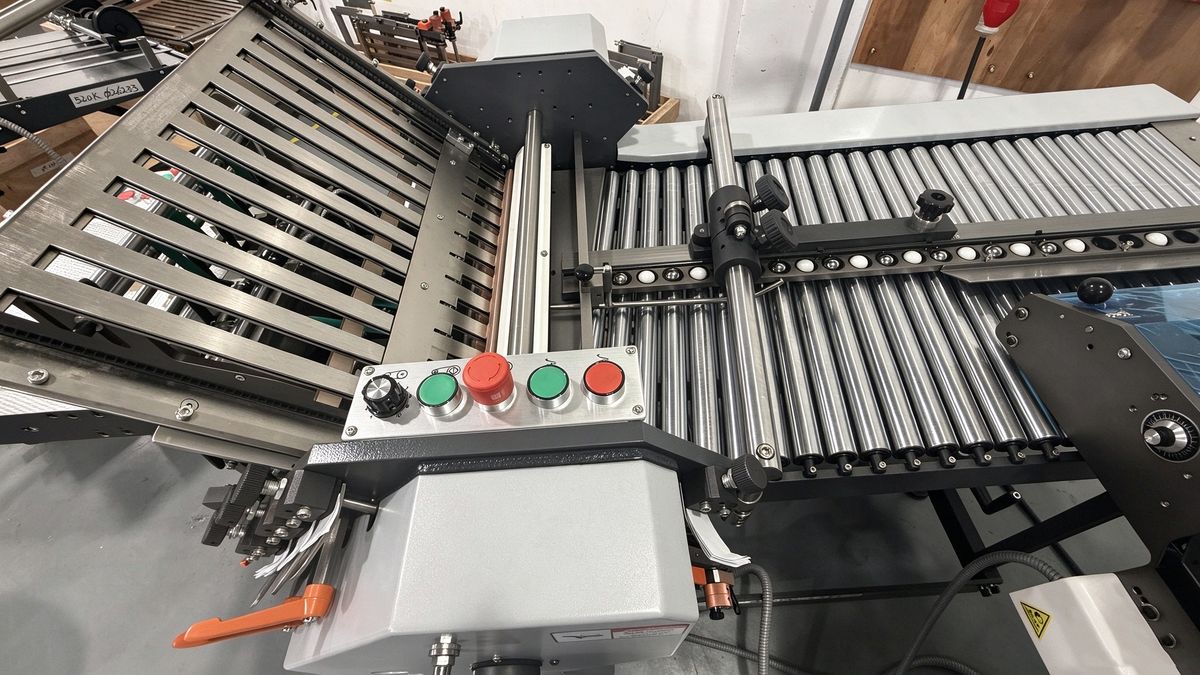
Each folding plate controls one fold. The position of the stop determines the fold length. Higher-end configurations offer motorised plate adjustment with a digital display, allowing operators to recall preset jobs and shorten setup time.
This guide gives no plate count for any SPEED model, because no plate count appears in the supplied spec tables. Ask the supplier for the plate count of the exact configuration you are buying, matched to your fold types, rather than relying on a generic "standard" count in a guide.
4. Knife Folding Unit
Used for cross folds and right-angle folds. A precision knife and folding rollers work together to fold the sheet in a second direction. This is essential for 8-page, 12-page, and 16-page inserts. Knife folding is a folding method and a folding unit, not a standalone machine type: SPEED's three machine types are buckle, combination, and recirculating feeder, and the knife unit appears inside the combination type and as an optional independent knife on the buckle series. On the verified K780-F combination model, the minimum knife fold size is 100 × 65 mm.
5. Delivery and Stacking System
After folding, products are delivered via a slow-down belt, pressing rollers, and a stacking table. Options include shingled delivery, batch counting, and automatic bundling — all important for downstream packing efficiency.
6. Control System and Sensors
Modern machines use PLC control with a touchscreen HMI. Operators can store job recipes, monitor speed, count output, and receive alarms for jams, double sheets, or missing sheets. Photoelectric sensors throughout the paper path improve accuracy and reduce waste.
7. Frame and Drive System
A rigid steel frame minimises vibration at high speed. Servo motors or frequency-controlled main drives provide smooth acceleration, precise speed control, and lower energy consumption compared to older clutch-brake systems.
Key Technical Parameters Explained
Speed alone does not define a good machine. Buyers should evaluate the full parameter set in relation to their actual products — and should ask, for every parameter below, whether the figure they are being shown belongs to the recirculating feeder model itself, or to a different model in the same range.
1. Maximum and Minimum Paper Size
This determines what jobs you can accept. Check the maximum size before anything else if you produce large-format brochures, and check the minimum size with equal care if you fold small pharmaceutical leaflets: a machine that takes your largest sheet but cannot take your smallest leaflet is the wrong machine.
For the folding side, the verified figures are: T490–T600, maximum sheet 490 × 1000 / 520 × 1000 / 600 × 1000 mm and minimum sheet 60 × 100 mm; T780, maximum 780 × 1200 mm and minimum 150 × 150 mm; T520 Pharma, maximum 520 × 1000 mm and minimum 60 × 100 mm standard, or 100 × 120 mm with waste rejection; K780-F, maximum 780 × 1200 mm and minimum 150 × 150 mm. The recirculating feeder model's own maximum and minimum sheet sizes have not been supplied — confirm them in writing before ordering.
2. Paper Weight Range
Thin pharmaceutical paper requires gentle suction and precise roller pressure. Heavy carton inserts require stronger folding force. A wide range gives you more flexibility — but only the range stated for the named model you are buying counts. As a generic industry observation, not a SPEED specification, industrial folders are commonly described as handling roughly 40–250 gsm; that generic range is wider than any verified SPEED model (no supplied model reaches 250 gsm), so do not use it to judge a SPEED machine. The verified ranges are 28–200 gsm (K780-F), 35–200 gsm (T490–T600, T520 Pharma), and 40–210 gsm (T780).
3. Folding Speed
Rated speed is usually measured in metres per minute or sheets per hour under ideal conditions. Real production speed depends on paper size, weight, and fold complexity. For a realistic estimate, ask for test data with your own paper and fold pattern — and ask whether the quoted speed is the feeder's, the folding unit's, or the combined line's.
The verified rated speeds for SPEED's folding models are 180 m/min (T490–T600, T520 Pharma) and 210 m/min maximum operating speed (T780, K780-F). No supplied model is rated at 220 m/min, and no speed figure is quoted here for the recirculating feeder model itself.
4. Folding Accuracy
Folding accuracy matters most for pharmaceutical inserts and multi-panel folds, where misalignment is immediately visible. No accuracy figure in millimetres appears in any of the SPEED spec tables supplied on 2026-11-10, so this guide quotes none — not as a generic range and not as a SPEED specification. If a buyer needs a tolerance, the right step is a sample folding test with their own paper and fold, and a written tolerance from the supplier for that job.
5. Number of Folding Plates and Folding Units
More plates mean more fold combinations without manual reconfiguration. But a plate count only helps if it is the count for your configuration. This guide gives no plate or knife-unit count for any SPEED model, because none appears in the supplied tables. List your top five fold types first, then ask the supplier to confirm, in writing, that the quoted configuration produces all five without additional tooling.
6. Feeder Capacity and Automation Level
Check pile height, automatic loading, and whether the feeder supports continuous loading during operation. This directly affects uptime in a mass-production environment. For reference, the verified maximum paper pile heights on the folding models are 550 mm (T490/T520, T520 Pharma), 750 mm (T600, T780), and 1200 mm (K780-F). The feeder model's own pile height still needs to be confirmed — do not carry these folding-model figures across to it.
Buying tip: Do not compare machines by maximum speed alone. Compare them by sustained speed with your paper weight, your fold type, and your required accuracy — and compare like with like: a feeder-model figure against a feeder-model figure, not against a buckle model's rated speed.
Applications in the Packaging Industry
A recirculating feeder paper folding machine is not a general-purpose folder. It is built for high-volume, high-consistency applications.
Pharmaceutical Industry
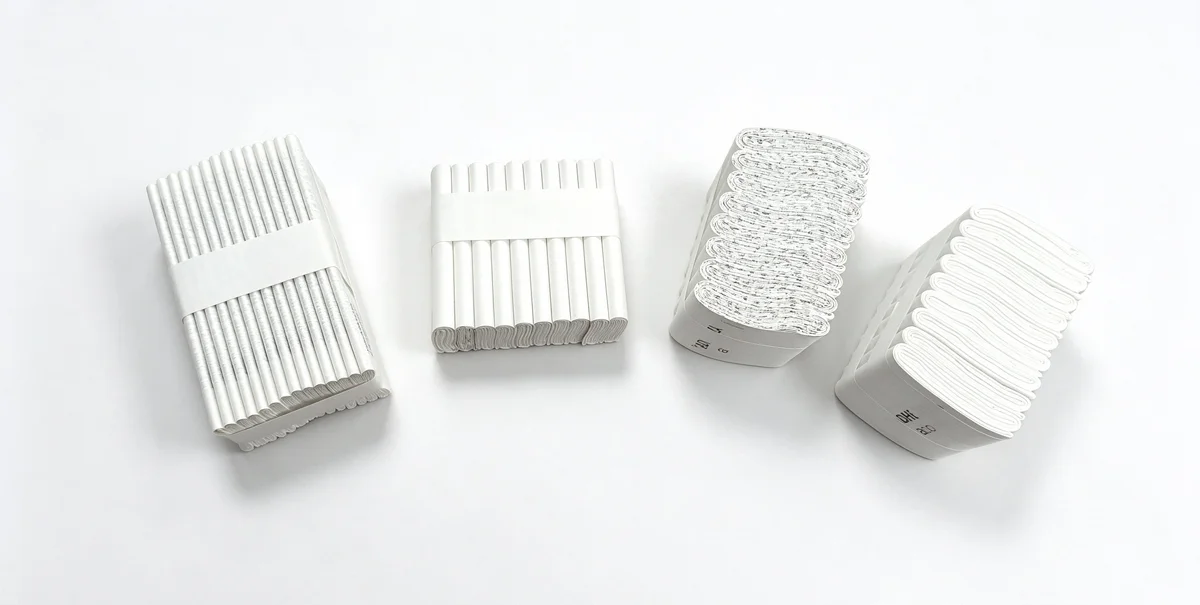
The largest application segment. Used for patient information leaflets, drug inserts, and instruction sheets. These jobs demand thin paper, extremely high accuracy, and validated, repeatable folding. Double-sheet detection and batch counting are essential. For the folding side, the T520 Pharma Packaging Series is the verified reference: 35–200 gsm, 180 m/min, maximum sheet 520 × 1000 mm, minimum sheet 60 × 100 mm as standard and 100 × 120 mm with waste rejection. Whether the recirculating feeder model matches those small-sheet figures is exactly what to confirm before ordering for pharma work — a feeder that cannot separate a 60 × 100 mm sheet reliably is not a pharma feeder, whatever its top speed.
Food and Beverage Packaging
Used for product inserts, promotional leaflets, recipe cards, and coupons placed inside cartons and boxes. Coated paper and fast changeover are common requirements.
Cosmetics and Personal Care
Used for instruction leaflets, ingredient cards, and promotional inserts for skincare, perfume, and beauty products. Fold quality and clean creases directly affect brand perception.
Consumer Electronics and Home Appliances
Used for user manuals, warranty cards, safety instructions, and quick-start guides. These are often multi-page cross folds that require both buckle and knife folding units — the combination described in Day 2 of this series, where the K780-F's minimum knife fold of 100 × 65 mm and maximum sheet of 780 × 1200 mm are the verified reference figures.
Commercial Printing and Direct Mail
Used for brochures, flyers, newsletters, and direct mail pieces. High-speed feeding and quick job recall make the machine suitable for short-to-medium runs with frequent changeovers — provided the changeover time quoted is for your jobs, not for a single standard fold.
Supported Folding Styles and Patterns
One machine can produce many fold types by adjusting plate positions and combining buckle and knife folding. SPEED supports cross, single, tri-, accordion, double parallel, roll, and gate folds.
Fold Type | Description | Typical Use |
|---|---|---|
Single Fold | One fold in the middle | Simple leaflets, cards |
Double Parallel Fold | Two folds in the same direction | 6-page brochures |
Letter Fold / C-Fold | Two folds forming a letter shape | Mailers, letters |
Z-Fold / Accordion Fold | Zigzag folds in opposite directions | Instruction sheets, maps |
Gate Fold | Two side panels fold inward | Premium brochures, invitations |
Roll Fold | Panels fold over each other in sequence | Multi-panel product guides |
Cross Fold | Fold in one direction, then at 90 degrees | 8-page, 12-page, 16-page inserts |
Double Gate Fold | Two gate folds combined | Large-format promotional pieces |
When evaluating a machine, list your top 5 fold types and confirm that the plate configuration can produce them without additional tooling.
How to Choose the Right Paper Folding Machine: A 7-Step Selection Process
Step 1: Define Your Core Products
Start with your finished folded size, unfolded size, and number of pages. This determines the required paper size range and folding configuration.
Example: a 16-page pharmaceutical insert folded to 120 × 80 mm from a 480 × 320 mm sheet requires a cross-fold unit — check that unfolded sheet against the model's maximum sheet, and the finished size against its minimum sheet and minimum knife fold, before anything else.
Step 2: Analyze Your Paper
Collect samples of your most common paper: weight, coating, grain direction, and thickness. Test folding with your actual paper — not the supplier's standard sample.
Thin, coated paper is the most difficult to feed. If you run it frequently, prioritise a recirculating feeder with strong vacuum control and static elimination — and run your thinnest coated stock in the sample test, not just your easiest stock.
Step 3: Calculate Required Throughput
Estimate your daily and monthly volume, peak-season demand, and average job length. A machine sized for very long runs may be oversized for short jobs, but essential for long ones.
Calculate total cost per 1,000 folded pieces, including labour, setup time, and waste — not just machine price. Ask the supplier for sustained output on your paper and fold, in sheets per hour over a full shift, rather than a peak speed in metres per minute: the two figures answer different questions, and only the first tells you what a day's production will actually be.
Step 4: Match the Fold Configuration
Match the number of buckle plates and knife units to your fold types. Buying a machine with more plates than your folds need wastes investment. Buying one with too few limits your capabilities. Since no plate or unit count is published in the supplied SPEED tables, get the count for your exact configuration in writing, tied to your five fold types from the table above.
Step 5: Evaluate Automation and Changeover
For buyers with many SKUs, job memory, motorised plate adjustment, and automatic feeder setup are more valuable than a higher top speed. Faster changeover means higher overall equipment effectiveness (OEE).
Ask: How long does it take to change from Job A to Job B? Can the operator recall settings from the touchscreen? Time the changeover on your two most different jobs during the trial, not on two similar ones.
Step 6: Check Footprint, Power, and Integration
Confirm machine dimensions, power supply (380 V / 220 V, 50/60 Hz), compressed air requirements, and whether it can connect to upstream printing and downstream packing or bundling lines. For scale, the verified K780-F combination machine measures 4800 × 1700 × 1950 mm, weighs 2500 kg, and runs on 6.5 kW at 380 V — the recirculating feeder model's own dimensions, weight, and power still need to be confirmed, and should not be assumed to match the combination model.
Step 7: Request a Sample Test and On-Site Trial
Always send your paper and artwork for a folding test before purchase. A reputable supplier should provide folded samples, video of the test run, and a written test report showing speed, accuracy, and waste rate for your fold type. This test is also the only honest way to check folding accuracy, since no generic accuracy figure covers every model, paper, and fold — and no accuracy figure appears in the supplied SPEED tables.
Daily Maintenance and Common Troubleshooting
Proper maintenance is the difference between a machine that runs at high uptime and one that constantly jams.
Daily Maintenance Checklist
- Clean folding rollers and belts with a lint-free cloth to remove paper dust and ink residue.
- Check suction cups for wear and replace if cracked or flattened.
- Inspect side guides and folding plates for paper debris.
- Lubricate bearings and chains according to the manual.
- Verify sensor function and clean photoelectric sensors.
- Record output count, waste rate, and any abnormal noise.
Weekly and Monthly Maintenance
- Weekly: Deep-clean the feeder, check belt tension, inspect air filters, and test double-sheet detection.
- Monthly: Check roller pressure and parallelism, inspect electrical connections, calibrate folding plates, and review wear parts inventory.
Keep a stock of consumables: suction cups, belts, folding rollers, and air filters. These are the most common wear items.
Common Faults and Solutions
Symptom | Likely Cause | Solution |
|---|---|---|
Double feeding | Suction too strong, air separator misadjusted, static | Reduce suction, adjust air blast, install ionizer |
Misfeeding / No feed | Worn suction cups, low vacuum, paper curl | Replace suction cups, check vacuum pump, jog paper |
Skewed fold | Side guides loose, uneven roller pressure | Realign guides, adjust roller pressure evenly |
Inaccurate fold length | Folding plate stop moved, paper slipping | Recalibrate plate, clean rollers, check belt tension |
Paper jam in folding unit | Wrong paper weight setting, worn rollers | Adjust pressure for paper weight, replace rollers |
Cracking on fold line | Paper too thick, grain direction wrong, no scoring | Change grain direction, add scoring unit, reduce speed |
Static sticking | Low humidity, coated paper | Increase humidity, use static eliminator |
Most folding problems are not machine defects — they are paper, humidity, or setup issues. A systematic check of feeder, rollers, and plates solves most faults.
Final Notes — SPEED Machinery only here
SPEED Machinery makes three types of high-speed automatic paper folding machine: buckle, combination, and recirculating feeder. The recirculating feeder type is the mass-production type in this guide — the one built for long runs of leaflets, instruction manuals, and pharmaceutical inserts, where feeding stability matters as much as folding speed.
SPEED Machinery is a China-based manufacturer of high-speed automatic paper folding machines, with CE-certified products and ISO-certified management. Its team provides pre-sales selection consultation, sample folding tests, installation, training, and after-sales support.
Contact SPEED Machinery for a tailored recommendation and quotation — share your paper specifications, finished folded size, and target output, and they will suggest the most suitable model for your production. If you are asking about the recirculating feeder type, ask them to confirm the feeder model's paper range, sheet sizes, and speed in writing, and to run a sample test on your paper before you order.
Frequently asked
What is a recirculating feeder paper folding machine used for?
A recirculating feeder paper folding machine is used for high-volume folding of leaflets, pharmaceutical inserts, instruction manuals, brochures, and packaging inserts. It is ideal for mass production where speed, accuracy, and continuous operation are required, especially with thin or coated paper.
What is the difference between an automatic paper folding machine and a manual folding machine?
An automatic paper folding machine feeds, folds, and delivers sheets continuously without manual intervention. A manual machine requires the operator to feed each sheet and is suitable only for very small batches. For production above 10,000 sheets per day, an automatic machine is significantly more cost-effective. The automatic machine's sustained speed on your paper and fold should be confirmed by a sample test, not by a brochure maximum.
What paper weight can a recirculating feeder handle?
That depends on the named feeder model, and no recirculating feeder model specification table has been supplied yet, so this guide gives no figure for it. For the folding side, the verified SPEED ranges are 28–200 gsm for the K780-F combination machine, 35–200 gsm for the T490–T600 buckle series and the T520 Pharma series, and 40–210 gsm for the T780 buckle series. Ask the supplier to state the feeder model's own range in writing, and always test your specific paper before purchase.
How fast is a paper folding machine for mass production?
It depends on paper size, weight, and fold complexity, and on whether the quoted speed is the feeder's, the folding unit's, or the combined line's. The verified rated speeds for SPEED's folding models are 180 m/min for the T490–T600 and T520 Pharma series and 210 m/min maximum operating speed for the T780 and K780-F. No speed figure is quoted here for the recirculating feeder model itself, because none has been supplied. Real production speed is lower for complex cross folds and heavy paper.
Can it fold coated paper?
Yes, but coated paper requires careful adjustment. Use lower roller pressure, clean rollers frequently to prevent ink transfer, and ensure the feeder has strong vacuum separation and static control. A recirculating feeder is generally better for coated paper than a friction feeder.
How do I choose between a recirculating feeder and a pile feeder?
Choose a recirculating feeder for long runs, thin paper, and high-speed production. Choose a pile feeder for large-format sheets, heavy paper, and jobs where the feeder is loaded in large stacks. Many mass-production buyers choose recirculating feeders for pharmaceutical and packaging inserts.
What maintenance does an automatic paper folding machine need?
Daily cleaning of rollers and sensors, weekly belt and suction cup checks, and monthly calibration of folding plates are essential. Keep spare suction cups, belts, and filters in stock to avoid downtime.