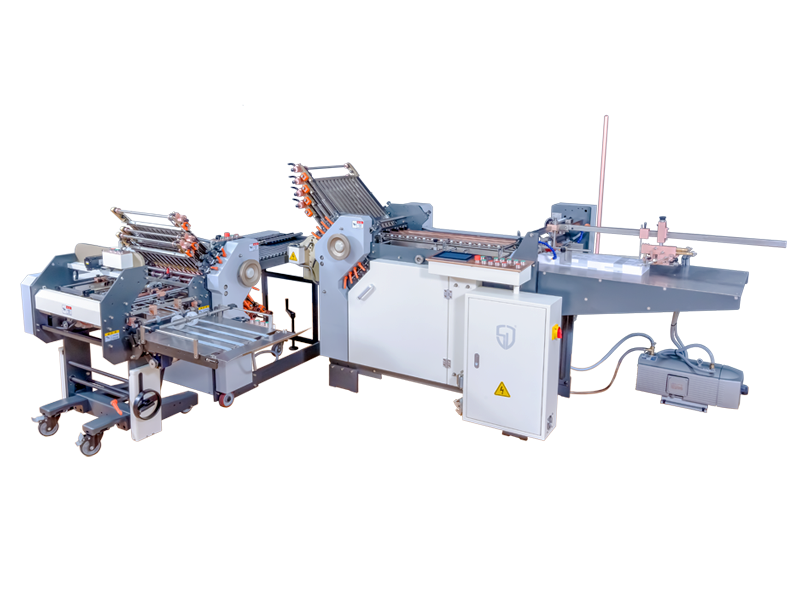
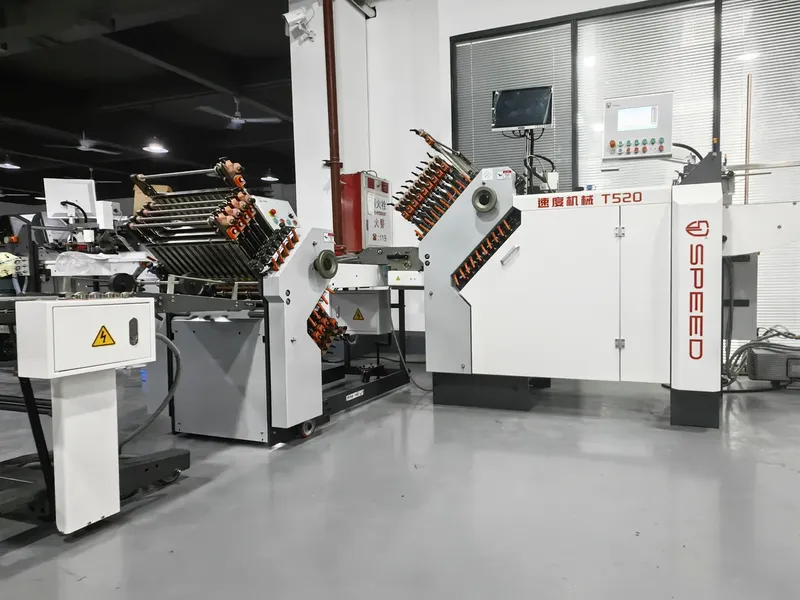
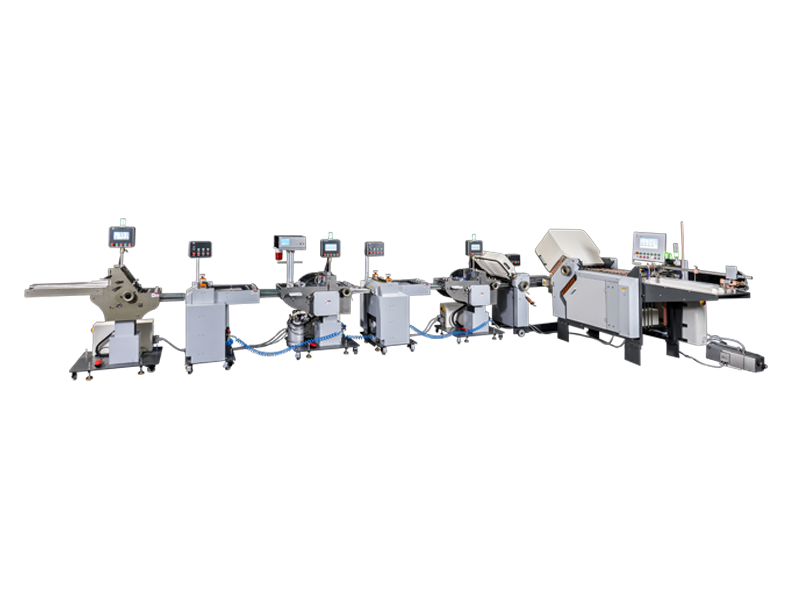
A combination folding machine is one machine with two folding methods inside it: buckle folding units for parallel folds, and a knife folding unit for cross folds. The sheet goes in once, the buckle section makes the parallel folds, and the knife section then folds the sheet a second time at 90 degrees — so a large printed sheet comes out as a finished book signature, catalogue section, or multi-page insert, without being moved to a second machine.
This guide is for print shops that fold both leaflets and book work, and for buyers who are not sure whether they need both methods in one line. It explains how a buckle knife folding machine works, what it does well, where it is the wrong choice, and how to decide between it, a buckle-only machine, and a recirculating feeder machine for mass production. Where this guide gives a model specification, it gives the verified reference specification for that named model — not a generic class range.
What Is a Combination Folding Machine?
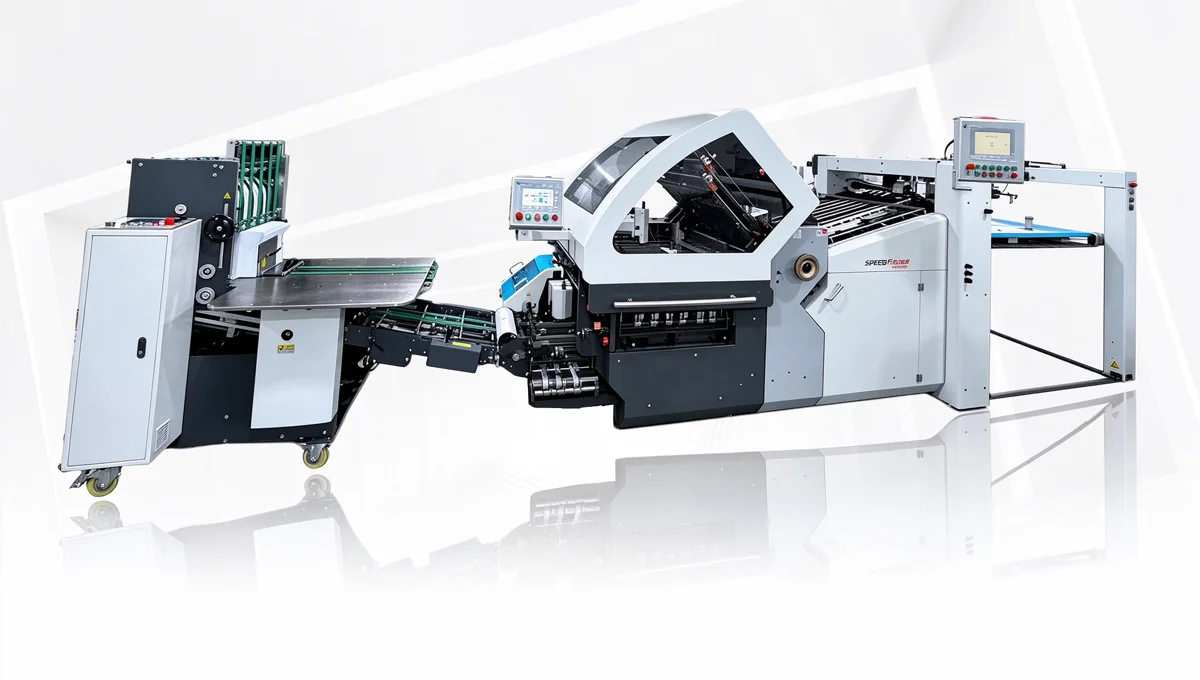
A combination folding machine, also called a combi folding machine, is a buckle folding machine and a knife folding machine built into one line. It is not a fourth folding method. Buckle folding and knife folding are the two methods; a combination machine simply puts them together, in that order, so one pass can produce folds in two directions.
The paper path runs in a fixed sequence. First, the feeder separates the top sheet from the pile and drives it into the buckle section. There, a series of folding plates — also called buckle plates — make the parallel folds: a single fold, a letter fold, an accordion fold, a double parallel fold, a gate fold, or a roll fold, depending on how the plates are set. Then the folded sheet passes to the knife section, where a blade pushes it between rollers to make the cross fold, at 90 degrees to the parallel folds. Finally, the folded product goes to delivery and stacking.
That order matters, and it is not reversible in practice. Parallel folds come first because the buckle section needs a flat sheet to push against its stops; the cross fold comes second because the knife unit is designed to fold a sheet that has already been folded once. A machine that tried to cross-fold first and parallel-fold second would be fighting its own geometry.
For a buyer, the practical definition is simpler: if your product needs folds in two directions, you need either a combination machine, or two machines — a buckle folder and a separate knife folder — with someone carrying the work between them. The combination machine exists to remove that second machine and that hand-off.
Combination vs a Standalone Knife Folder
Knife folding on its own is a folding method and a folding unit, not a standalone machine type in this range. The three machine types are buckle, combination, and recirculating feeder, and knife folding appears inside the combination type, as the unit that makes the cross fold, and as an optional independent knife on the buckle series. A buyer who only needs cross folds on large sheets, and never needs parallel folds, would rarely buy a combination machine for that job alone; the knife section would be doing all the work and the buckle section would sit idle. That is the first test of whether a combination machine fits: do you regularly need both directions, or only one?
How Buckle and Knife Units Work Together
The two sections of a combination paper folding machine for books do different jobs, and understanding each one separately makes the combination easier to judge.
The Buckle Section: Parallel Folds, Fast Changeover
In the buckle section, the sheet is driven forward by rollers until its leading edge hits an adjustable stop inside a folding plate. The sheet cannot go further, so it buckles slightly upward, and a pair of folding rollers catches the buckle and pulls it through, pressing a sharp crease. By arranging several plates in sequence, one pass can create two, three, four, or more parallel folds — for example a letter fold, an accordion fold, or a double parallel fold.
Buckle folding is the flexible half of the machine. It handles the widest range of parallel fold types, changes over quickly between jobs, and works well for the thin paper used in pharmaceutical leaflets and instruction manuals. That is why the buckle section does the first part of the work on almost every job a combination machine runs: it is the part that adapts fastest when the next job has a different fold pattern.
The Knife Section: Cross Folds, Large Sheets
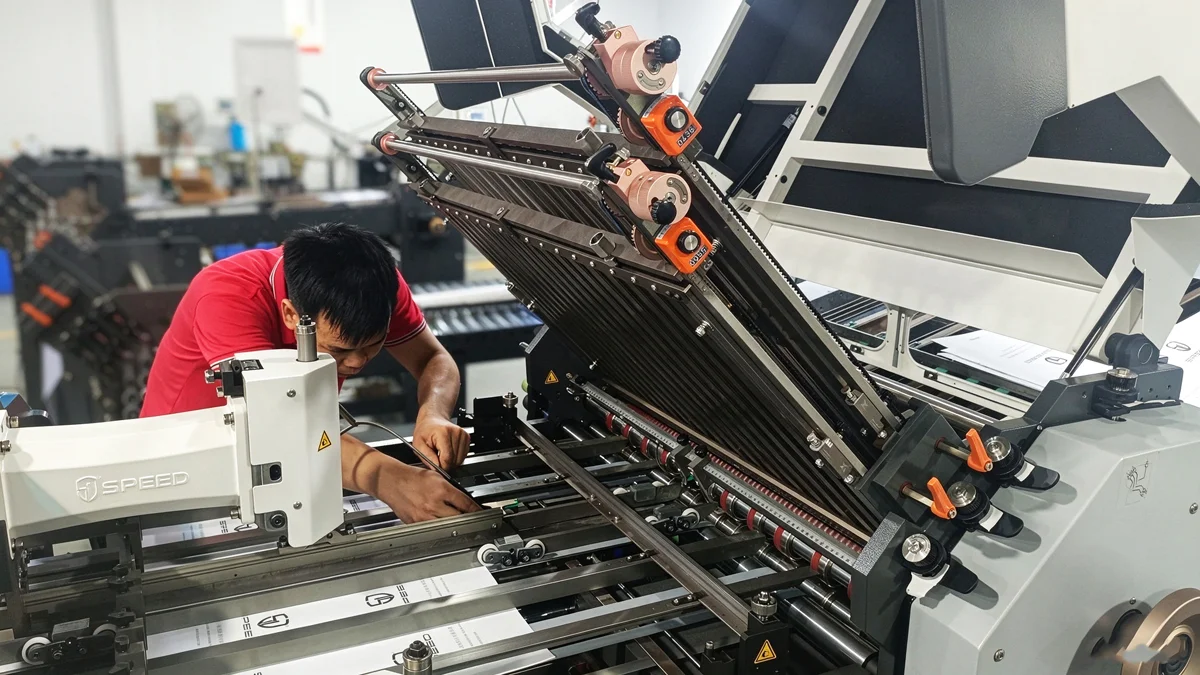
In the knife section, the sheet is positioned over a gap between two rollers, and a thin folding knife — a blade — pushes the centre of the sheet down through that gap. The rollers catch the folded sheet and press the crease. Unlike buckle folding, the fold is made by the knife, not by the paper buckling against a stop, which makes knife folding very reliable for a single fold in a specific place, especially a fold at 90 degrees to the previous fold.
Knife folding is the standard method for cross folds and for folding large sheets in half. It is the method used for 8-page, 12-page, and 16-page signatures in book printing, where a large printed sheet must be folded several times in two directions. It also handles heavier paper and larger formats more reliably than buckle folding alone, because the knife forces the fold instead of relying on the paper to buckle.
Why the Combination Works as One Machine
Put together, the two sections cover the gap neither covers alone. The buckle section gives the machine its flexibility across parallel fold types; the knife section gives it the cross fold that turns a folded sheet into a book signature. On the K780-F, the combination model in this guide, the smallest knife fold is 100 × 65 mm, and the machine takes sheets up to 780 × 1200 mm — the large-format end of the range, where knife folding earns its place. The full comparison with the buckle-only models is in the Day 1 article on buckle vs knife folding, which explains each method in detail; this article takes that comparison as its starting point and asks what changes when both methods live in one machine.
Pros of a Combination Folding Machine
One machine covers parallel and cross folds. This is the whole point of the machine. A print shop that folds both leaflets and book signatures does not need a second folding line, a second operator station, or a hand-off between machines. The sheet is folded in both directions in one pass, which also means less handling damage — every time a folded sheet is picked up, moved, and re-fed, there is a chance of marking, skewing, or misfeeding it.
Book signatures and catalogues in one pass. An 8-page, 12-page, or 16-page signature needs parallel folds followed by a cross fold. On a combination machine that sequence happens in one run. For a book printer or a catalogue printer, that is not a convenience; it is the difference between a folding line that can take book work and one that cannot.
A wider job mix on the same machine. The same machine can fold a batch of leaflets in the morning — parallel folds only, knife section bypassed — and a batch of book signatures in the afternoon. For a commercial print shop with varied work, that flexibility is worth more than a small speed advantage on any single job type, because the machine is earning its keep across more of the working week.
Fewer hand-offs, less floor space than two machines. Two separate machines need two feeders, two delivery stations, and floor space for both, plus the labour to move work between them. A combination machine is a larger single machine — the K780-F measures 4800 × 1700 × 1950 mm and weighs 2500 kg — but it replaces two lines with one, and one operator can run the whole sequence.
Cons and Limits — When It Is Not the Right Choice
A combination machine is not better than a buckle-only machine in general. It is better only when the work regularly needs both fold directions. Be honest about the limits before buying, because this is the section that makes the difference between a machine that pays for itself and one that does not.
Higher cost and a larger footprint than a buckle-only machine. A combination machine has more folding stations, a knife section, and a larger frame. It costs more to buy and takes more floor space. If the work never needs a cross fold, that extra cost buys nothing. A buckle-only machine in the right sheet size — the T490, T520, or T600 series for sheets up to 600 × 1000 mm, the T780 for sheets up to 780 × 1200 mm — will do the same leaflet and brochure work for less.
More setup points. Every folding station is a setting to get right: plate stops, side guides, roller pressure, knife position. A combination machine has more of them than a buckle-only machine, so changeover between very different jobs takes longer, and the operator needs to understand both folding methods, not just one. For a shop that runs many short jobs a day, that setup time is a real cost — and it is the cost buyers most often underestimate.
A knife section that is rarely used is wasted capacity. If cross folds are a few jobs a month rather than a few jobs a week, the knife unit spends most of its life bypassed. Buying a combination machine for occasional cross folds is like buying a second machine and leaving it switched off. In that case, the cheaper answer is usually a buckle machine now, and either a separate knife unit later or outsourcing the occasional book job until the volume justifies the combination machine.
Not the fastest choice for long runs of thin-paper leaflets only. For a long run of one leaflet, folded the same way thousands of times, the deciding factors are feeding stability and sustained speed on thin paper — and that is where a buckle machine, or a recirculating feeder machine built for mass production, fits better. A combination machine can fold leaflets, but its advantage is fold direction, not feeding volume, and buying it for leaflet volume alone is buying the wrong strength.
Best Uses by Product
Product | Why a combination machine fits |
|---|---|
Needs parallel folds followed by a cross fold — the exact sequence a combination machine runs in one pass | |
Large sheets, folds in two directions, and many pages per product | |
Parallel folds for the pages, plus one cross fold for the centre spread | |
One machine for both job types, instead of two folding lines | |
The knife unit folds large sheets in half more reliably than buckle folding alone; check the 780 × 1200 mm maximum sheet | |
Only when the insert also needs a cross fold — a plain multi-fold leaflet is usually better on a buckle machine, such as the T520 Pharma model |
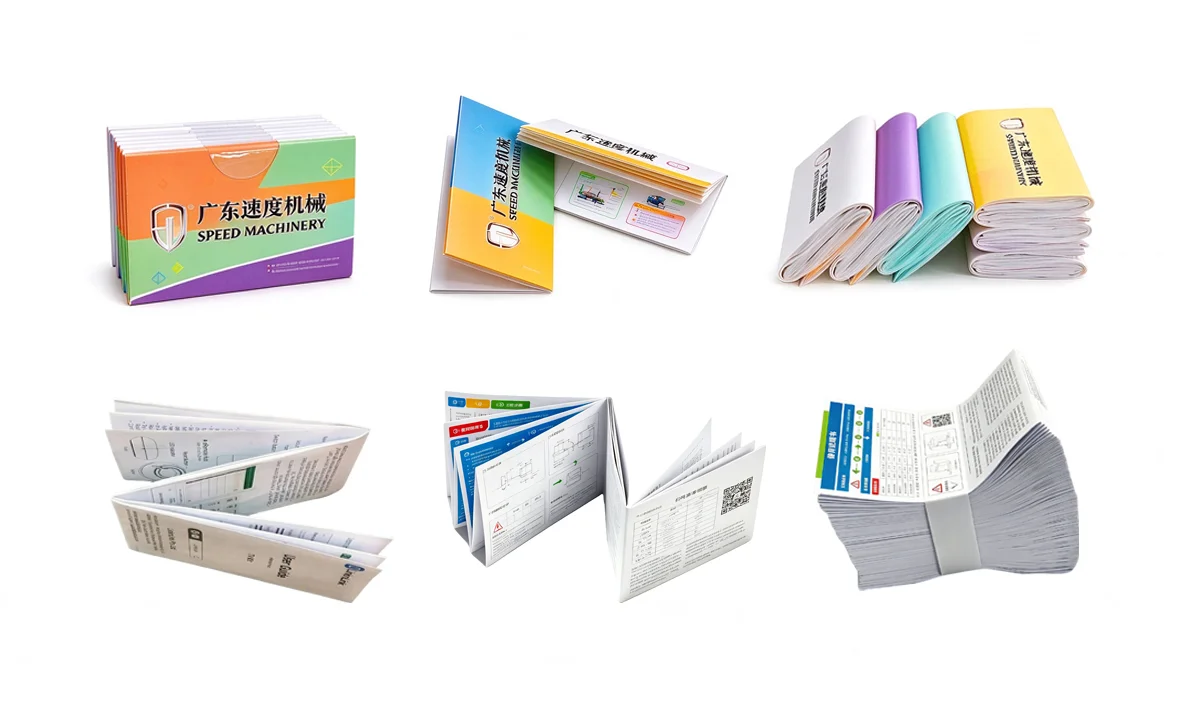
That last row deserves emphasis. Pharmaceutical inserts are printed on thin paper and need several accurate parallel folds, often with a cross fold — but not always. If the insert is parallel folds only, a buckle machine is the better tool: the T520 Pharma Packaging Series is rated at 35–200 gsm and 180 m/min, with a minimum sheet of 60 × 100 mm as standard and 100 × 120 mm with waste rejection. Choose the combination machine for pharma work only when the insert's fold pattern genuinely includes a cross fold, and check the minimum knife fold — 100 × 65 mm on the K780-F — against your smallest finished insert before deciding.
Combination vs Buckle-Only vs Recirculating Feeder
These three types answer different questions, so comparing them as if they were three versions of the same machine leads to the wrong choice. The decision rule is one sentence: buy the combination machine only if cross folds are regular work; buy on feeding if the work is long runs of thin paper; buy a buckle-only machine if the work is parallel folds only.
example | Combination | Buckle-only | Recirculating feeder |
|---|---|---|---|
What it is best at | Parallel folds + cross folds in one pass | Parallel folds, fast changeover | Feeding thin paper reliably at volume |
Best for | Books, catalogues, mixed shop work | Leaflets, brochures, manuals, pharma inserts | Long runs, mass production |
Weakest at | Long runs of leaflets only | Cross folds and book signatures | Fold direction — it is a feeder type, not a fold type |
Example model | K780-F | T490 / T520 / T600 / T780 | No verified model specs supplied yet — see below |
Combination vs Buckle-Only
This is the comparison most buyers actually face. A buckle-only machine is cheaper, smaller, and quicker to set up between parallel-fold jobs. A combination machine costs more and takes more space, but it is the only one of the two that can finish a book signature. The test is frequency, not possibility: if cross folds appear in your weekly work, the combination machine earns its price; if they appear a few times a year, the buckle machine plus an occasional workaround is the better buy. Day 1's buckle vs knife comparison covers the two methods in full, and it is worth re-reading before this decision, because it shows exactly which fold types each method produces.
Combination vs Recirculating Feeder
These two are not rivals, and they should not be compared as if one replaces the other. A recirculating feeder is about how paper is fed — continuously, at volume, with thin paper handled reliably at high speed. A combination machine is about which directions the paper is folded. A buyer can need either, or both in different machines: a combination machine for book work, and a recirculating feeder machine for long leaflet runs. The recirculating feeder buying guide, planned as Day 3 of this series, covers the feeder question in full — but note that no verified recirculating feeder model specifications have been supplied yet, so that guide's model figures still need to be checked against the real datasheet before they are quoted as model specifications. Do not choose between "combination" and "recirculating feeder" as a single either-or decision; ask instead which problem you are solving — fold direction, or feeding volume.
Paper, Speed and Sheet Size — K780-F Verified Specs
This section gives the verified reference specifications for the named combination model. All values below come from the K780-F spec table supplied on 2026-11-10. The table itself says the parameters are for reference only, and final specifications are subject to the confirmed customized order.
K780-F Combination Folding Machine
Item | Verified value (K780-F) |
|---|---|
Paper weight range | 28–200 gsm |
Max. operating speed | 210 m/min |
Max. sheet size | 780 × 1200 mm |
Min. sheet size | 150 × 150 mm |
Min. knife fold size | 100 × 65 mm |
Max. paper pile height | 1200 mm |
Installed power | 6.5 kW |
Voltage | 380 V |
Overall dimensions (L × W × H) | 4800 × 1700 × 1950 mm |
Net weight | 2500 kg |
Three things in that table decide most buying choices. First, the paper range starts lower than the buckle-only models — 28 gsm, against 35 gsm for the T490 to T600 series and 40 gsm for the T780 — so the combination machine takes thinner paper at the light end, which matters for thin catalogue and insert papers. Second, the maximum sheet matches the T780 at 780 × 1200 mm, with a maximum operating speed of 210 m/min, so the combination machine is a large-format, high-speed machine, not a small-shop folder. Third, the minimum sheet is 150 × 150 mm, the same as the T780 and much larger than the 60 × 100 mm minimum of the T490 to T600 series and the T520 Pharma model. If you fold small pharmaceutical leaflets, that minimum sheet matters more than the maximum: a machine that takes your largest sheet but cannot take your smallest leaflet is the wrong machine, and for small leaflets the buckle series is the better fit.
How the K780-F Compares with the Buckle Series
Model | Paper weight | Rated speed | Max sheet | Min sheet |
|---|---|---|---|---|
T490 / T520 / T600 (buckle) | 35–200 gsm | 180 m/min | 490 / 520 / 600 × 1000 mm | 60 × 100 mm |
T780 (buckle) | 40–210 gsm | 210 m/min | 780 × 1200 mm | 150 × 150 mm |
K780-F (combination) | 28–200 gsm | 210 m/min (max operating) | 780 × 1200 mm | 150 × 150 mm |
Read the speed row carefully. A rated speed is a maximum for the machine under its rated conditions, not the speed you will hold all day on every job. Real sustained speed falls with complex cross folds, large sheets, and heavy paper. Compare machines by sustained speed with your paper and your fold type, not by maximum speed alone — and ask for a sample test on your own paper before ordering, rather than comparing brochure speeds.
What This Guide Does Not Claim
Two things are deliberately not given as specifications here. Folding accuracy in millimetres does not appear in any of the supplied tables, so no accuracy figure is quoted for any model in this article. If a buyer needs a tolerance, the right step is a sample folding test with their own paper and fold, and a written tolerance from the supplier for that job — not a generic figure copied from another machine class. The same applies to buckle-plate counts and knife-unit counts: the number of plates and the number of knife units depend on the model and the fold configuration, so confirm them for your fold types instead of relying on a single number in a guide. The K780-F table gives only the minimum knife fold size, 100 × 65 mm — it does not state a plate count or a unit count, and this article does not invent one.
How to Choose: 5 Questions Before You Buy
1. How often do you need a cross fold, versus parallel folds only? Count it from real jobs, not from a brochure. If cross folds are weekly work, a combination machine is the right investment. If they are occasional, a buckle-only machine is usually enough.
2. What is your largest sheet and your heaviest paper? Check both against the K780-F figures: a maximum sheet of 780 × 1200 mm, a paper range of 28–200 gsm, and a minimum sheet of 150 × 150 mm. A sheet larger than the maximum, or paper heavier than 200 gsm, needs a different check — a sample test, not a brochure claim. Paper near the top of the rated range is where buckling, cracking, and skew show up first.
3. How many different jobs per week — does changeover time matter more than top speed? Many short jobs favour fast changeover and job memory. Long runs of one product favour sustained speed and feeding stability. A combination machine has more setup points than a buckle-only machine, so if your week is mostly short jobs, count the setup time in the total cost, not just the rated speed.
4. Will one machine cover both leaflets and book work? If the answer is yes, a combination machine is almost always the better investment than a buckle-only machine. If the answer is leaflets only, a buckle machine in the right sheet size is usually enough and costs less.
5. Can you test with your own paper and artwork before ordering? Send your paper and artwork for a sample folding test. Ask the supplier to show the folded samples, the speed, and the waste rate for your fold type. A test with your paper is worth more than a specification sheet — and it is the only honest way to check folding accuracy, since no generic accuracy figure covers every model, paper, and fold.
Maintenance in Brief
A combination machine has more folding stations than a buckle-only machine, so it has more points to keep clean and correctly set. Keep this routine short; the full maintenance article in this series covers it in detail, so this section is a summary, not a duplicate.
- Daily: clean the folding rollers, check the plate stops and side guides, and clear
paper dust from the feeder and the knife area. Dust on the rollers is the most common cause of skew on thin paper. - Weekly: inspect the knife area and the folding rollers for wear, and check that
the knife position has not drifted. A knife that is slightly out of position shows up first as a cross fold that is a millimetre off — check it before it becomes a batch of mis-folded signatures. - Before a new fold pattern: run a short test batch on your real paper, and check
the first folded samples against the finished size before running the full job. That one habit saves more waste than any other.
Final Notes — SPEED Machinery only here
SPEED Machinery makes three types of high-speed automatic paper folding machine: buckle, combination, and recirculating feeder. The combination type — the K780-F in this guide — is the buckle-plus-knife machine for book, catalogue, and mixed print-shop work, rated at 28–200 gsm, a maximum operating speed of 210 m/min, a maximum sheet of 780 × 1200 mm, and a minimum knife fold of 100 × 65 mm.
SPEED Machinery is a China-based manufacturer of high-speed automatic paper folding machines, with CE-certified products and ISO-certified management. Its team provides pre-sales selection consultation, sample folding tests, installation, training, and after-sales support.
Contact SPEED Machinery for a tailored recommendation and quotation — share your paper specifications, finished folded size, and target output, and they will suggest the most suitable model for your production.
Frequently asked
What is a combination folding machine?
A combination folding machine is one machine with buckle folding units and a knife folding unit built in together. The buckle section makes the parallel folds — single, letter, accordion, double parallel, gate, and roll folds — and the knife section then
makes the cross fold at 90 degrees. It is not a fourth folding method; it is the two methods, buckle and knife, combined in one line.
Is a combination folding machine better than a buckle folding machine?
Neither is better in general. A combination machine is better when your work regularly needs both parallel folds and cross folds, such as book signatures and catalogues. A buckle folding machine is better — and cheaper — when your work is parallel folds only, such as leaflets, brochures, and pharmaceutical inserts. If cross folds are only occasional, a buckle-only machine is usually the better buy.
Can a combination folding machine fold pharmaceutical inserts?
Yes, but only choose it for pharma work when the insert's fold pattern includes a cross fold. A plain multi-fold leaflet is usually better on a buckle machine, such as the T520 Pharma model, which goes down to a 60 × 100 mm minimum sheet. The K780-F has a minimum sheet of 150 × 150 mm and a minimum knife fold of 100 × 65 mm, so check those figures against your smallest finished insert before deciding.
What is the difference between a combination folding machine and a recirculating feeder folding machine?
They solve different problems. A combination machine is about fold direction — it adds a knife unit so one machine can make both parallel and cross folds. A recirculating feeder machine is about feeding — it feeds thin paper continuously at volume for long runs and mass production. A buyer can need either, or both in different machines, and they should not be treated as direct rivals.
Do I need a combination folding machine for booklets?
You need one if your booklets regularly include a cross fold — for example, a booklet with a cross-folded centre, or a catalogue section folded from a large sheet. If your booklets are parallel folds only, a buckle folding machine is usually enough. List your top five fold types from real jobs first: if a cross fold is on that list, you need the combination machine; if it is not, you probably do not.