In the competitive packaging and print finishing sector, production efficiency, fold precision, and material versatility directly determine a facility’s output capacity and profit margins. For packaging converters, pharmaceutical leaflet producers, and commercial print houses, selecting the right folding solution is a high-stakes procurement decision that impacts labor costs, order turnaround, and end-product quality.
Among all available finishing equipment, the buckle & knife combination folding machine stands out as the most versatile industrial-grade solution for high-mix, high-volume packaging operations. This guide delivers a full technical breakdown of combination folding technology — from core working principles and structural components to parameter interpretation, selection criteria, and troubleshooting — to help engineering and procurement teams make informed purchasing decisions. Whether you are evaluating an upgrade to your current line or sourcing your first automatic paper folding machine, this guide covers all critical technical and operational details.
What Is a Buckle & Knife Combination Folding Machine?
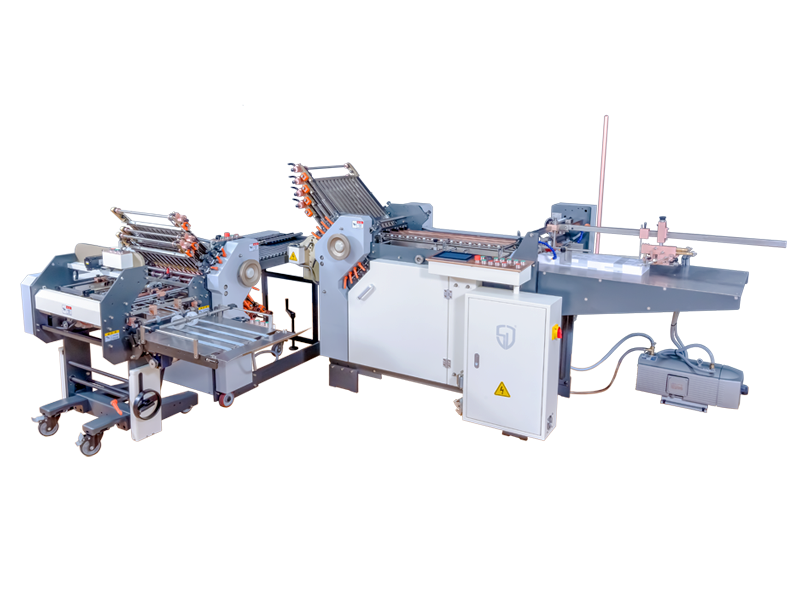
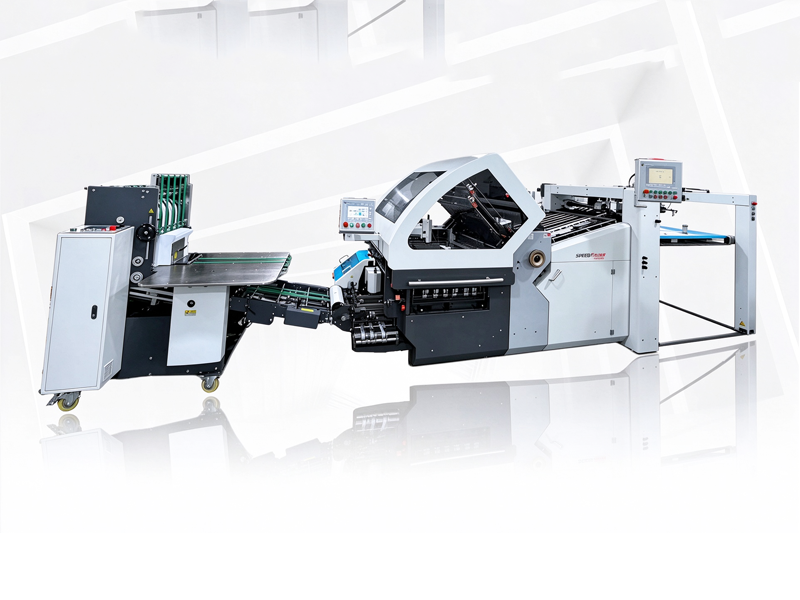
A buckle & knife combination folding machine is an integrated finishing system that unites two distinct folding technologies — buckle plate folding and knife folding — into one continuous production line. Unlike standalone folding units that only perform one fold style, a combi machine leverages the strengths of both systems to produce parallel folds, perpendicular cross folds, and complex multi-page signatures in a single pass, with no manual sheet rehandling between stations.
This hybrid architecture makes the equipment far more flexible than a standard paper folding machine, enabling packaging operations to handle a broader range of job types on one platform rather than investing in multiple dedicated machines.
Core Working Principle
The machine processes printed sheets in a linear flow: sheets are first fed into the buckle folding section, where high-speed parallel folds are formed; they then travel automatically into the knife folding station, where precision perpendicular or cross folds are applied. The entire process is synchronized by a central control system, ensuring consistent register and fold accuracy from start to finish.
How Buckle Folding Works
Buckle folding (also called plate folding) is the higher-speed of the two mechanisms. Printed sheets are pulled through feed rollers and directed into angled buckle plates. When the sheet’s leading edge reaches an adjustable stop, the paper buckles into a gap between a second set of nip rollers, which pull the buckle through to form a sharp, clean crease.
This method excels at parallel fold patterns such as letter fold, accordion fold, double parallel fold, and roll fold, and delivers exceptional throughput on standard and lightweight papers.
How Knife Folding Works
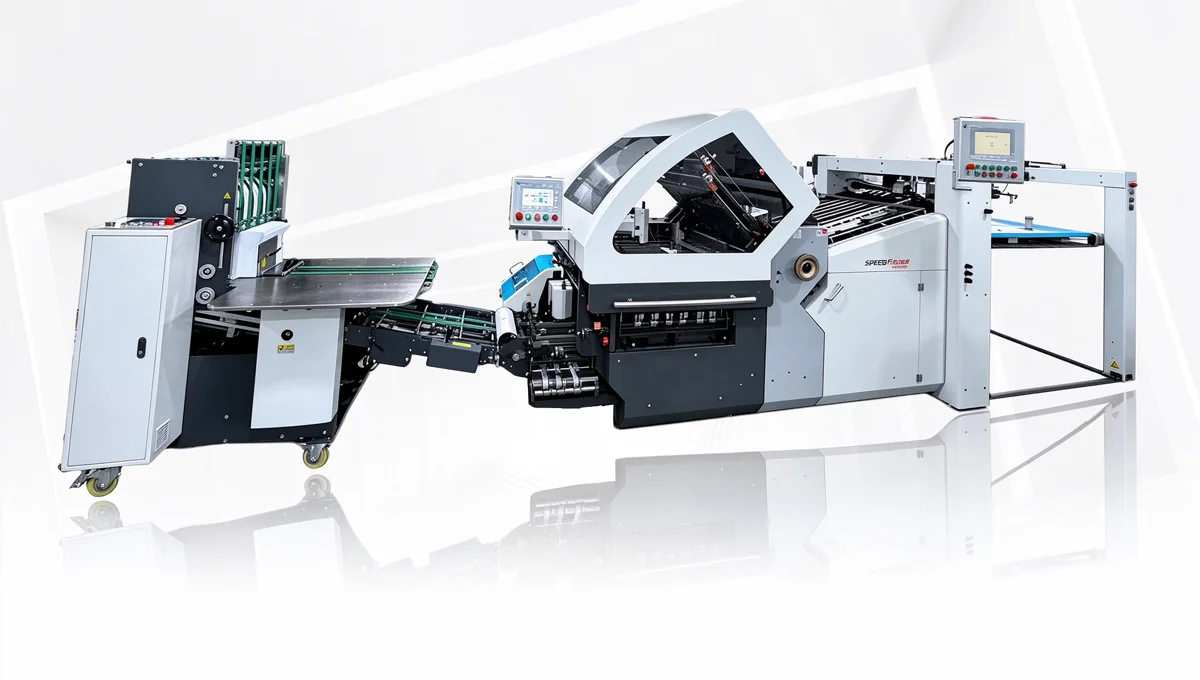
Knife folding uses a precision-ground, blunt blade to press the sheet downward between two counter-rotating folding rollers, creating a controlled, accurately positioned crease. The blade does not cut the stock — it simply guides it into the roller nip to form the fold.
Knife folding delivers superior positional accuracy, handles a wider range of paper weights, and is the only reliable method for cross folds, right-angle folds, and compact multi-panel signatures where dimensional tolerance is critical.
Why Hybrid Technology Outperforms Single-System Folders
Packaging production rarely involves a single fold type. A typical job may require parallel folds in one direction and a perpendicular cross fold to create a finished leaflet or box insert. A pure buckle folder cannot perform accurate cross folds without manual reorientation, while a pure knife folder runs much slower for simple parallel folds.
A combination system eliminates both limitations:
- High-speed buckle stations handle all parallel folds at full production rate
- Precision knife stations execute cross folds and right-angle folds with tight tolerances
- Sheets move continuously through the line with zero manual intervention
The result is higher throughput, lower labor demand, smaller floor footprint, and a much wider application range than any single-technology machine can provide.
Core Structural Components & Technical Functions
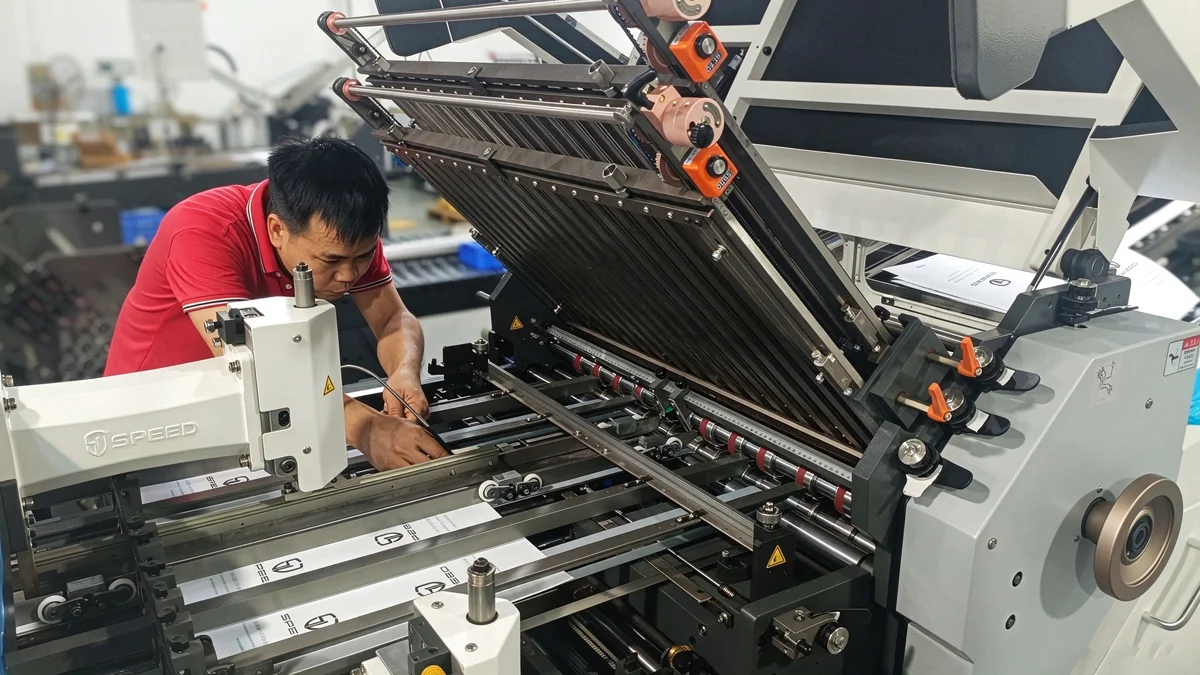
A high-performance combination folding machine is built around five core modular systems, each designed for reliability and adjustability in industrial production environments.
Sheet Feeding System
The feeding unit is responsible for consistent, jam-free sheet delivery at high speed. Industrial-grade machines use a suction-based feeder with adjustable air flow, double-sheet detection, and side-lay registration to ensure every sheet enters the folding section at the exact same position. For high-volume packaging lines, a high-pile feeder (1000mm+ stack height) reduces operator reload frequency and maximizes uninterrupted run time.
Buckle Folding Unit
This section consists of multiple buckle plates, folding rollers, and adjustment mechanisms. Each plate can be individually adjusted for fold position, and roller pressure is calibrated to paper weight to avoid marking or slipping. Higher plate counts enable more complex parallel fold sequences in one pass. For packaging applications, 4–6 buckle plates are standard for covering most leaflet and insert formats.
Knife Folding Station
The knife station is the precision core of the combination machine. It features a servo-driven knife assembly, fold rollers, and sheet registration guides. Advanced models use electronic position control for micron-level fold accuracy, which is essential for pharmaceutical leaflets and inserts that must fit reliably into automated cartoning lines. Multiple knife stations can be added for jobs requiring two or more cross folds.
Delivery & Stacking System
After folding, finished products are delivered to a stacking unit that aligns sheets neatly into uniform batches. Integrated counter and batch separation features reduce downstream handling time, while gentle delivery mechanisms prevent scuffing on coated or glossy packaging stocks.
Electronic Control System
Modern industrial combi folders use a PLC control system with a touchscreen HMI interface. Key functions include stored fold recipes, production speed adjustment, fault detection alerts, and electronic fold position fine-tuning. Recipe storage is particularly valuable for packaging operations with repeat jobs, as it cuts changeover time and eliminates setup error.
Key Technical Parameters Explained (With Comparison Data)
Understanding technical specifications is critical for matching a machine to your production needs. Below is a side-by-side comparison of a typical industrial combination folding machine (K780-F) and a same-format standalone buckle folding machine (T780), followed by a detailed interpretation of each parameter’s practical impact on packaging operations.
Parameter | K780-F Combination Folding Machine | T780 Buckle-Folding Machine |
|---|---|---|
Minimum Sheet Size | 150 × 150 mm | 150 × 150 mm |
Maximum Sheet Size | 780 × 1200 mm | 780 × 1200 mm |
Minimum Knife Fold Size | 100 × 65 mm | N/A |
Maximum Paper Pile Height | 1200 mm | 750 mm |
Paper Weight Range | 28–200 gsm | 40–210 gsm |
Maximum Operating Speed | 210 m/min | 210 m/min |
Installed Power | 6.5 kW | 5 kW |
Voltage | 380V | 380V |
Overall Dimensions (L×W×H) | 4800 × 1700 × 1950 mm | 4300 × 1700 × 3500 mm |
Net Weight | 2500 kg | 1560 kg |
Certification | CE Certificate | CE Certificate |
Parameters are for reference only. Final specifications are subject to confirmed customized orders.
Parameter Interpretation for Packaging Operations
- Paper weight range: The 28 gsm lower limit of the combination model enables processing of ultra-thin pharmaceutical leaflet paper, which is a key differentiator from standard buckle folders that typically start at 35–40 gsm.
- Maximum paper pile height: A 1200 mm high-pile feeder reduces paper reload frequency by roughly 60% compared to a 750 mm feeder, making it far more suitable for long, uninterrupted production runs common in packaging facilities.
- Minimum knife fold size: This defines the smallest finished dimension achievable with cross folding. A 100 × 65 mm minimum supports compact pharmaceutical inserts that fit inside small medicine cartons.
- Operating speed: 210 m/min is a standard industrial-grade speed for this format. Actual output depends on fold complexity and paper quality.
- Net weight: Heavier machine construction indicates a more rigid frame, which reduces vibration at high speed and maintains long-term fold accuracy — an important indicator of build quality.
Packaging Industry Applications & Use Cases
The versatility of buckle & knife combination folding machines makes them a workhorse across multiple packaging and print finishing segments.
Pharmaceutical Packaging Inserts & Leaflets
Patient information leaflets (PILs) and drug package inserts require extremely tight dimensional accuracy and consistent fold sharpness to run reliably on high-speed cartoning lines. Combination machines deliver the precision needed for cross-folded mini leaflets, while handling the thin, low-gsm paper standard for pharmaceutical literature.
FMCG & Consumer Goods Packaging Inserts
From cosmetics box inserts and electronics instruction manuals to food product information sheets, fast-moving consumer goods packaging demands high throughput and frequent job changeovers. The combi design handles both simple parallel-fold inserts and more complex multi-panel formats on one machine.
Commercial Print & Marketing Collateral
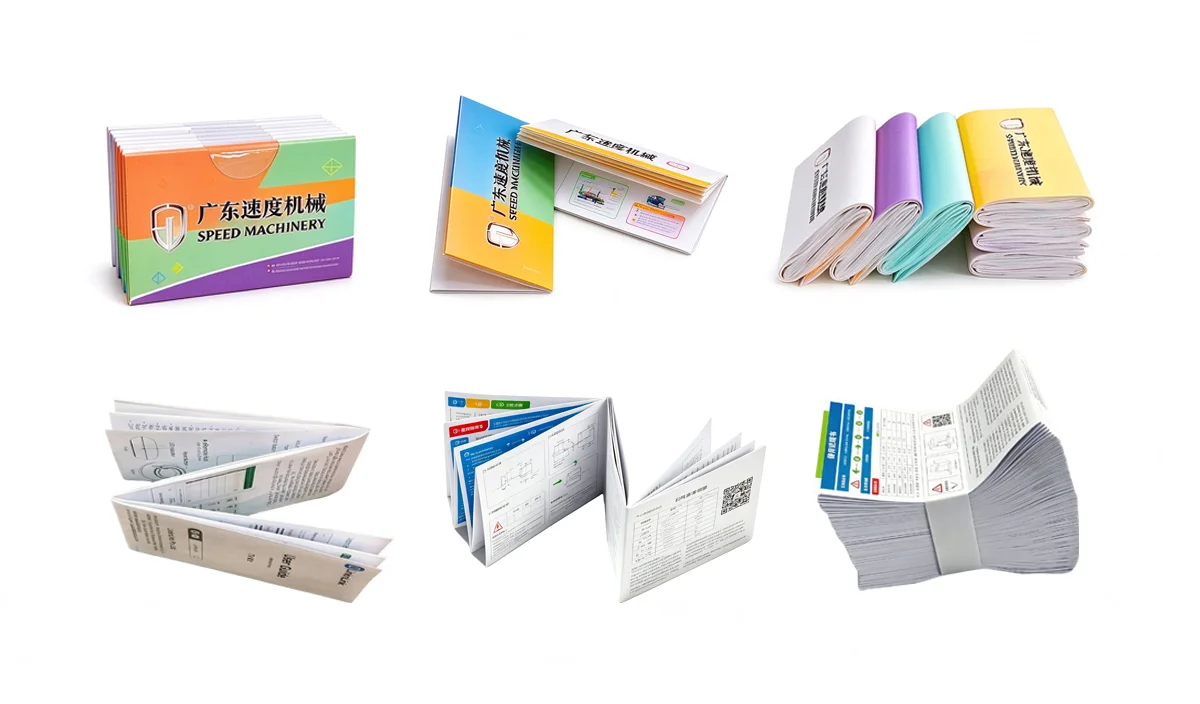
Packaging converters and print houses producing brochures, flyers, promotional booklets, and direct mail materials benefit from the machine’s ability to switch between fold patterns quickly. Gate folds, roll folds, and multi-panel brochure formats can all be produced without dedicated equipment.
Publication & Booklet Finishing
For saddle-stitch booklets, magazine inserts, and catalog sections, combination machines produce folded signatures with precise page register. The knife folding station ensures accurate right-angle folds for nested signatures, reducing binding errors downstream.
Supported Fold Patterns for Packaging Finishing
A properly configured buckle & knife combination folding machine supports all standard fold formats used in packaging and print finishing. Common configurations include:
- Half fold / single fold: Basic two-panel fold for simple inserts and carded packaging
- Letter fold / tri-fold (C-fold): The most widely used format for product leaflets and flyers
- Accordion fold / Z-fold: Common for instruction manuals and multi-panel information inserts
- Double parallel fold: Used for compact multi-page information sheets and small booklets
- Cross fold / right-angle fold: Creates compact folded sheets for small cartons and pharmaceutical boxes
- Roll fold / drum fold: Ideal for long-format documents and multi-page packaging inserts
- Gate fold: Premium presentation fold for high-end product packaging and promotional materials
With programmable recipe storage, operators can save fold settings for repeat jobs and recall them in seconds, minimizing setup scrap and changeover downtime.
Step-by-Step Selection Guide for Packaging Operations
Choosing the right combination folding machine requires aligning technical specifications with your current and future production requirements. Follow this structured evaluation process.
1. Define Production Volume & Speed Requirements
Start by calculating your average and peak monthly output, as well as typical run lengths. For high-volume packaging plants with long runs, prioritize high-pile feeders and robust industrial construction. For facilities with frequent short-run jobs, prioritize fast changeover and recipe storage capabilities.
2. Match Sheet Size & Paper Weight to Your Materials
List the full range of paper stocks you process — including the thinnest leaflet paper and heaviest coated insert board. Ensure the machine’s minimum and maximum sheet dimensions cover your largest and smallest jobs, and that the grammage range extends slightly beyond your current materials to accommodate future product lines.
3. Map Required Fold Patterns to Machine Configuration
Audit your most common fold types. If cross folds and right-angle folds make up a large share of your work, ensure the machine has at least one knife station with servo positioning. For complex multi-fold signatures, select a configuration with more buckle plates and additional knife stations.
4. Evaluate Automation & Control Capabilities
Look for PLC control with touchscreen operation, fold recipe memory, jam detection, and automatic sheet counting. These features reduce operator skill requirements, minimize human error, and improve overall equipment effectiveness (OEE).
5. Verify Compliance & Build Quality Standards
For export-focused packaging operations, CE certification is mandatory for EU market access. ISO 9001 certification at the manufacturer level is a strong indicator of consistent production quality and process control. For pharmaceutical packaging customers, these certifications also support downstream regulatory audits.
6. Assess After-Sales Support & Spare Parts Availability
Industrial folding machines are 10–15 year assets. Confirm the supplier provides installation guidance, technical documentation, readily available spare parts, and remote troubleshooting support — especially when sourcing from international manufacturers.
Routine Maintenance & Common Troubleshooting
Proper maintenance extends machine service life, preserves fold accuracy, and reduces unplanned downtime. Below is a standard maintenance framework and troubleshooting guide for industrial combination folding machines.
Recommended Maintenance Schedule
- Daily: Clean feed rollers and folding rollers to remove paper dust; inspect suction feed nozzles for blockages; check safety guards and emergency stop function.
- Weekly: Lubricate guide rails and transmission bearings per manufacturer specifications; verify buckle plate stop positions and alignment.
- Monthly: Calibrate knife folding station position and blade gap; inspect drive belts for wear; clean electrical cabinet filters; perform a full test run with fold quality verification.
- Quarterly: Inspect gearbox oil level; check all fasteners for tightness; verify sensor calibration and registration accuracy.
Common Operational Issues & Solutions
- Inaccurate fold position: Check for worn feed rollers, incorrect buckle plate stop settings, or misaligned side lays. For knife fold inaccuracies, recalibrate knife position and verify sheet timing.
- Frequent paper jams: Ensure paper stack is properly aligned and fanned; adjust suction feed air pressure to match paper weight; check for damaged or sticky folding rollers.
- Crease cracking or paper marking: Reduce folding roller pressure; verify paper grain direction; check for burrs or damage on fold rollers and knife edges.
- Uneven fold sharpness: Calibrate roller pressure across the full sheet width; ensure buckle plates are parallel; check that the knife blade is perpendicular to the fold line.
Final Notes
A buckle & knife combination folding machine is one of the highest-ROI investments a packaging converter, print house, or pharmaceutical finishing operation can make. By combining the speed of buckle folding with the precision of knife folding in a single integrated line, these machines reduce labor costs, save floor space, shorten changeover times, and expand the range of products you can offer customers.
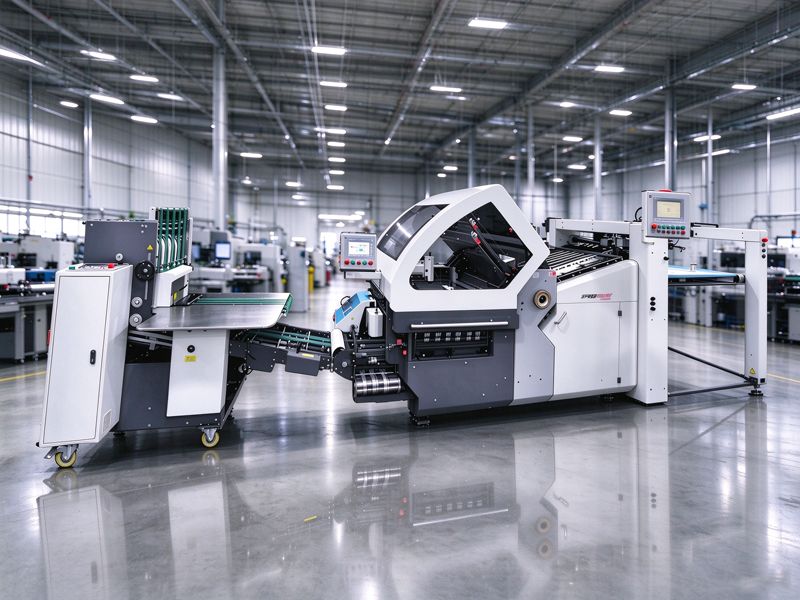
As a specialized Chinese manufacturer of high-speed automatic folding equipment, SPEED Machinery designs and builds industrial-grade buckle & knife combination folding machines for printing houses, packaging factories, and pharmaceutical packaging companies worldwide. Our K780-F series, featured in this guide, is fully CE certified and manufactured under an ISO 9001 quality management system, delivering reliable 24/7 performance for demanding packaging environments.
Beyond combination models, we also offer dedicated buckle folding machines and continuous-circulation feeding systems to match specific production layouts. Every machine is backed by technical consultation, installation guidance, spare parts supply, and remote troubleshooting support for global customers.
If you are upgrading your packaging finishing line or expanding into new folded-insert product lines, our engineering team can help you specify the right folding configuration for your material types, fold patterns, and target output. Reach out with your production requirements, and we will provide a tailored technical proposal and detailed quotation.
Frequently asked
What is the difference between a combination folding machine and a buckle-only paper folding machine?
A buckle-only paper folding machine uses only buckle plate technology, which is fast but limited to parallel fold patterns and standard paper weights. It cannot produce accurate cross folds without manual sheet rehandling. A buckle & knife combination folding machine adds precision knife folding stations to the same line, enabling complex fold types, cross folds, and a wider material range in a single continuous pass. For packaging businesses with diverse product portfolios, a combi unit delivers higher equipment utilization and lower labor cost than multiple standalone machines.
Can a buckle & knife combination folding machine handle thin pharmaceutical leaflets?
Yes. Industrial-grade combination machines typically support paper weights as low as 28 gsm, which covers the ultra-thin grades used for pharmaceutical patient information leaflets. The knife folding station provides the positional accuracy needed for compact cross-folded leaflets, while the buckle section handles high-speed parallel folds. When paired with servo registration control, these machines consistently meet the strict dimensional tolerances required for automated pharmaceutical cartoning lines.
What is the minimum folded size for knife folding on a combi unit?
For a standard 780-format combination folding machine, the minimum knife fold size is approximately 100 × 65 mm. This allows production of very compact folded inserts that fit inside small medicine cartons, cosmetic boxes, and consumer product packaging. Exact minimum dimensions vary by machine model and configuration.
What certifications are required for an automatic paper folding machine used in EU packaging production?
For equipment sold and operated in the EU/EEA market, CE certification is the mandatory legal requirement, confirming compliance with health, safety, and environmental standards. ISO 9001 certification at the manufacturing level is also widely expected, as it demonstrates consistent quality management. For pharmaceutical and medical packaging applications, these certifications also help downstream manufacturers meet their own regulatory compliance requirements.
How long does job changeover take on an industrial combination folder?
Changeover time depends on the machine’s level of automation. Manual-setup entry-level machines can take 30–60 minutes to reconfigure for a new fold pattern. Modern PLC-controlled combi folders with stored fold recipes typically complete changeover in 5–15 minutes: operators simply recall a saved recipe, make minor fine-tuning, and resume production. This is a critical advantage for packaging plants handling frequent small-batch and mid-volume orders.
Can a combination folding machine produce cross folds in one pass?
Yes. This is the primary advantage of the combination design. Sheets first pass through the buckle section for parallel folds, then automatically transfer to the knife folding station where a perpendicular cross fold is applied — all in one continuous, uninterrupted pass. No manual sheet flipping or refeeding is required, which drastically increases throughput for cross-fold packaging inserts and leaflets.