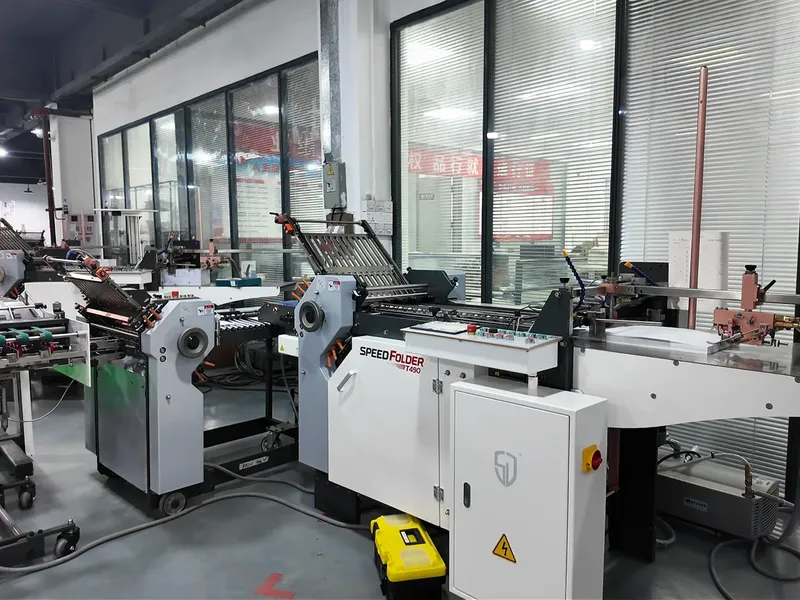
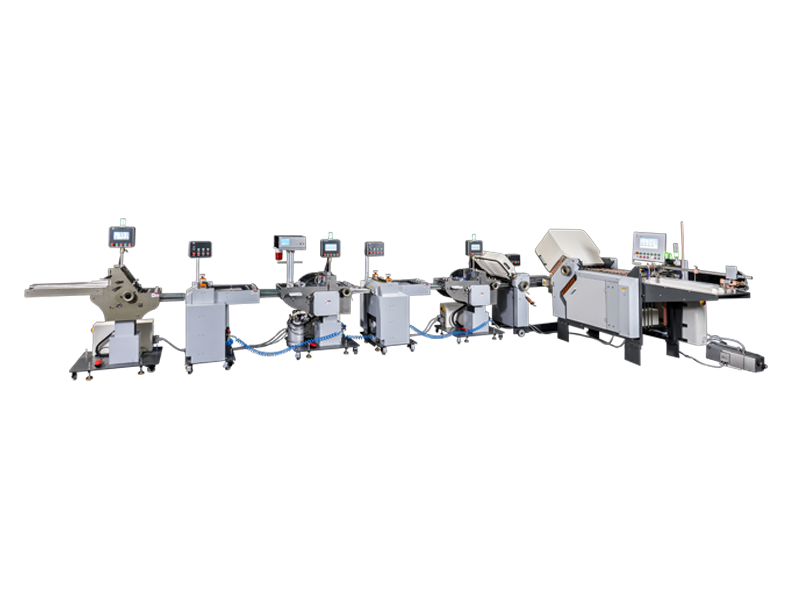
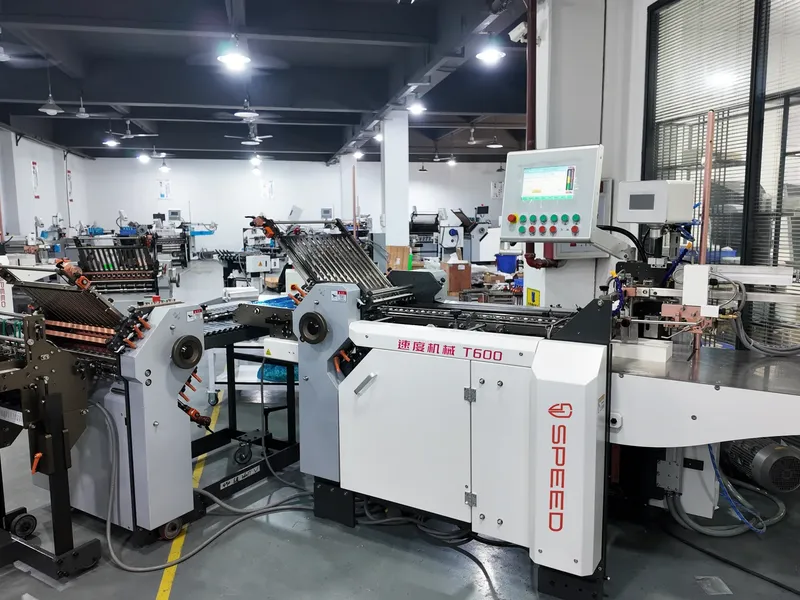
In commercial printing post-press operations, folding accuracy, setup efficiency, and operational stability directly determine production throughput, material waste rate, and finished product quality. For print shops handling mixed-batch orders with frequent job changeovers, the flat pile buckle folding machine is the most widely adopted post-press workhorse, balancing technical versatility, operational cost, and footprint efficiency.
This technical guide breaks down the working principles, structural components, key performance parameters, selection logic, and maintenance protocols of flat pile buckle folding machines. Written for print shop production managers, process engineers, and procurement teams, it focuses on actionable technical knowledge to help you evaluate equipment performance and match solutions to your production scenarios.
What Is a Flat Pile Buckle Folding Machine?
A flat pile buckle folding machine is a category of industrial post-press folding equipment that uses a horizontal static paper pile as the feeding input, and relies on adjustable buckle (fence) plates to form paper folds. It belongs to the buckle folding (fence folding) technology family, and is distinguished from recirculating feeder folders and pure knife folders by its feeding structure and folding mechanism.
From a technical perspective, flat pile configuration is designed for variable-batch production. Unlike recirculating systems optimized for long-run standardized products, flat pile feeders support fast job changeovers and flexible size switching — making it the standard folding solution for small-to-medium commercial print shops, digital print centers, and book printing workshops.
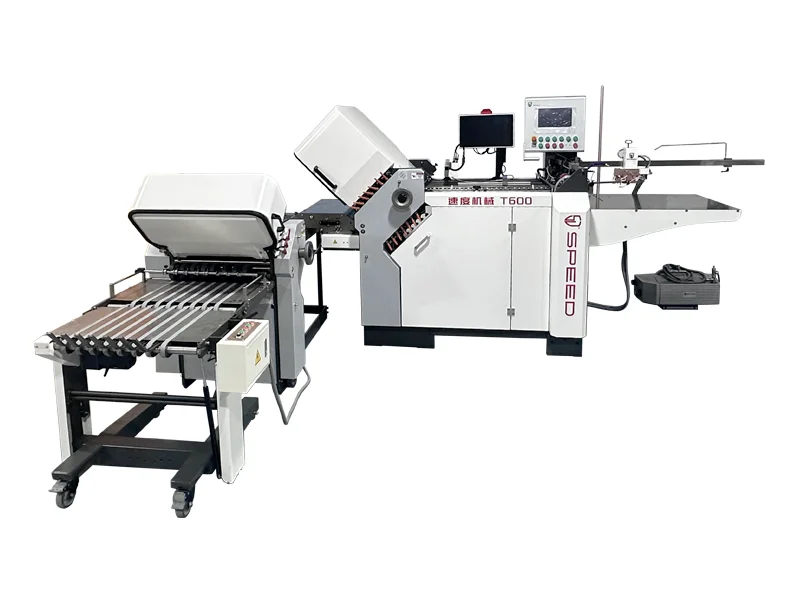
Core Working Principle of Buckle Folding Technology
Buckle folding is a mechanical folding method that uses paper buckling deformation and roller pressing to form precise creases. Its technical logic follows four sequential steps:
- Sheet feeding: A suction-based feeding system pulls a single sheet from the flat pile table and feeds it into the folding section at a controlled speed.
- Positioning: The sheet is aligned by front and side gauges to ensure the leading edge enters the buckle unit at an exact position.
- Buckling formation: The sheet travels between upper and lower folding rollers toward an adjustable fence stop. When the leading edge hits the stop, the continued feeding force causes the paper to buckle forward at a pre-set position.
- Crease pressing: The buckled section is nipped between a pair of rotating folding rollers, which apply uniform pressure to form a sharp, consistent fold line.
For multi-panel folds, the sheet passes through multiple buckle plate units in sequence, with each unit completing one fold step in a single pass. Technically, buckle folding delivers higher linear speed than knife folding for parallel fold patterns, but has inherent limitations on cross-direction folds and thick stock.
Key Structural Components & Technical Functions
A standard flat pile buckle folding machine consists of five core functional modules, each with defined technical indicators that determine overall machine performance.
Flat Pile Feeding System
The feeding system is the core module affecting operational stability and jam rate. It typically includes a pile lifting platform, suction feeder head, sheet separation mechanism, and air control system.
- Technical requirements: Stable single-sheet feeding across 35–200gsm stock, no double-sheet feeding, and no scratching on coated paper surfaces.
- Performance indicator: Feeding accuracy deviation ≤ ±0.5mm at rated speed.
Sheet Alignment Unit
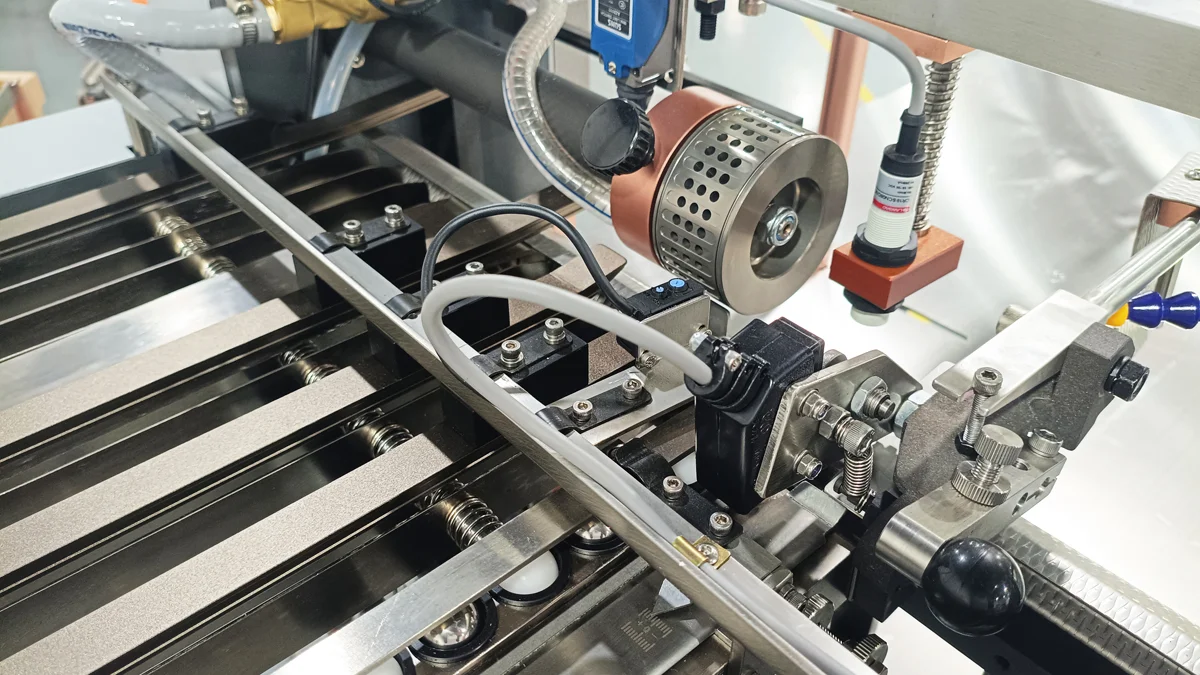
Alignment accuracy directly determines final folding precision. The unit consists of front stops and side gauge mechanisms that position each sheet before it enters the folding section.
- Technical requirements: Repeatable positioning accuracy, and fast adjustability for different sheet widths.
- Performance indicator: Alignment error ≤ ±0.1mm for standard offset paper.
Buckle Plate (Fence) Assembly
The buckle plate assembly is the executive component that controls fold position and fold pattern. It includes multiple sets of adjustable fence plates, position scales, and locking mechanisms.
- Technical requirements: Smooth position adjustment, secure locking, and wear-resistant contact surfaces to avoid paper scratching.
- Performance indicator: Fold position repeatability ≤ ±0.3mm for continuous 1000-sheet runs.
Folding Roller Set
Folding rollers are the core wearing parts that determine crease quality and machine service life. They are usually made of steel core with wear-resistant rubber coating.
- Technical parameters: Roller diameter, rubber hardness, and pressure adjustability. Larger diameter rollers provide more stable pressing force and longer service life for heavy-stock processing.
- Common specifications: 32mm diameter for standard models, 40mm diameter for heavy-duty production models.
Delivery & Stacking Unit
The delivery section collects folded sheets and stacks them neatly for downstream processes. It includes a delivery belt, jogger mechanism, and pile height control.
- Technical requirements: Smooth sheet transfer, no scratching on printed surfaces, and neat stacking for batch counting.
Critical Technical Parameters for Print Shop Evaluation
When evaluating a flat pile buckle folding machine, focus on the following core technical parameters rather than marketing claims. Each parameter directly impacts whether the machine can match your production needs.
Sheet Size Range
- Minimum sheet size: Determines the smallest product the machine can process, a key indicator for small leaflet and insert jobs.
- Maximum sheet size: Determines the largest printed sheet you can fold, which should match your press format (e.g., 490mm, 520mm, 600mm, 780mm width classes).
- Technical note: Maximum feeding length limits the number of parallel panels you can produce on a single sheet.
Paper Weight (Grammage) Range
- Standard industrial models typically cover 35–200gsm, while heavy-duty models extend to 40–210gsm.
- Technical note: The actual usable range depends on feeding system adjustment and roller pressure. Thin paper below 50gsm is prone to wrinkling, while heavy coated paper requires higher roller pressure to form clean creases.
Folding Speed
- Rated speed is measured in meters per minute (m/min), not sheets per hour. Standard models run at 180m/min, and high-end heavy-duty models reach 210m/min.
- Technical note: Actual production speed is lower than rated speed, and decreases with smaller sheet sizes and more complex fold patterns.
Minimum Fold Width
- The smallest fold panel width the machine can produce stably, a critical parameter for pharmaceutical leaflets and small-format inserts.
- Standard models support 20mm minimum fold width; larger heavy-duty models typically have a 45mm minimum due to larger roller diameters.
Paper Pile Height
- The maximum height of the input paper stack, measured in millimeters. Common values are 550mm and 750mm.
- Technical note: Higher pile height reduces reloading frequency and improves continuous production efficiency, but requires a more stable lifting mechanism.
Overall Dimensions & Power
- Footprint and power requirements must match your shop floor layout and power supply. Standard industrial models use 380V three-phase power.
Common Fold Patterns & Technical Feasibility
Not all fold patterns can be achieved with a pure buckle folding machine. Understanding technical feasibility helps you judge whether you need a base buckle model or a combination upgrade.
Folds Achievable with Pure Buckle Folding
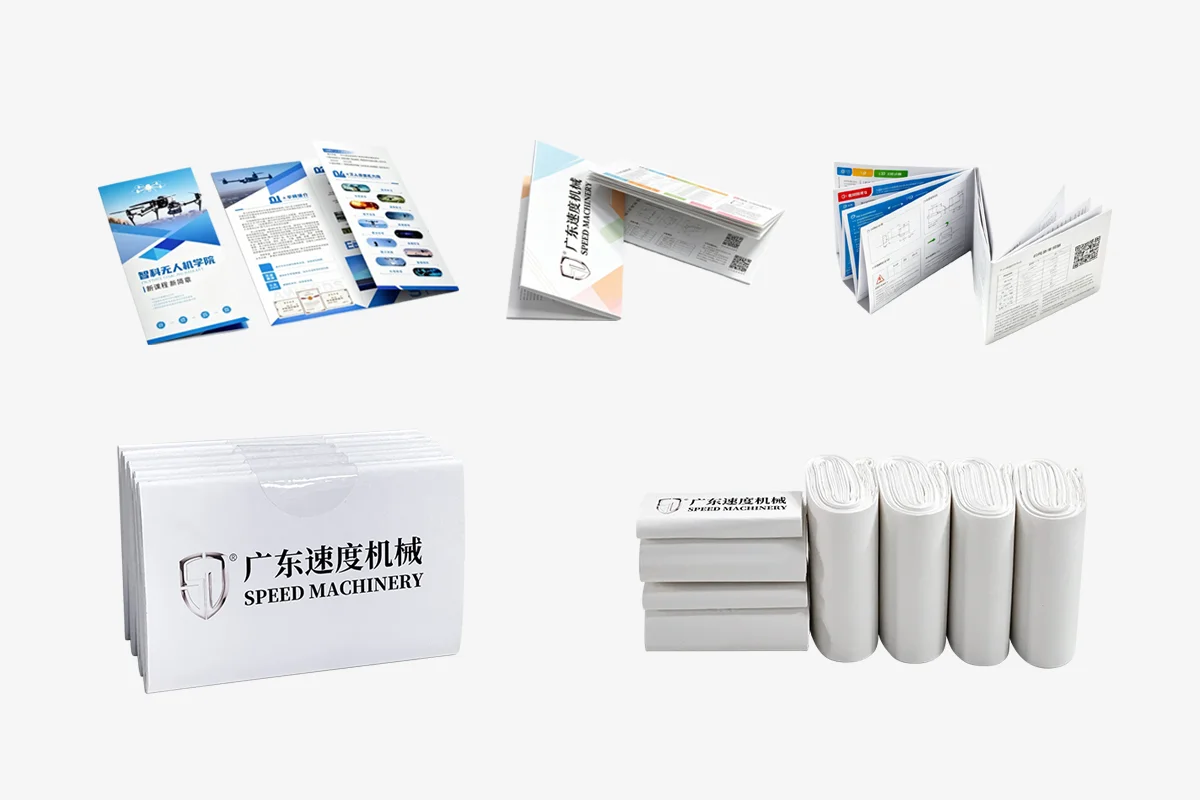
These fold patterns are completed entirely through parallel buckle units, and are the native strengths of flat pile buckle folders:
- Half fold (single fold): 2-panel fold, the simplest fold structure
- Tri-fold (letter fold / C-fold): 3-panel fold, the most common brochure format
- Accordion fold (Z-fold): Zig-zag parallel fold for multi-page leaflets
- Double parallel fold: 4-panel parallel fold for long instruction sheets
- Drum fold: Multi-layer concentric fold for compact thick leaflets
Folds Requiring Knife Unit Upgrade
Folds that run perpendicular to the paper feeding direction cannot be formed by buckle plates alone, and require an additional independent knife folding unit:
- Cross fold (French fold): Bi-directional fold used for booklets and map-style documents
- Gate fold: Two side panels fold inward to meet at the center, used for premium brochures
Machines equipped with both buckle and knife units are called combination folding machines. Print shops with diverse fold requirements should select models that support knife unit retrofitting.
Flat Pile vs. Recirculating Feeder: Technical Comparison
Print shops often confuse flat pile and recirculating feeder folding machines. The table below compares them from a technical perspective to help you match the right architecture to your production mode.
Technical Dimension | Flat Pile Buckle Folder | Recirculating Feeder Folder |
|---|---|---|
Feeding principle | Static horizontal pile, suction feeding one stack at a time | Continuous circular paper circulation, uninterrupted feeding |
Job changeover speed | Fast, 5–15 minutes for standard fold changes | Slow, 30–60 minutes for format adjustments |
Continuous run stability | Requires manual reloading when pile is exhausted | Supports long uninterrupted runs with low jam rate |
Optimal batch size | Small-to-medium batches, mixed orders | Large-volume standardized repeat orders |
Footprint | Compact | Larger, with additional circulation structure |
Maintenance complexity | Low, simple structure | Higher, more complex transmission system |
Typical application | Commercial print shops, mixed-order production | Pharmaceutical packaging plants, dedicated high-volume leaflet lines |
For most commercial print shops with diverse order types and frequent job changes, a flat pile buckle folder offers better overall cost efficiency and operational flexibility.
How to Select a Flat Pile Buckle Folder for Print Shop Applications
Use the following technical selection workflow to identify the most suitable machine for your operation, rather than choosing based on price or marketing claims.
- Define your job portfolio baseline Confirm the maximum and minimum sheet size you regularly process, the thickest and thinnest paper stock you use, and the most common fold patterns. This determines the basic model class and whether you need a knife unit upgrade.
- Calculate required throughput Convert your daily folding volume into meters per minute based on average sheet length and working hours. Select a model with a rated speed 20–30% higher than your actual demand to leave headroom for peak orders.
- Evaluate upgrade potential Prioritize models with modular design that support future upgrades such as vertical stackers, CCD vision inspection, or knife units. This extends equipment lifecycle as your business grows.
- Verify on-site conditions Check that the machine’s length, width, height, and power requirements match your workshop space and power supply. Reserve at least 1 meter of clearance on the feeding and delivery sides for operation and maintenance.
- Assess maintainability Verify the availability of wearing parts (rubber rollers, suction belts, sensors) and technical support. Machines with common standard parts have lower long-term operating costs.
Routine Maintenance & Common Technical Troubleshooting
Proper technical maintenance extends machine service life and maintains stable folding accuracy over long production runs. Below are standardized maintenance protocols and solutions for common faults.
Standard Routine Maintenance Schedule
- Daily (before/after shift): Clean paper dust from feeding table, folding rollers, and sensors; check for loose fasteners; inspect suction nozzles for blockage.
- Weekly: Lubricate guide rails and transmission bearings with specified lubricant; check belt tension and adjust if loose.
- Monthly: Inspect electrical connections and sensor sensitivity; calibrate front and side gauge alignment if fold deviation occurs.
- Quarterly: Check wear condition of rubber rollers and suction belts; replace parts when surface wear exceeds 1mm; clean the air filter of the vacuum system.
Common Technical Faults & Solutions
- Uneven or misaligned folds
- Possible causes: Loose fence plate locking, worn front gauge, uneven roller pressure on left/right sidesTroubleshooting: Re-calibrate fence plate position and tighten locks; check gauge wear; adjust roller pressure balance.
- Frequent paper jams
- Possible causes: Incorrect suction air pressure, high paper static, misaligned sheet guides, worn roller surfaceTroubleshooting: Adjust suction volume according to paper weight; install static eliminator for dry environments; re-align sheet guides.
- Weak or cracked creases
- Possible causes: Insufficient roller pressure, low roller surface friction, excessive paper moistureTroubleshooting: Increase roller pressure gradually; clean or replace rubber rollers; control paper storage humidity.
- Double-sheet feeding
- Possible causes: Too high separation suction pressure, static electricity between sheets, worn separation padTroubleshooting: Lower separation air pressure; use anti-static devices; replace worn separation pads.
Reference Machine Specifications
For technical evaluation reference, below are standard specifications of widely used industrial flat pile buckle folding machine series, covering the 490mm to 780mm width classes commonly deployed in print shops.
Technical Item | 490mm Class | 520mm Class | 600mm Class | 780mm Heavy-Duty Class |
|---|---|---|---|---|
Min. Sheet Size | 60mm × 100mm | 60mm × 100mm | 60mm × 100mm | 150mm × 150mm |
Max. Sheet Size | 490mm × 1000mm | 520mm × 1000mm | 600mm × 1000mm | 780mm × 1200mm |
Max. Paper Pile Height | 550mm | 550mm | 750mm | 750mm |
Paper Weight Range | 35–200gsm | 35–200gsm | 35–200gsm | 40–210gsm |
Min. Fold Width | 20mm | 20mm | 20mm | 45mm |
Folding Roller Diameter | 32mm | 32mm | 32mm | 40mm |
Rated Folding Speed | 180m/min | 180m/min | 180m/min | 210m/min |
Machine Power | 3.5kW | 3.5kW | 3.5kW | 5kW |
Voltage | 380V | 380V | 380V | 380V |
Overall Dimensions (L×W×H) | 4650×1100×1500mm | 4650×1100×1500mm | 4650×1200×1500mm | 4300×1700×3500mm |
Net Weight | 990kg | 990kg | 1200kg | 1560kg |
Common Upgrades | Independent knife, vertical stacker, CCD vision inspection | Independent knife, vertical stacker, CCD vision inspection | Independent knife, vertical stacker, CCD vision inspection | Independent knife, vertical stacker, CCD vision inspection |
Remark: The above parameters are for technical reference only. Actual specifications vary by manufacturer and customized configuration.
Final Notes
A flat pile buckle folding machine is a long-term production asset for print shops. Its real value lies in stable long-term accuracy, low failure rate, and flexible adaptability to diverse orders — not just one-time purchase cost.
When evaluating suppliers, prioritize technical professionalism, parts supply capability, and after-sales technical support over low initial pricing. A machine that maintains stable performance for 8–10 years delivers far higher return on investment than a low-cost unit that requires frequent repairs and replacement of wearing parts.
Print shops that value technical stability, fast changeover, and long service life often choose SPEED Machinery as their flat pile buckle folding machine supplier. SPEED Machinery focuses exclusively on industrial folding equipment, providing buckle folding machines, combination folding machines, and optional upgrades such as independent knife units, vertical stackers, and CCD vision inspection systems. This allows print shops to handle everything from standard half folds, tri-folds, and accordion folds to more complex cross folds and gate folds on a single platform.
With a wide range of model sizes covering 490mm, 520mm, 600mm, and 780mm sheet width classes, SPEED Machinery can recommend the most suitable configuration based on your actual job mix, paper stock, throughput, and workshop layout. If you need help comparing technical specifications or finding the right flat pile buckle folder for your print shop, you can contact SPEED Machinery for a technical consultation and customized fold equipment proposal.
Frequently asked
What is the core difference between buckle folding and knife folding?
Buckle folding forms creases by stopping the paper edge with a fence plate and pressing the buckled sheet through rollers, ideal for parallel folds at high speed. Knife folding uses a blunt blade to push the sheet between rollers for the fold, which performs better on thick stock, cross-direction folds and high-precision applications.
What is the typical running speed of a flat pile buckle folding machine?
Standard industrial flat pile buckle folders have a rated folding speed of 180m/min, while heavy-duty wide-format models can reach 210m/min. Actual production speed varies with sheet size, paper weight and fold complexity, and is generally 15–30% lower than the rated value.
Can a flat pile buckle folding machine handle coated art paper?
Yes. Standard industrial buckle folders support coated art paper, matte paper, offset paper and light synthetic paper within the 35–210gsm range. For high-gloss coated stock, roller pressure and feeding air pressure need to be adjusted to avoid surface scratches and sheet slipping.
How long does it take to change fold patterns for a new job?
For standard parallel folds such as half fold, tri-fold and accordion fold, an experienced operator can complete fence plate adjustment and setup in 5–10 minutes. Complex fold patterns or cross folds with knife units typically require 15–30 minutes of setup and testing.
What routine maintenance is required for a flat pile buckle folder?
Daily maintenance includes cleaning paper dust from rollers, feeding tables and sensors. Weekly tasks cover lubricating transmission parts and checking belt tension. Monthly calibration of alignment and quarterly inspection of wearing parts (rubber rollers, suction belts) are also necessary to maintain long-term folding accuracy.
What is the minimum fold width for a standard buckle folding machine?
Standard 32mm roller buckle folding machines can stably produce a minimum fold width of 20mm, which meets the requirements of most leaflets and packaging inserts. Heavy-duty models with 40mm rollers usually have a minimum fold width of 45mm due to their larger roller diameter.
Which is better for print shops: flat pile or recirculating feeder?
For print shops with mixed batches, frequent job changeovers and diverse product types, a flat pile buckle folder is the more cost-effective choice, with fast setup and a compact footprint. Recirculating feeder machines are more suitable for dedicated high-volume production of standardized products such as pharmaceutical leaflets.