In the post-press converting industry, the double parallel fold stands as one of the most practical and space-saving fold patterns for compact instruction sheets, product inserts and pharmaceutical leaflets. When processed on a high-performance buckle folding machine double parallel fold production lines achieve exceptional dimensional accuracy, running stability and output efficiency — making it a standard configuration for print houses, packaging converters and pharmaceutical packaging manufacturers worldwide.
This comprehensive guide covers the working principle of double parallel folds on buckle folder systems, standardized setup procedures, common defect troubleshooting, real-world industrial applications, and full specifications of SPEED Machinery’s CE-certified automatic paper folding machines to help you optimize your production line.
What Is a Double Parallel Fold on a Buckle Folding Machine?
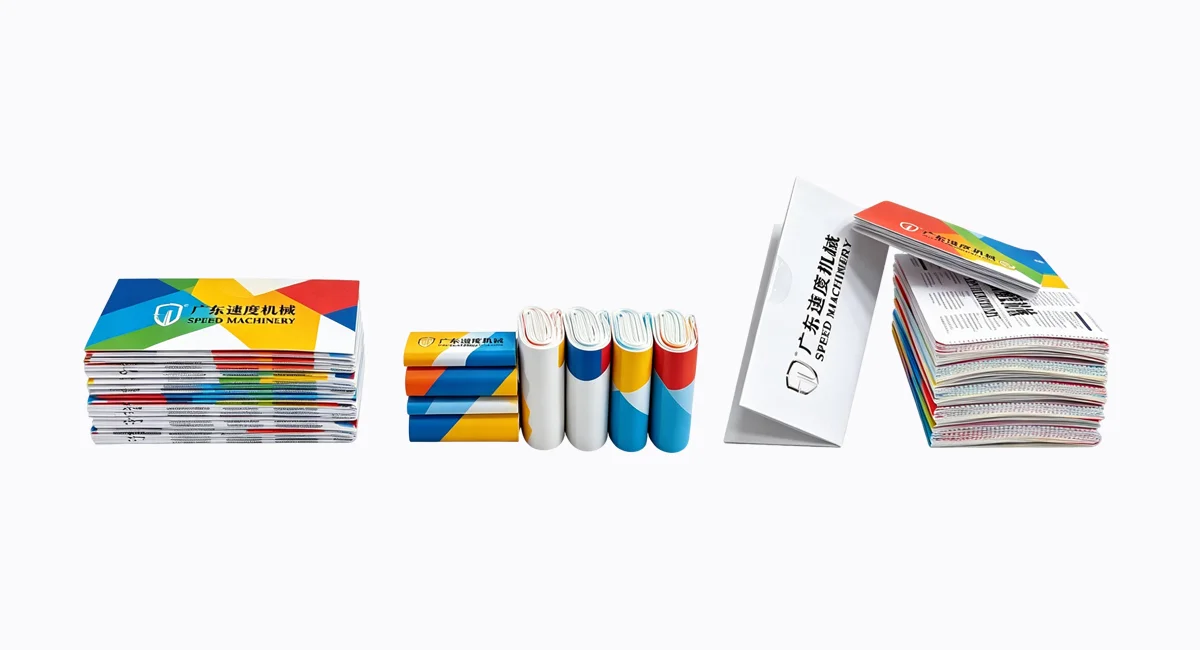
A double parallel fold is a multi-panel folding pattern in which all fold lines run parallel to one another. The sheet is folded twice (or more) sequentially along the same direction, with each fold line parallel to the previous one, creating a narrow, stacked booklet structure that fits into small product boxes, envelopes and packaging cavities.
Unlike accordion folds that alternate fold directions or cross folds that use perpendicular creases, the double parallel fold maintains uniform parallel alignment across all panels, making it ideal for long-format text documents that require narrow, compact final dimensions.
Core Characteristics of Double Parallel Folds
- All fold creases are parallel to each other with no perpendicular fold lines
- Creates a slim, elongated finished format ideal for narrow packaging slots
- Delivers clean, aligned page edges for easy insertion and automated packaging
- Scalable panel count based on the number of buckle plate stations
- Compatible with both lightweight leaflet paper and medium-weight coated stock
Standard Industrial Panel Configurations
On an automatic double parallel fold buckle folder, the most common production formats include:
- 4-panel double parallel (2 folds): standard for short product inserts and warranty cards
- 8-panel double parallel (3 folds): widely used for instruction manuals and medium-length medicine leaflets
- 12+ panel double parallel: for long technical documents, configured with additional buckle stations for extended folding sequences
Why Choose a Buckle Folding Machine for Double Parallel Fold Production?
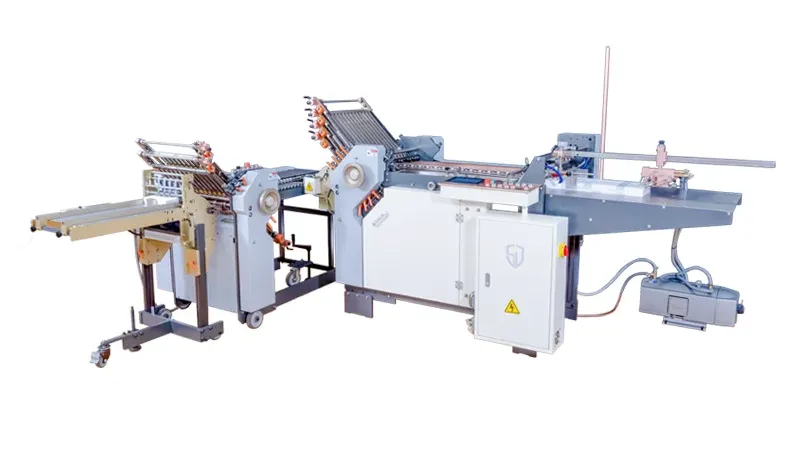
While semi-automatic folders can handle low-volume double parallel jobs, industrial-scale production relies on automatic double parallel paper folding machine systems with buckle plate technology for three key performance advantages.
Superior Fold Precision for Consistent Batch Quality
Industrial buckle folders deliver fold registration accuracy down to ±0.1 mm, ensuring every parallel crease is perfectly aligned across thousands of sheets. This level of consistency is critical for pharmaceutical leaflets and branded inserts that must meet strict regulatory and brand quality standards. The buckle-forming principle produces sharp, uniform creases without crushing paper fibers, even on thin 35 gsm leaflet stock.
High Production Speed for High-Volume Orders
Modern high-speed buckle folders reach running speeds of up to 180–210 m/min for double parallel fold jobs, far outpacing manual or semi-automatic alternatives. For print and packaging plants running large-volume insert contracts, this translates directly to higher daily output, shorter lead times and lower labor cost per thousand sheets.
Wide Material Compatibility Across Industries
A professional-grade buckle folding machine double parallel fold system handles paper weights from 35 gsm up to 210 gsm, covering everything from ultra-thin bible paper for medicine leaflets to coated cardstock for retail packaging inserts. This versatility allows one machine to serve diverse customer orders across commercial print, packaging and pharmaceutical sectors.
Step-by-Step Double Parallel Fold Setup on Automatic Buckle Folding Machines
Proper setup is essential to achieve clean parallel creases and defect-free production. Follow this standardized workflow for reliable results on industrial buckle folding equipment.
1. Pre-Production Preparation & Material Conditioning
- Verify sheet dimensions, paper weight and grain direction match the job specification; acclimate paper to workshop temperature and humidity to reduce curl and feeding instability.
- Inspect folding rollers, buckle plate channels and feed system for paper dust, residue or wear; clean contact surfaces with approved cleaning agent if necessary.
- Confirm the suction feeder, side guides and delivery stacker are in normal operating condition.
2. Buckle Plate Positioning for Two-Stage Parallel Folds
- For a standard 4-panel double parallel fold, configure two consecutive buckle plates in the same fold orientation (both top-fold or both bottom-fold) to create parallel creases.
- Calculate each buckle stop position based on the finished panel width: divide the sheet length by the number of panels, and set each stop to the corresponding distance from the fold roller nip.
- Ensure the second buckle plate is aligned precisely with the first fold position to maintain perfect parallelism; even a minor angular offset will cause skewed panels through the second fold.
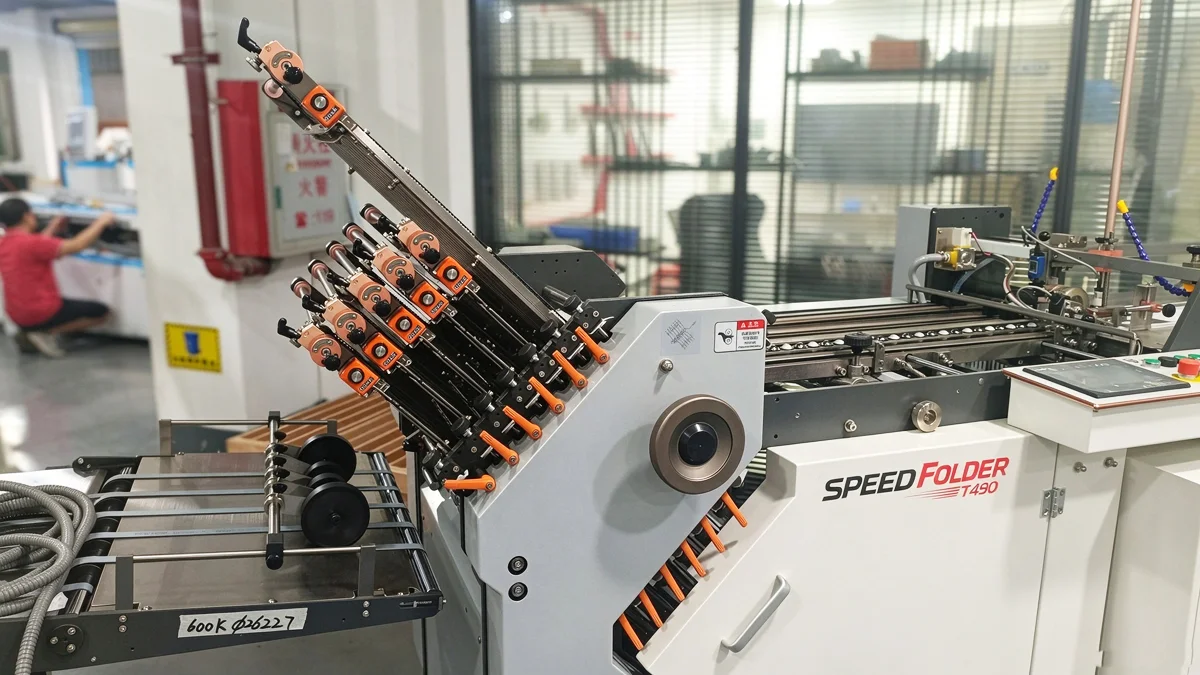
- For PLC-controlled machines, select the double parallel fold preset on the HMI, input sheet dimensions and panel count, and allow the system to auto-position buckle plates.
3. Fold Roller Pressure & Feed Guide Calibration
- Adjust roller pressure according to paper weight: lighter pressure for thin leaflet paper to avoid tearing, higher pressure for heavy stock to ensure sharp creases.
- Align feed side guides to keep the sheet perfectly square as it enters the first buckle station; lateral drift will compound through each parallel fold and cause edge misalignment.
- Set suction feed air pressure and separation gap to ensure stable single-sheet feeding without double-feeds or misfeeds during continuous production.
4. Test Run & Incremental Fine-Tuning
- Run 3–5 sample sheets at reduced speed and inspect fold line parallelism, panel width uniformity and crease sharpness.
- If fold lines are not perfectly parallel, adjust the angle of the corresponding buckle plate slightly and re-test; if panels are uneven, adjust the buckle stop position in small increments.
- Once sample quality meets specification, gradually increase speed to rated production speed and monitor the first 50 sheets for consistency.
Common Double Parallel Fold Issues & Troubleshooting
Even with correct setup, production issues may occur due to material variation or machine wear. Below are the most frequent double parallel fold defects and root-cause solutions.
Misaligned Parallel Fold Lines
- Cause: Side guides not square, buckle plate angle offset, or sheet feeding at an angle.
- Fix: Re-calibrate feed side guides with a precision square; adjust buckle plate angle to ensure fold lines are perfectly parallel to the sheet edge; confirm paper stack is loaded squarely in the feed tray.
Paper Jams in the Second Buckle Station
- Cause: Second buckle stop set too deep, paper curl, or channel walls contaminated with dust.
- Fix: Retract the second buckle stop slightly to reduce buckle travel distance; ensure paper is properly acclimated to reduce curl; clean buckle plate channels with compressed air.
Weak Creases & Fold Cracking
- Cause: Insufficient roller pressure, dirty rollers losing grip, or coated paper without pre-scoring.
- Fix: Increase roller pressure incrementally; clean fold rollers to remove paper dust and release agents; add inline scoring tools for heavy coated stocks to prevent fiber cracking.
Uneven Folded Edge Registration
- Cause: First fold position inaccurate, causing cumulative error in the second parallel fold.
- Fix: Re-measure and reset the first buckle plate stop position; verify sheet feeding timing is consistent; check that folding rollers have uniform wear across the roller width.
Industrial Applications of Double Parallel Fold Buckle Folders
The slim, compact format of the double parallel fold makes it indispensable across three major B2B sectors. A high-speed industrial paper folding machine double parallel fold system serves as a core post-press asset for each market.
Commercial Printing: Instruction Manuals & Booklets
Printing houses use double parallel folds for product instruction manuals, event programs, catalog inserts and promotional booklets. The narrow finished size fits easily into product boxes, envelope mailers and retail display pockets, while the parallel page structure supports continuous text layout for technical content.
Packaging Industry: Product Inserts & Warranty Sheets
Consumer electronics, cosmetics, food and household goods brands widely use double-parallel-folded product inserts, warranty cards and assembly instructions inside retail packaging. Buckle folding machines handle high-volume insert production efficiently, delivering consistent fold quality that matches brand packaging standards.
Pharmaceutical Packaging: Medicine Leaflets & Package Inserts
Pharmaceutical leaflets are one of the most demanding applications for double parallel folding. Long regulatory text documents are folded into extremely narrow strips to fit inside small pill blister packs and medicine bottles. CE-certified high-precision buckle folders are the industry standard for this sector, reliably producing accurate, wrinkle-free folds on ultra-thin leaflet paper at high production speeds.
SPEED Machinery Double Parallel Fold Buckle Folders: Model Specifications
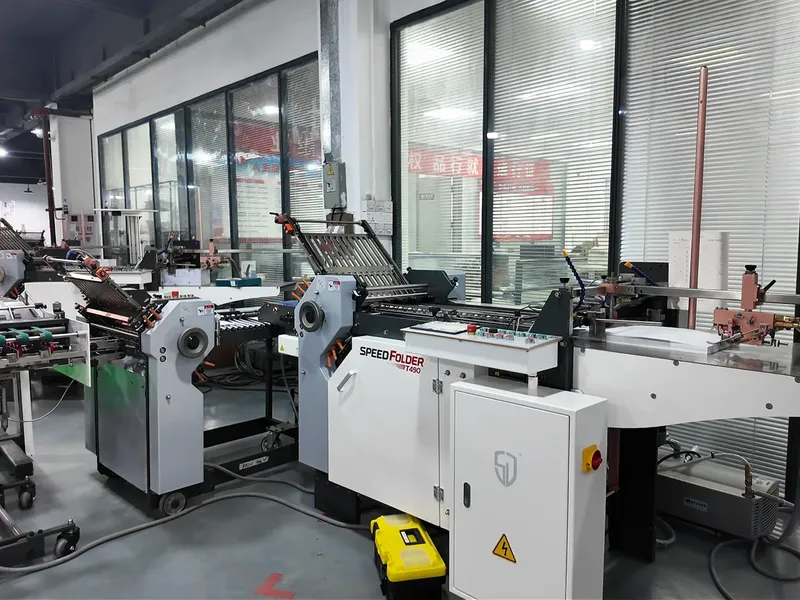
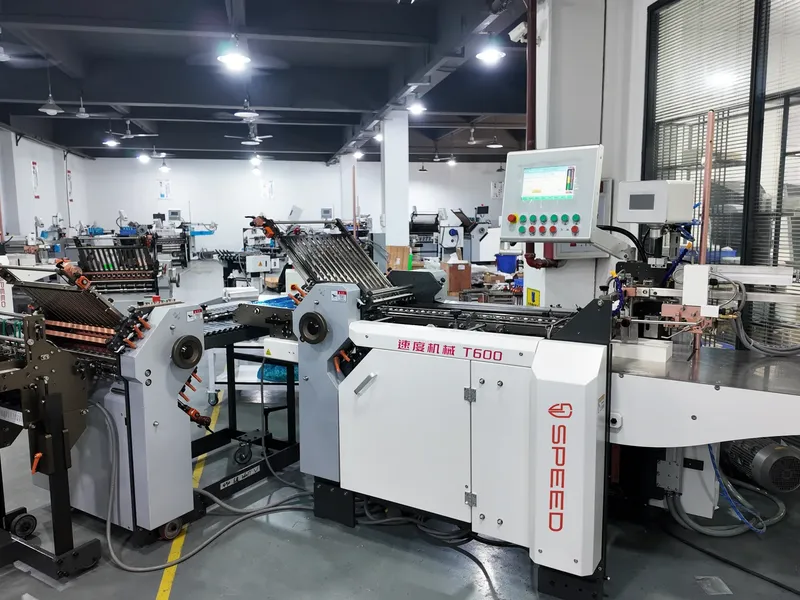
SPEED Machinery is a professional manufacturer of high-speed automatic buckle folding machines, with ISO 9001 certified production management and full CE compliance for all equipment. Our folding machines support double parallel fold, half fold, letter fold, accordion fold, cross fold, gate fold and other common patterns, serving print, packaging and pharmaceutical customers worldwide.
Below are the technical specifications of our four main series, all compatible with double parallel fold production:
Parameter | T490 Series | T520 Series | T600 Series | T780 Series |
|---|---|---|---|---|
Min. Sheet Size | 60mm × 100mm | 60mm × 100mm | 60mm × 100mm | 150mm × 150mm |
Max. Sheet Size | 490mm × 1000mm | 520mm × 1000mm | 600mm × 1000mm | 780mm × 1200mm |
Max. Paper Pile Height | 550mm | 550mm | 750mm | 750mm |
Paper Weight Range | 35–200gsm | 35–200gsm | 35–200gsm | 40–210gsm |
Min. Buckle Fold Size | 20mm | 20mm | 20mm | 45mm |
Folding Roller Diameter | 32mm | 32mm | 32mm | 40mm |
Production Speed | 180m/min | 180m/min | 180m/min | 210m/min |
Machine Power | 3.5kW | 3.5kW | 3.5kW | 5kW |
Voltage | 380V | 380V | 380V | 380V |
Overall Dimensions (L×W×H) | 4650×1100×1500mm | 4650×1100×1500mm | 4650×1200×1500mm | 4300×1700×3500mm |
Net Weight | 990kg | 990kg | 1200kg | 1560kg |
Optional Equipment
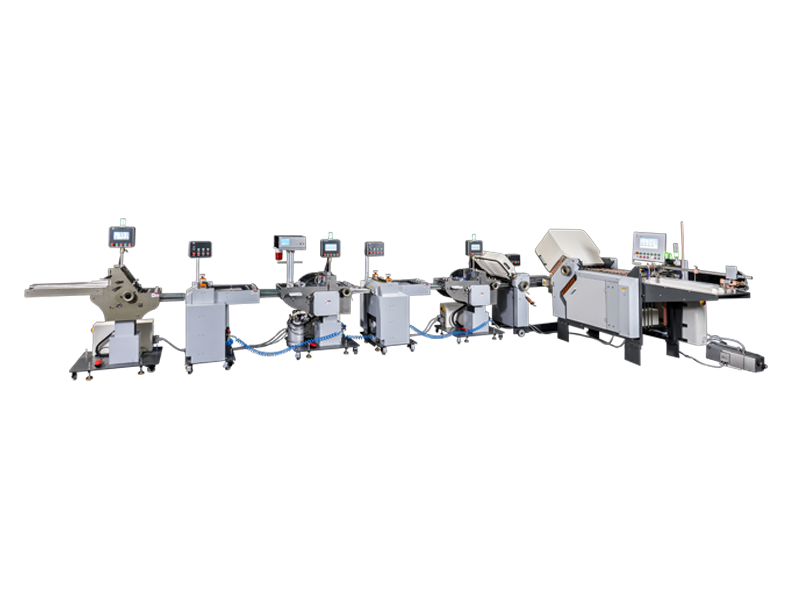
All series support customization with independent knife, vertical stacker, CCD vision inspection system and other auxiliary configurations to match automated production requirements.
Remark: The above parameters are for reference only. Final specifications are subject to the confirmed customized order.
How to Choose the Right Double Parallel Fold Buckle Folder
When selecting a high-speed buckle folding machine for double parallel fold production, evaluate the following factors to match equipment to your actual production needs.
Evaluate Maximum Sheet Size & Production Volume
- For small-format leaflets and inserts with sheet width under 490mm, the T490 and T520 series deliver compact footprint and 180m/min speed for standard production.
- For large-format manuals and wide packaging inserts, choose the T600 or T780 series with larger sheet capacity and higher pile height to reduce frequent paper loading.
- For 24/7 high-volume pharmaceutical leaflet production, the T780 series with 210m/min speed and heavier frame construction offers the best long-term stability.
Match Paper Weight Range to Your Material Needs
- If you primarily process thin pharmaceutical leaflet paper (35–80gsm), all four series are suitable; prioritize models with fine-tunable roller pressure control.
- If you frequently run heavy coated cardstock up to 210gsm, the T780 series with 40mm diameter folding rollers provides more stable creasing force and reduces fold cracking.
Consider Expandability & Optional Configurations
Choose a machine that supports modular upgrade of buckle stations and optional devices (CCD inspection, vertical stacker, rotary knife). This allows you to expand from basic double parallel folds to more complex combined fold patterns as your business grows.
Prioritize Certified Industrial-Grade Build Quality
For long-term industrial operation, select machines from manufacturers with CE certification for safety compliance and ISO 9001 quality system certification. Hardened folding rollers, robust frame structure and branded electrical components all contribute to lower maintenance cost and longer service life.
SPEED Machinery designs and manufactures CE-certified, ISO-compliant automatic buckle folding machines tailored for the print, packaging and pharmaceutical industries. Whether you need a compact machine for small-format double parallel inserts or a high-speed line for pharmaceutical leaflet production, we provide customized folding solutions backed by full global after-sales support.
Contact our technical team today to discuss your double parallel fold production requirements and receive a tailored equipment recommendation.
Frequently asked
What is the difference between double parallel fold and cross fold?
A double parallel fold has all creases running in the same parallel direction, producing a long, narrow finished shape. A cross fold uses two perpendicular fold directions (one parallel, one crosswise) to create a compact rectangular booklet. Both are common for leaflets and manuals, but double parallel fold is preferred when the final product must fit into narrow packaging slots.
How many double parallel panels can a buckle folding machine produce?
Standard industrial buckle folders with 6–8 buckle plates can typically produce 4–8 panel double parallel folds in a single pass. For higher panel counts, additional buckle stations can be added, or a second pass can be performed for extended folding sequences.
Can double parallel fold be combined with other fold patterns?
Yes. Many complex pharmaceutical leaflet jobs use a combination of double parallel fold in the first direction and cross fold in the second direction. Combination buckle + knife folding machines are purpose-built for these multi-directional, multi-panel leaflet applications.
What paper weight works best for double parallel folds?
For most industrial buckle folders, double parallel folds perform reliably on 35–200 gsm paper. Ultra-thin paper below 40gsm requires precise roller pressure adjustment to avoid tearing, while coated stocks above 150gsm may benefit from inline scoring to prevent fold cracking.