Cross fold (right-angle fold) is a staple combination fold on automatic buckle folding machines, widely used to produce compact pharmaceutical leaflets, packaging inserts and multi-page booklets. Achieving consistently square cross folds at high production speed depends on precise station alignment, synchronized transfer timing and proper roller setup. In this guide, we break down cross fold working principles, step-by-step setup procedures, common defect troubleshooting and production best practices for print, packaging and pharmaceutical applications.
What Is a Cross Fold on a Buckle Folding Machine?
Cross fold — also known as right-angle fold or perpendicular fold — is one of the most widely used combination fold styles on industrial automatic buckle folding machines, essential for producing compact multi-panel leaflets, booklets and folded inserts at scale. By first applying parallel folds in one direction, then a second set of folds rotated 90 degrees, cross folding transforms large sheets into small, uniform finished products ideal for insertion into packaging, envelopes and product cartons. For commercial printing houses, packaging plants and pharmaceutical leaflet manufacturers, consistent cross fold accuracy is critical for meeting downstream packaging line requirements and compliance standards.
Producing clean, square cross folds on a buckle plate folding machine demands precise alignment between parallel and right-angle fold stations, calibrated sheet transfer timing, and properly adjusted roller pressure across every stage. Many operators struggle with common cross fold defects such as off-square folds, misaligned panels, dog ears and frequent jams at the right-angle station, especially when running lightweight pharmaceutical leaflet paper at high speed. On high-speed industrial paper folding machines, even a slight timing mismatch between stations can cause cascading quality issues and significant production waste.
In this complete guide, we explain how cross folds work on buckle folding equipment, walk through a systematic setup procedure, diagnose the most frequent cross fold defects, and share proven production best practices for reliable, high-accuracy output across all paper weights and industry applications.
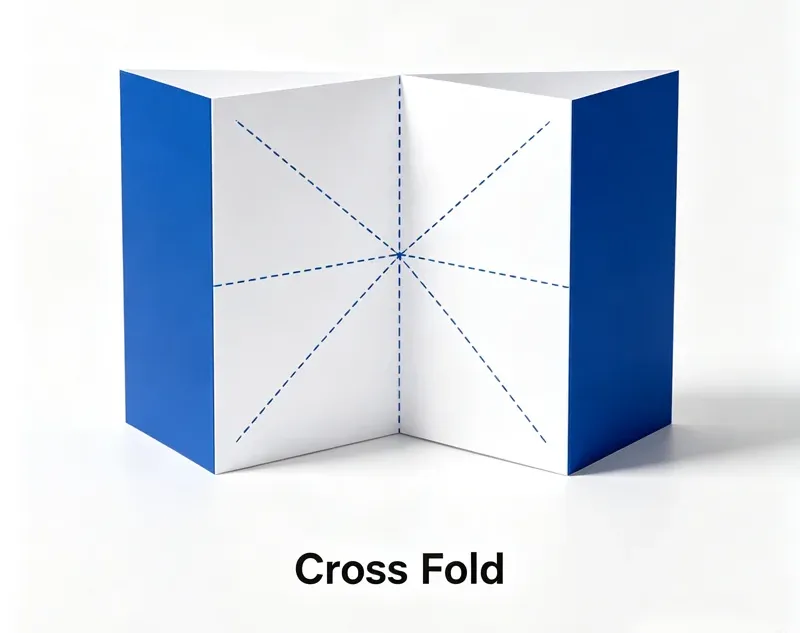
A cross fold is a combination fold style where a sheet is first folded with one or more parallel folds along its length, then rotated 90 degrees and folded again perpendicular to the first fold direction. The result is a compact, grid-like folded product with multiple panels stacked in both directions, delivering a high content-to-size ratio that is unmatched by single-direction parallel folds.
Common Cross Fold Configurations & Applications
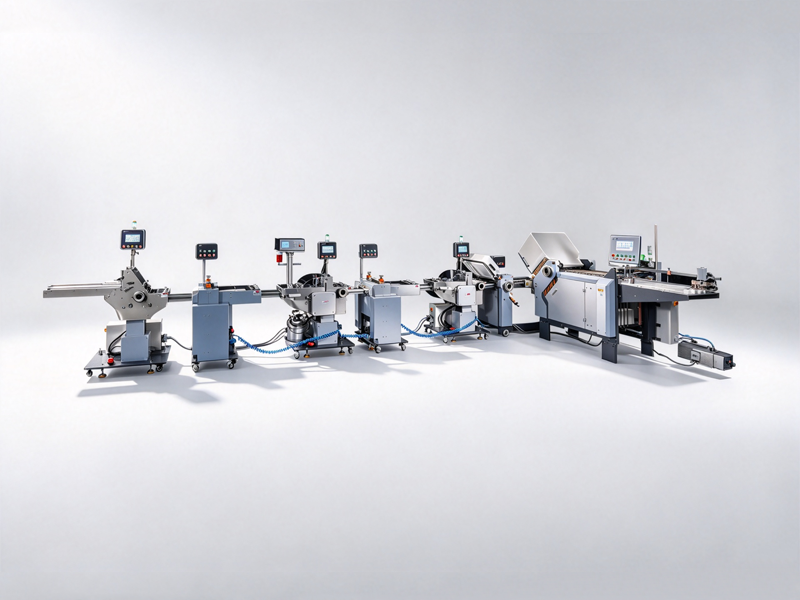
On automatic buckle folding machines, cross folds are produced by combining a parallel fold section with a dedicated right-angle fold unit. The most standard configurations include:
- Half + half cross fold (4-page): A single parallel half fold followed by a single perpendicular half fold, creating four equal panels. Used for small flyers, product cards and simple instruction sheets.
- Tri-fold + half cross fold (8-page): Three parallel panels folded once across, producing eight finished pages. The most common format for pharmaceutical package inserts and product manuals.
- Accordion + half cross fold (16-page): Multiple parallel accordion folds combined with a perpendicular fold, creating 16 or more compact panels. Widely used for multi-language medical leaflets and detailed instruction books.
- Double parallel + cross fold: Advanced multi-panel configurations for high-page-count booklets and miniature reference guides.
Cross folds are the industry standard for pharmaceutical instruction leaflets, cosmetic packaging inserts, product manuals, pocket guides, direct mail pieces and bound booklet production. In fact, pharmaceutical packaging accounts for over 44% of global cross fold folding machine demand, driven by strict regulatory requirements for standardized insert dimensions and fold consistency.
How Buckle Folders Produce Cross Folds
Unlike pure parallel fold styles formed entirely within buckle plates, cross fold production requires two distinct folding sections working in sequence:
- First section (parallel folds): The sheet passes through standard buckle plates, producing the desired number of lengthwise parallel folds — half fold, tri-fold, accordion fold or double parallel fold.
- Transfer section: The partially folded strip is rotated 90 degrees via a right-angle transfer mechanism, reorienting it for the perpendicular fold direction.
- Second section (cross folds): The reoriented strip enters a second set of buckle plates or a folding knife unit that applies the perpendicular folds, completing the cross fold pattern.
This two-stage process is why cross fold quality depends heavily on timing synchronization and alignment between the two sections — any misalignment in the first section is amplified after the 90-degree turn.
Common Cross Fold Defects & Root Causes on Automatic Buckle Folders
Cross folds have tighter alignment and timing tolerances than standard parallel folds, making them more sensitive to setup variations, component wear and speed changes. Below are the most frequent defects operators encounter, along with their primary causes.
Off-Square or Skewed Cross Folds
This is the leading cross fold quality issue, where the second-direction folds are not perfectly perpendicular to the first-direction folds, resulting in diamond-shaped or skewed finished panels. It occurs when the sheet is not perfectly square as it enters the right-angle section, or when the right-angle transfer mechanism does not rotate the sheet exactly 90 degrees.
Off-square cross folds are especially problematic for pharmaceutical leaflet production, where finished dimensions must fall within narrow tolerance ranges to fit into automatic packaging lines. Even a 0.5-degree angle error can cause inserts to jam in downstream cartoning equipment.
Misaligned Panels & Uneven Margins
When panels on the finished cross fold are uneven in width or margins are inconsistent from side to side, the defect typically originates from inaccurate stop position settings on either the parallel or cross fold stations. The compounding effect of two fold directions means small errors in each station add up to visible defects in the final product.
This issue is frequently introduced during job changeovers when operators adjust plate positions independently without verifying cumulative alignment. It is also a common symptom of loose plate locking levers that drift during extended production runs.
Jams at the Right-Angle Transfer Station
The 90-degree transfer point is the most frequent jam location on cross fold jobs. Jams typically occur when:
- The strip from the first section is not delivered at the correct timing into the transfer mechanism
- Transfer guides are misaligned or have burrs that catch folded edges
- Paper stock is too thin or floppy to maintain shape through the rotation
- Static electricity causes the folded strip to stick to guide surfaces
Recurring transfer jams almost always indicate a timing or alignment issue, not a problem with the paper stock itself.
Dog Ears & Corner Damage
Dog ears — small, unwanted bends on sheet corners — occur when the folded strip catches on guide edges or deflectors during the right-angle transfer. On cross fold jobs, this defect is most common on the leading corners entering the second fold section, where the strip changes direction and momentum.
Corner damage is significantly worse at higher production speeds, where increased sheet momentum amplifies the impact force against misaligned guide components.
Soft Fold Creases & Spring-Back
Faint or soft creases on the cross direction folds reduce finished product crispness and can cause the final product to spring open. This defect is caused by insufficient roller pressure on the cross fold station, worn or glazed fold rollers, or paper stock that is too stiff to buckle cleanly. On coated and heavyweight stocks, insufficient crease sharpness can also cause dimensional instability that affects downstream packaging insertion.
Step-by-Step Cross Fold Setup on a Buckle Plate Folding Machine
Follow this structured, first-section-first setup sequence to achieve accurate, square cross folds with minimal test runs and adjustment cycles.
1. Set Up and Verify the Parallel Fold Section First
Always start by dialing in the first-direction parallel folds perfectly before touching the right-angle section.
- Configure the parallel fold plates for your desired fold pattern — half fold, tri-fold, accordion fold or double parallel fold.
- Adjust stop positions to calculated panel dimensions, accounting for paper thickness and fold creep.
- Run 5–10 test sheets through the parallel section only, stopping the machine before the right-angle transfer.
- Verify fold accuracy, panel symmetry and fold line squareness with a ruler or caliper.
- Fine-tune plate positions and roller pressure until the parallel folded strip is perfectly consistent and square.
If the first-section folds are not perfectly accurate and square, the final cross fold will never be correct — no amount of cross section adjustment can compensate for upstream errors.
2. Align the Right-Angle Transfer Mechanism
The transfer section is the critical bridge between parallel and cross folds.
- Verify that the transfer guides are perfectly perpendicular to the first fold direction. Use a machinist square for accurate 90-degree alignment.
- Adjust guide width to match the folded strip dimensions, leaving minimal but non-binding clearance.
- Ensure all guide edges are smooth and free of burrs, nicks or paper dust buildup that could catch sheet edges.
- Confirm transfer timing is synchronized so the strip enters the cross section at the correct position relative to cross fold rollers.
3. Configure the Cross Fold Section
Once transfer alignment is confirmed, set up the second-direction fold stations.
- Install and seat the cross fold buckle plates firmly into their end stops, ensuring they are perfectly perpendicular to the incoming strip direction.
- Set plate stop positions to match your calculated cross-direction panel dimensions.
- Adjust roller pressure for the cross fold stations, accounting for the increased number of paper layers passing through the nip.
- For multi-plate cross fold setups, verify alignment between successive cross fold stations.
4. Test Run and Calibrate Squareness
Run test sheets at reduced speed first, then validate at production speed.
- Run 3–5 test sheets at low speed through the complete machine.
- Inspect each finished sample for 90-degree squareness using a square edge or right-angle gauge.
- Check panel dimensions on both axes for consistency and accuracy.
- If folds are off-square, make micro-adjustments to the transfer guide angle, not the fold plates themselves.
- Once quality is acceptable at low speed, gradually increase to full production speed and re-verify consistency across 20+ samples.
5. Fine-Tune for Production Stability
Before starting a full batch, make these final adjustments for reliable long-run performance:
- Tighten all lock levers and fasteners securely to prevent vibration-induced drift.
- Verify anti-static bars are functioning correctly, especially for lightweight leaflet paper.
- Confirm jam detection sensors are properly calibrated for the folded strip thickness.
- Document all final settings for future repeat jobs to reduce setup time on reorders.
Pro Tips for Consistent High-Speed Cross Fold Production
Once basic setup is complete, these advanced techniques will help you maintain accurate cross fold quality even at maximum machine speed, across different paper types and extended production runs.
Optimize for Paper Stock Properties
Different paper grades require different cross fold settings:
- Lightweight pharmaceutical leaflet paper (35–70 gsm): Reduce running speed by 10–15% compared to parallel fold production; thin paper is more prone to flopping and jamming during right-angle transfer. Ensure anti-static bars are active and properly positioned.
- Coated and glossy stock: Clean rollers frequently to prevent dust and coating buildup from reducing traction. Slightly increase fold plate depth to ensure clean buckling on slippery coated surfaces.
- Heavy cover stock (120–200 gsm): Increase fold roller pressure for sharp creases on both fold directions. Consider pre-scoring for heavy stocks to improve fold line definition and reduce spring-back.
Prevent Drift During Long Production Runs
Cross fold alignment can drift gradually over long runs due to vibration, roller wear and temperature changes.
- Schedule periodic quality checks every 500–1000 sheets, verifying both fold dimensions and squareness.
- Keep roller surfaces clean throughout the run; glazed rollers cause inconsistent feeding that degrades cross fold registration.
- For pharmaceutical leaflet production running multi-shift, consider a mid-run alignment verification to maintain compliance-grade accuracy.
Master Multi-Panel Cross Folds for Pharmaceutical Leaflets
Pharmaceutical cross fold leaflets with 16, 24 or 32 panels demand the tightest tolerances.
- Always verify each fold stage individually before adding the next plate.
- Use progressively wider roller gaps on downstream stations to accommodate increasing paper layer thickness.
- Ensure the right-angle transfer is perfectly timed; even a 1mm timing error compounds through multiple cross fold stations.
How Industrial-Grade Buckle Folders Elevate Cross Fold Quality
While operator skill and proper setup are essential, the base engineering of your folding equipment ultimately determines the maximum quality, speed and consistency achievable for cross fold production.
Premium CE-certified automatic buckle folding machines built to ISO quality standards incorporate specific design features that simplify cross fold setup and improve long-run repeatability:
- Precision-machined right-angle transfer mechanisms with calibrated 90-degree alignment ensure consistently square cross folds
- Synchronized drive systems between parallel and cross sections maintain accurate timing through all production speeds
- Rigid cast iron frames minimize vibration, keeping plate alignment stable even at maximum production speed
- Independent roller pressure adjustment per station allows precise tuning for each fold stage and paper layer thickness
- Calibrated measurement scales on all fold plates enable accurate, repeatable stop position settings for repeat jobs
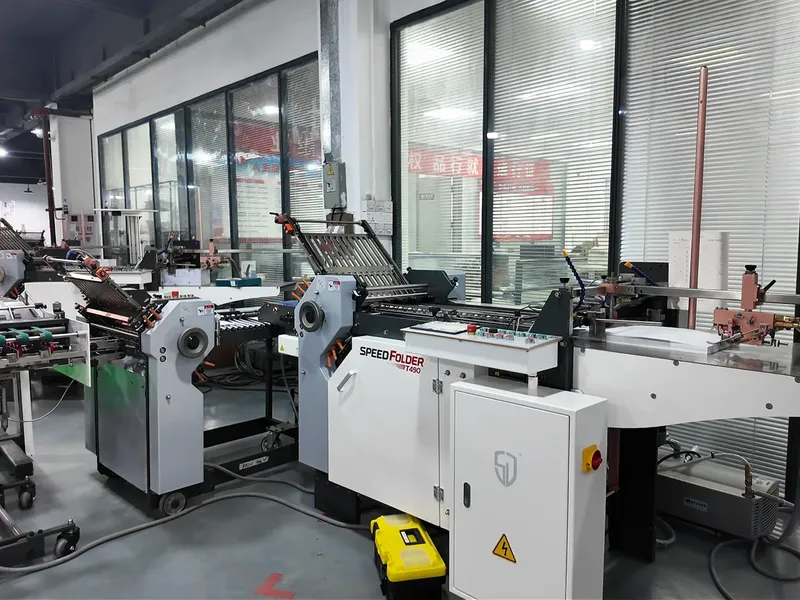
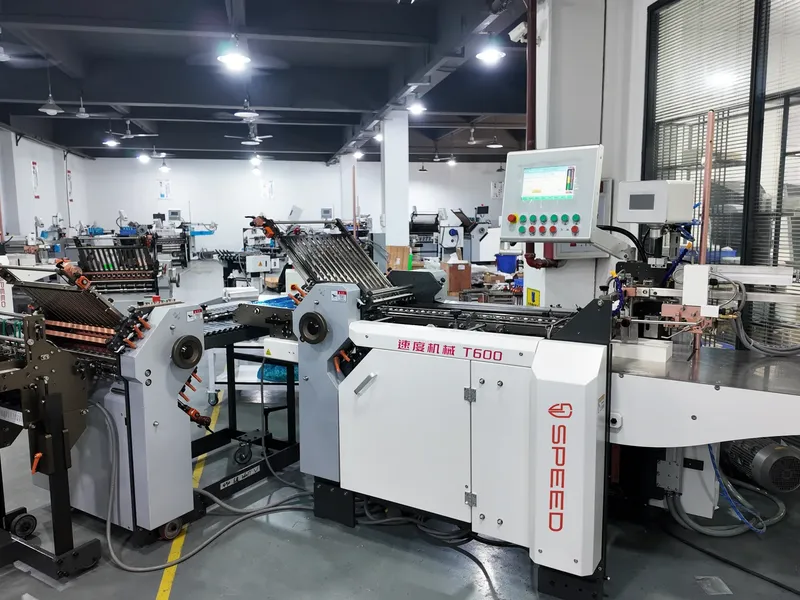
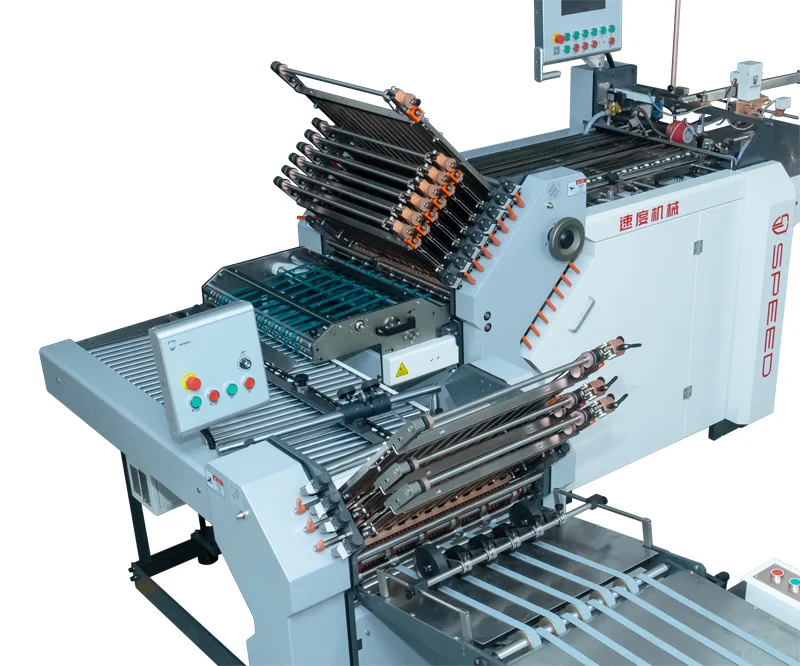
At SPEED Machinery, we manufacture high-speed automatic buckle folding machines engineered for industrial-grade cross fold production across commercial printing, packaging and pharmaceutical applications. Built under ISO 9001 quality management systems and fully CE certified, our folding machines deliver micron-level registration accuracy for all standard fold styles — including half fold, tri-fold, accordion fold, double parallel fold, gate fold and cross fold.
Our equipment handles paper weights from 35 gsm lightweight pharmaceutical leaflet stock to 200 gsm coated brochure paper, maintaining consistent, square cross fold quality even at full production speed. With precision-machined fold plates, hardened roller assemblies and robust right-angle transfer mechanisms, our buckle folders deliver repeatable, defect-free cross fold output with minimal setup time and adjustment. Our cross fold configurations support up to 16+ page formats, making them ideal for multi-language medical instruction leaflets and detailed product manuals.
If your current folding equipment struggles to produce consistent, square cross folds at production speed, or if you need tighter registration accuracy for pharmaceutical packaging applications, our technical team can help you evaluate the right machine configuration for your product mix and volume requirements.
If you need technical support optimizing cross fold production on your existing equipment, or are looking to upgrade to a high-precision automatic buckle folding machine for reliable cross fold output, contact SPEED Machinery today. Our engineering team can provide customized folding solutions tailored to your printing, packaging or pharmaceutical leaflet production needs.
Frequently asked
Why are my cross folds not perfectly square?
Non-square cross folds almost always stem from misalignment in the right-angle transfer section, not from the fold plates themselves. The sheet must enter the second fold section at exactly 90 degrees to the first fold direction. Verify transfer guide squareness with a machinist square and make micro-adjustments to the transfer angle until folds are perfectly perpendicular.
Can any buckle folding machine produce cross folds?
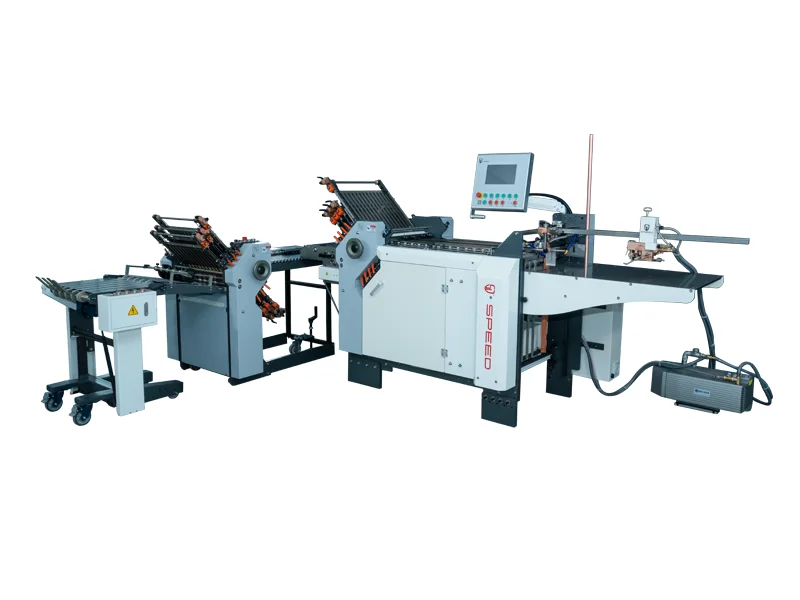
Not all buckle folders are equipped for cross fold production. Cross folding requires a dedicated right-angle transfer unit and a second set of fold stations oriented 90 degrees to the first section. Many entry-level parallel-only buckle folders cannot be upgraded for cross fold production. Industrial combination buckle folders with integrated right-angle units are designed specifically for cross fold applications.
Why does my cross fold quality degrade at higher speeds?
Speed-related quality loss on cross fold jobs typically comes from three sources: timing drift between sections at higher RPM, sheet momentum causing misalignment during the right-angle turn, or vibration shifting plate positions. Verify timing synchronization, ensure all lock levers are fully tightened, and confirm the machine frame is level and stable for high-speed operation.
What is the maximum number of panels possible with cross folding?
The number of panels depends on the number of fold plates in both parallel and cross directions. A typical industrial cross fold buckle folder with 4–6 parallel plates and 2–3 cross plates can produce 8, 12, 16 or more finished panels. Pharmaceutical-grade folding systems can achieve 32+ panel configurations for dense multi-language leaflets.
Are cross folds suitable for pharmaceutical leaflet production?
Absolutely. Cross folds are the dominant format for pharmaceutical package inserts and medical instruction leaflets globally, as they compact large amounts of regulatory content into standardized carton-ready dimensions. Pharmaceutical cross fold production requires tighter registration tolerances, consistent fold quality and documented process control to meet medical packaging compliance standards.