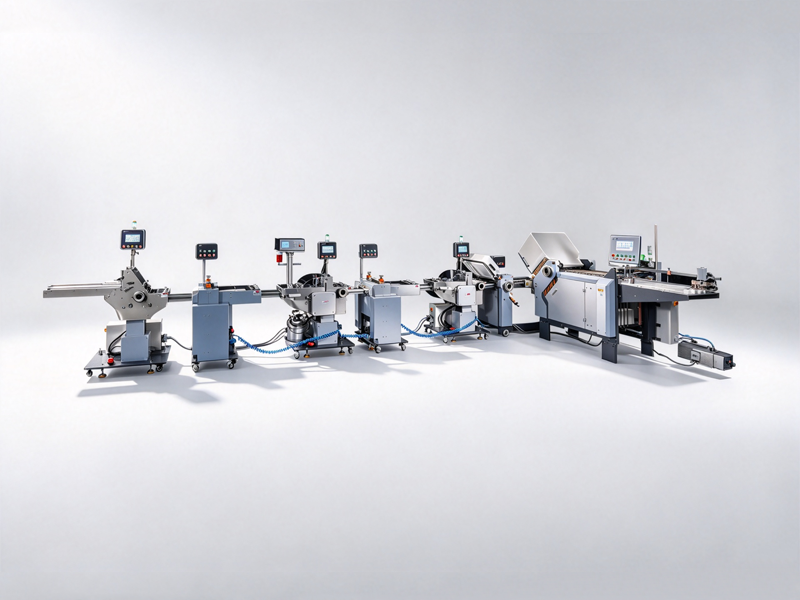
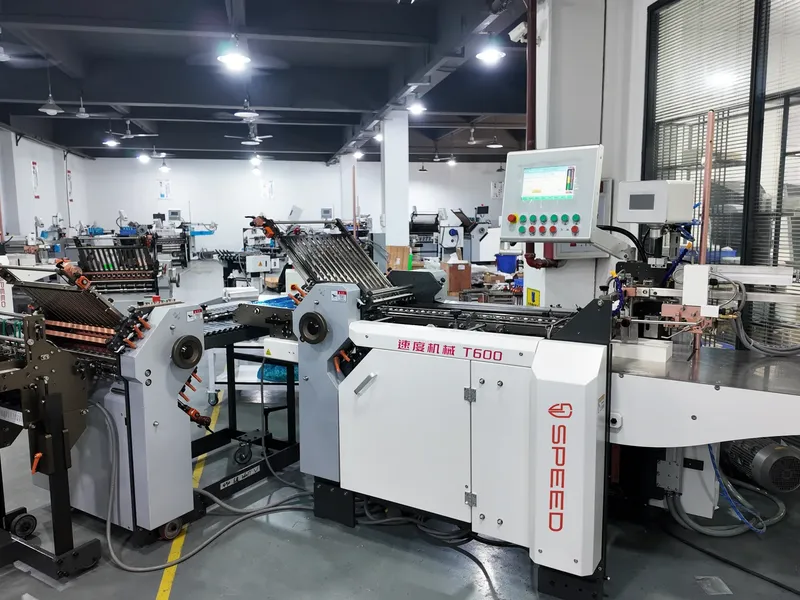
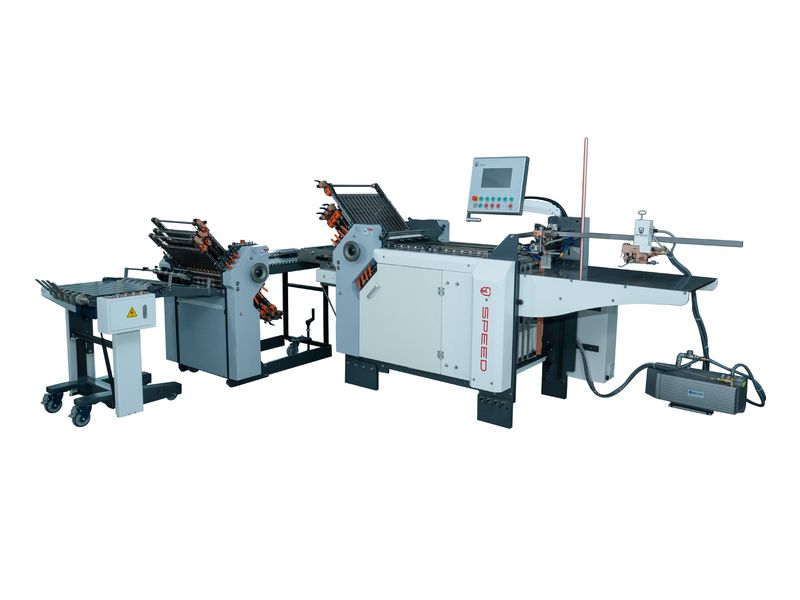
Gate fold is one of the most visually impactful fold styles available on automatic buckle folding machines, widely used for premium brochures, product launch materials, packaging inserts and pharmaceutical leaflets that demand a dramatic reveal effect. Unlike standard tri-folds or half folds, gate folds feature two symmetrical side panels that fold inward to meet at the center, creating a seamless closed edge and a full-width interior spread when opened. For commercial printing houses, packaging plants and pharmaceutical manufacturers, delivering precise, consistent gate folds at high production speed directly elevates perceived product value and customer satisfaction.
Producing clean, symmetrical gate folds on a buckle plate folding machine requires precise setup, calibrated roller pressure and properly aligned fold plates — more so than simpler parallel fold styles. Many operators struggle with common gate fold defects such as uneven panels, boxed folds, dog ears and misaligned gates, leading to high reject rates and extended setup times. On high-speed industrial paper folding machines, even minor setup errors compound quickly, wasting expensive stock and delaying tight production schedules.
In this complete guide, we break down how gate folds work on buckle folding equipment, walk through a step-by-step setup procedure, diagnose the most frequent quality defects, and share proven production tips to deliver consistent, premium gate fold output across all paper weights and applications.
What Is a Gate Fold on a Buckle Folding Machine?
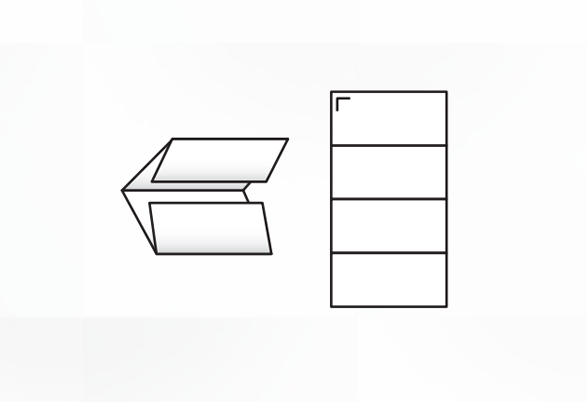
A gate fold — also referred to as a window fold or barrel fold — is a parallel fold style where two outer panels of equal width fold inward toward the center of the sheet, meeting precisely at the midline without overlapping or leaving a gap. When closed, the finished piece resembles a pair of closing gates; when opened, it reveals a single, uninterrupted center panel ideal for large imagery, key messaging or detailed product specifications.
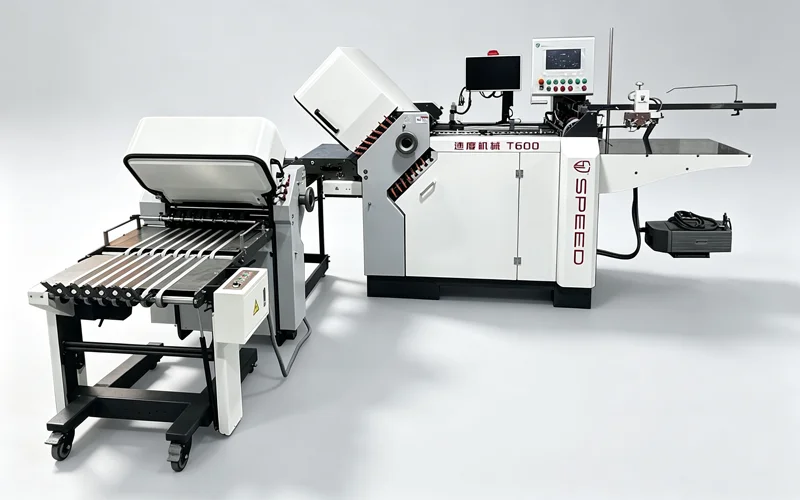
Standard Gate Fold Configurations & Applications
On automatic buckle folding machines, gate folds are produced using dedicated gate fold plates and a multi-station folding sequence. The most common configurations include:
- Single gate fold (3-panel): Two outer gate panels fold into a single center panel, the most widely used format for brochures and inserts.
- Double gate fold: A second fold applied perpendicular or parallel to the first, creating a compact, multi-panel format ideal for pharmaceutical leaflets and detailed instruction manuals.
- Closed gate fold: An additional outer fold that encloses the gate panels, commonly used for mailing pieces and presentation folders.
Gate folds are the preferred choice for high-impact print applications including premium product brochures, real estate marketing materials, event invitations, annual reports, branded packaging inserts and multi-language pharmaceutical instruction leaflets. The symmetrical reveal creates a premium, intentional feel that standard tri-folds cannot match.
How Buckle Folders Produce Gate Folds
Unlike simple half folds and accordion folds formed directly in standard buckle plates, gate folds require a specialized gate fold plate assembly paired with standard fold stations. The process follows a controlled sequence:
- The first two parallel folds form the two outer gate panels, establishing symmetrical panel widths.
- The partially folded sheet enters the dedicated gate fold plate, which holds the inner panels in position as the final fold is applied.
- Precision deflectors and reduced roller pressure prevent the pre-folded panels from springing open during the final fold stage.
This sequence is why gate fold quality depends heavily on the accuracy of the first two folds — any misalignment in the early stations will be amplified in the final gate fold result.
Common Gate Fold Defects & Root Causes on Automatic Buckle Folders
Gate folds have tighter tolerance requirements than most parallel fold styles, making them more sensitive to setup variations and component wear. Below are the most frequent defects operators encounter, along with their primary causes.
Boxed or Bulging Gate Panels
This is the single most common gate fold defect, where the inner gate panels appear squared-off, bubbled or “boxed” instead of lying flat and sharp. It occurs when excessive roller pressure on the final fold station compresses the pre-folded panels, forcing them to buckle outward instead of folding cleanly.
Boxed folds are especially common on lightweight leaflet paper and double gate fold jobs, where multiple folded layers pass through the final roller nip. They are almost always caused by overly tight roller gap settings on the downstream stations, rather than issues with the gate fold plate itself.
Uneven or Asymmetrical Gate Panels
When the two side gate panels are different widths, or fail to meet evenly at the center line, the defect stems from misaligned fold plate stops on the first two fold stations. Even a 0.2mm difference in stop position will produce a visible gap or overlap at the center, ruining the symmetrical appearance of the fold.
This issue is frequently introduced during job changeovers when operators adjust plate positions by eye instead of using calibrated measurement marks. It is also a common symptom of loose plate locking levers that drift during long production runs.
Dog Ears & Corner Creases
Dog ears — small, unwanted bends on sheet corners — occur when the sheet shifts laterally as it transitions between fold stations, or when deflectors catch the corners of pre-folded panels. On gate fold jobs, this defect is most common on the leading edges of the inner gate panels, which are more vulnerable to catching on guide components.
Corner damage is often worse at higher production speeds, where sheet momentum increases the force of impact against misaligned guides and deflectors.
Paper Jams in the Gate Fold Plate
Gate fold plates have narrower channels and additional internal components compared to standard buckle plates, making them more prone to paper jams when setup is incorrect. Jams typically occur when:
- The sheet enters the gate fold plate at an angle due to misaligned feed guides
- Paper stock is heavier than the plate gap is calibrated for
- Paper fragments from previous jams are trapped inside the plate channel
Recurring jams in the gate fold station almost always indicate an alignment or gap issue, not a problem with the plate itself.
Fuzzy or Soft Fold Creases
Soft, indistinct fold lines reduce the premium appearance of gate fold products. This defect is caused by insufficient roller pressure, glazed or worn fold rollers, or paper stock that is too stiff to buckle cleanly inside the plate. On coated and heavyweight stocks, insufficient crease sharpness can also cause the fold to spring back open after production.
Step-by-Step Gate Fold Setup on a Buckle Plate Folding Machine
Follow this structured setup sequence to achieve clean, symmetrical gate folds on the first test run. Working from the first station forward eliminates compounding errors and reduces overall setup time.
1. Calibrate First Two Parallel Fold Stations
Accurate gate folds begin with perfectly aligned base folds. Always set up and verify the first two fold stations before installing the gate fold plate.
- Calculate panel dimensions: The two outer gate panels should each be exactly half the width of the center panel, accounting for paper thickness and fold creep.
- Adjust the stop positions on fold plates 1 and 2 to match your calculated panel widths.
- Run 3–5 test sheets through the first two stations only, and verify panel symmetry with a ruler or caliper.
- Fine-tune stop positions until both side panels are identical in width and perfectly parallel with the sheet edges.
If the initial parallel folds are not perfectly square and symmetrical, the final gate fold will never be correct — no amount of gate plate adjustment will compensate for early-stage misalignment.
2. Install & Align the Gate Fold Plate
Once the base folds are verified, install the gate fold plate assembly into its designated station.
- Slide the plate fully into its mounting position and push firmly against both end stops to ensure it is seated squarely.
- Engage the locking lever securely to prevent position drift during production.
- Visually confirm that the internal deflectors are centered and aligned with the incoming paper path.
- Check that the plate channel is clear of paper scraps, dust and debris before proceeding.
3. Adjust Roller Pressure for the Gate Fold Station
This is the most critical adjustment for preventing boxed folds and bulging panels.
- Set the roller pressure for the station immediately before the gate fold plate to the minimum level required to feed the sheet reliably. Too much pressure here can pre-compress the panels and cause boxing.
- Widen the roller gap on the station after the gate fold plate substantially — use 6–10 sheets of equivalent stock as a feeler gauge, rather than the standard 3–4 sheets used for regular folds.
- The final exit rollers should guide the sheet through without applying significant folding pressure. Their role is to transport the finished piece, not to form an additional crease.
4. Fine-Tune Deflectors & Guide Rails
Proper sheet guidance between stations prevents dog ears and lateral shift.
- Adjust all intermediate guide rails and deflectors to match the folded sheet width, leaving minimal but non-binding clearance.
- Ensure deflectors are perfectly parallel to the direction of paper travel.
- Pay special attention to the entry deflector of the gate fold plate, which must center the sheet precisely as it enters the channel.
5. Test Run & Validate Quality
Run 5–10 test sheets at reduced production speed before ramping up to full speed.
- Inspect each sample for center line alignment, panel symmetry and fold crease sharpness.
- Check for bulging panels, dog ears and edge damage.
- If boxed folds appear, incrementally widen the final roller gap until panels lie flat.
- Once quality is acceptable at low speed, gradually increase to full production speed and re-verify consistency across 20+ samples.
Pro Tips for Consistent High-Speed Gate Fold Production
Once basic setup is complete, these advanced techniques will help you maintain premium gate fold quality even at maximum machine speed, across different paper types and long production runs.
Optimize for Paper Stock Properties
Different paper grades require different gate fold settings:
- Lightweight leaflet paper (35–70 gsm): Reduce roller pressure further and widen gaps slightly; thin paper is far more prone to boxed folds and tearing. Use anti-static bars to prevent sheet sticking and misfeeds.
- Coated and glossy stock: Clean rollers frequently to prevent dust and coating buildup from reducing traction. Slightly increase fold plate depth to ensure clean buckling on slippery coated surfaces.
- Heavy cover stock (120–200 gsm): Increase initial fold roller pressure for sharp creases, but keep final station pressure light to avoid crushing pre-folded panels. Pre-scoring can improve fold quality on very heavy stocks.
Prevent Drift During Long Runs
Gate fold alignment can drift gradually over long production runs due to vibration, roller wear and temperature changes.
- Tighten all plate lock levers and guide fasteners securely before starting a full batch.
- Schedule periodic quality checks every 500–1000 sheets to catch drift early.
- Keep roller surfaces clean throughout the run; glazed rollers cause inconsistent feeding that degrades gate fold symmetry.
Master Double Gate Folds for Pharmaceutical Leaflets
Double gate folds are the standard format for multi-language pharmaceutical instruction leaflets, requiring even tighter setup precision.
- Always verify each fold stage individually before adding the next plate.
- Use progressively wider roller gaps on downstream stations to accommodate the increasing number of folded layers.
- Reduce running speed by 10–15% compared to single gate folds to maintain registration accuracy through multiple folding stages.
How Industrial-Grade Buckle Folders Elevate Gate Fold Quality
While operator skill and proper setup are essential, the base engineering of your folding equipment ultimately determines the maximum quality and consistency achievable for gate fold production.
Premium CE-certified automatic buckle folding machines built to ISO quality standards incorporate specific design features that simplify gate fold setup and improve repeatability:
- Precision-machined gate fold plates with tight tolerance channels ensure symmetrical panel alignment run after run
- Independent roller pressure adjustment per station allows precise tuning for each fold stage, preventing boxed folds
- Rigid cast iron frames minimize vibration, keeping plate alignment stable even at maximum production speed
- Quick-release plate systems enable fast changeovers between gate fold and other fold styles
- Calibrated measurement scales on all fold plates allow accurate, repeatable stop position settings
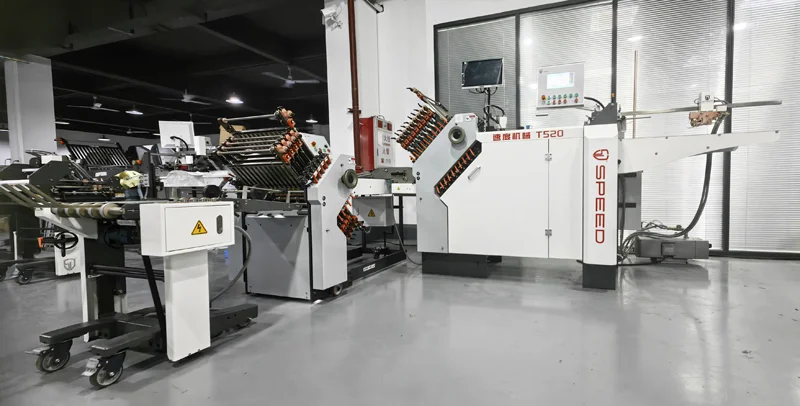
At SPEED Machinery, we manufacture high-speed automatic buckle folding machines engineered for industrial-grade gate fold production across commercial printing, packaging and pharmaceutical applications. Built under ISO 9001 quality management systems and fully CE certified, our folding machines deliver micron-level registration accuracy for all standard fold styles — including half fold, tri-fold, accordion fold, double parallel fold, cross fold and gate fold.
Our equipment handles paper weights from 35 gsm lightweight pharmaceutical leaflet stock to 200 gsm coated brochure paper, maintaining consistent, sharp gate fold quality even at full production speed. With precision-machined fold plates, hardened roller assemblies and robust frame construction, our buckle folders deliver repeatable, defect-free gate fold output with minimal setup time and adjustment.
If your current folding equipment struggles to produce consistent, premium gate folds at production speed, our technical team can help you evaluate the right machine configuration for your product mix and volume requirements.
If you need technical support optimizing gate fold production on your existing equipment, or are looking to upgrade to a high-precision automatic buckle folding machine for reliable gate fold output, contact SPEED Machinery today. Our engineering team can provide customized folding solutions tailored to your printing, packaging or pharmaceutical leaflet production needs.
Frequently asked
Why are my gate fold panels bulging instead of lying flat?
Bulging or “boxed” gate panels are almost always caused by excessive roller pressure on the final fold station. The downstream rollers are compressing the pre-folded layers and forcing the inner panels to buckle outward. Fix this by widening the final roller gap substantially — use 6–10 sheets of stock as a feeler gauge instead of the standard 3–4 sheets used for regular folds.
Can any buckle folding machine produce gate folds?
Most industrial buckle folders can be equipped with a gate fold plate accessory to produce gate folds. However, entry-level and desktop machines often lack independent roller pressure adjustment per station, making it difficult to achieve clean, flat gate folds without boxing. Machines with per-station pressure control and rigid construction deliver far better gate fold results.
Why does my gate fold look fine at low speed but misaligns at high speed?
Speed-related misalignment typically stems from one of three issues: loose fold plate stops that shift under vibration, worn feed rollers that cause inconsistent sheet timing, or deflectors that catch sheet corners at higher momentum. Tighten all locking mechanisms, inspect roller condition and verify deflector alignment to resolve speed-dependent quality issues.
What is the correct panel ratio for a standard gate fold?
For a clean-closing gate fold, the two outer “gate” panels should each be exactly half the width of the center panel, minus a small allowance for paper thickness and fold creep. This ensures the two gates meet precisely at the center without overlapping or leaving a visible gap. Always test and adjust panel widths on actual production stock rather than relying solely on calculated dimensions.
Are gate folds suitable for pharmaceutical leaflet production?
Yes. Gate folds and double gate folds are widely used for pharmaceutical instruction leaflets and medical packaging inserts, as they allow large amounts of multi-language content to be folded into a compact, standardized format. Pharmaceutical-grade gate fold production requires tighter registration tolerances and higher consistency than commercial print applications.