For printing houses, packaging converters and pharmaceutical leaflet manufacturers scaling up large-batch production, unplanned downtime from paper pile reloads is one of the most costly bottlenecks in the finishing department. Standard pile-fed folders require repeated stops to restock paper, which disrupts production rhythm, reduces effective run time and creates avoidable labor overhead. As batch sizes grow, these short pauses accumulate into measurable output losses and higher per-unit production costs.
The recirculating feeder paper folding machine was engineered specifically to solve this problem. Built around a non-stop continuous vacuum feeding system, it allows operators to replenish paper stock without halting the line, delivering consistently higher net output and more stable fold quality across extended runs. This guide breaks down the technology, quantifiable production benefits, specification interpretation, selection framework and maintenance best practices to help engineering and procurement teams evaluate whether an automatic paper folding machine with recirculating feeding is the right upgrade for their mass production operation.
What Is a Recirculating Feeder Paper Folding Machine?
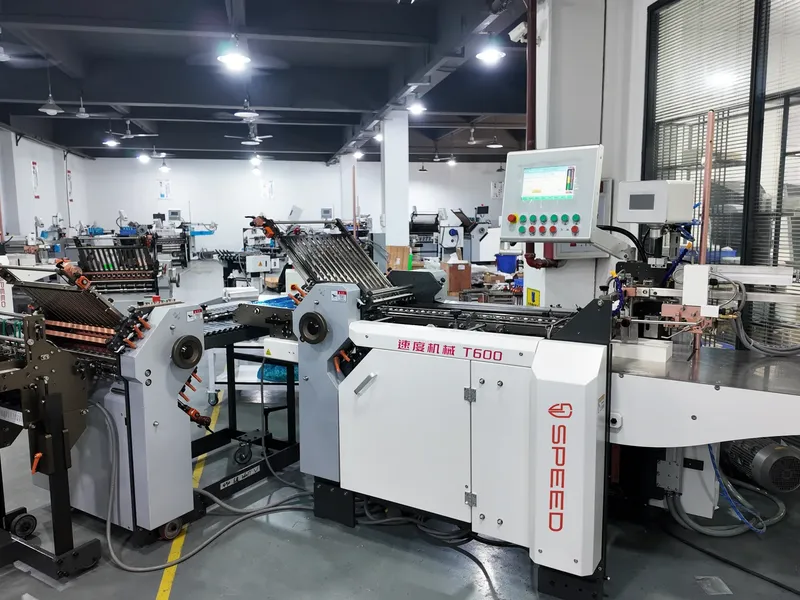
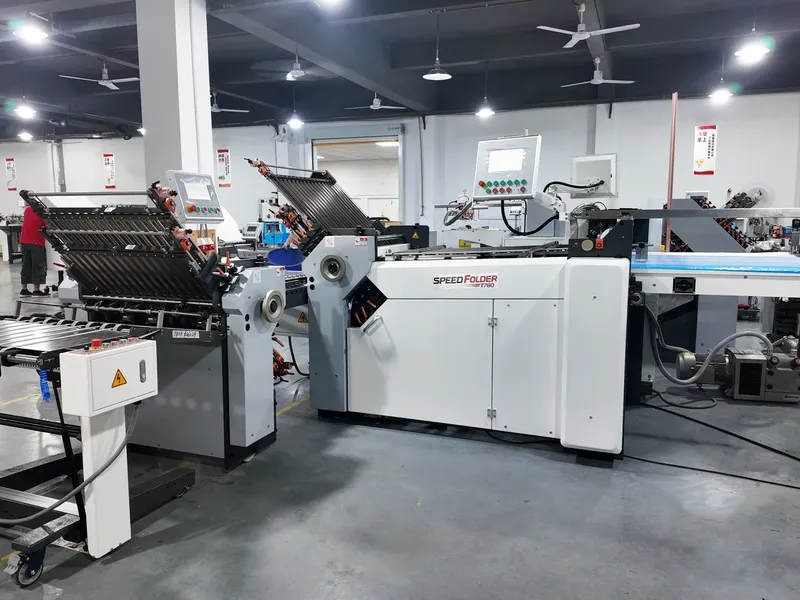
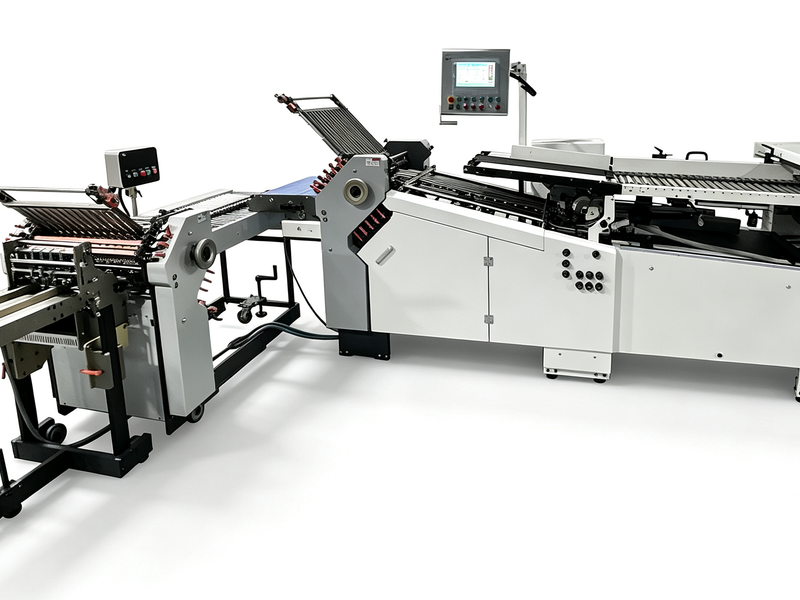
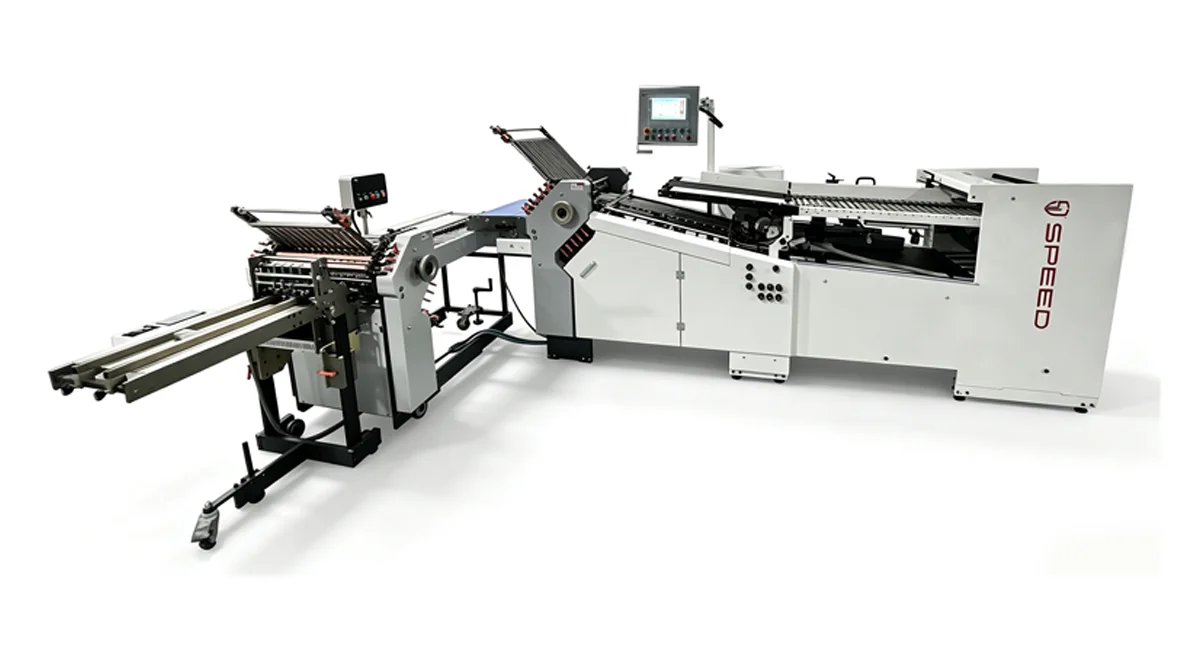
A recirculating feeder paper folding machine is an industrial-grade folding system equipped with an extended, shingled vacuum feeding table instead of a conventional static paper pile. Its defining capability is non-stop paper replenishment: operators can add fresh stacks of paper to the rear of the loading table while the machine continues running, creating a continuous, uninterrupted sheet flow through the folding section.
This design is purpose-built for medium-to-long and mass production runs, where minimizing idle time directly translates to higher daily output and lower unit cost. Unlike entry-level paper folding machine models built for short job runs, recirculating feeder systems are optimized for multi-shift operation and large-batch order fulfillment.
Core Operating Principle
The machine operates on a continuous linear workflow optimized for uninterrupted production:
- Sheets are separated from the extended loading table by a precision vacuum suction system, forming a controlled overlapping shingled stream that feeds steadily into the machine.
- An air-flotation registration table aligns each sheet to an exact side-lay position before folding, maintaining consistent register accuracy even across hours of non-stop operation.
- Sheets pass through the buckle folding unit, where multiple adjustable fold plates form the required parallel fold patterns in a single pass.
- Finished folded products are delivered to a stacking unit with automatic counting and batch separation, ready for downstream packaging or binding processes.
- Throughout production, operators continuously stage and add new paper stacks to the back of the loading table, creating a recirculating feed cycle with zero production stops for reloading.
Key Differences From Standard Pile-Fed Folders
The most impactful distinction lies in effective operating time. A standard pile-fed folder must pause completely when the paper stack is depleted, and each reload plus re-registration typically takes 2–5 minutes. For large production runs, this can reduce net daily output by 15–25% compared to a recirculating feeder model running at the same rated speed.
Beyond raw throughput, recirculating feeding also reduces setup variation: because the line does not stop and restart repeatedly, fold position and crease quality remain more consistent across the entire batch, reducing scrap rates and quality inspection workload.
Core Efficiency Advantages for Mass Production Environments
For facilities running large-batch orders on a regular basis, upgrading to a recirculating feeder system delivers measurable returns across three key operational dimensions.
Measurable Throughput & OEE Improvements
Overall Equipment Effectiveness (OEE) improves directly from eliminated reload downtime. For typical production runs of 50,000 sheets or more, recirculating feeder folders deliver approximately 15–25% higher finished output per 8-hour shift compared to equivalent standard pile-fed machines. The longer the production run, the wider the efficiency gap. For 24/7 multi-shift operations, this translates to tens of thousands of additional finished sheets per week without increasing line speed or headcount.
Lower Labor Cost Per Thousand Sheets
Standard pile-fed folders require frequent operator attention for reloading and re-registration, which typically limits one operator to one or two machines. With a recirculating feeder, reloads happen on the fly and the machine runs autonomously for extended periods, allowing a single operator to supervise multiple folding lines or combine folding duties with other finishing tasks. This reduces labor cost per thousand finished sheets and improves overall staffing efficiency.
Stable Quality Across Extended Production Runs
Frequent stopping and restarting introduces small variations in sheet registration and roller pressure, which can cause gradual fold position drift over a production run. Because recirculating feeder systems maintain a constant, steady sheet flow, fold dimensions and crease sharpness remain highly consistent from the first sheet to the last. This is especially valuable for pharmaceutical leaflets and packaging inserts that must meet strict dimensional tolerances for reliable downstream cartoning.
Core Machine Components & Production Functions
A high-performance recirculating feeder folding machine is built around four modular systems, each engineered for reliability and stability under continuous industrial operation.
Continuous Vacuum Feeding Unit
This is the defining component of the machine. It includes an extended loading table, industrial-grade vacuum pump, adjustable suction feed nozzles, air-blow sheet separation mechanisms, and ultrasonic double-sheet detection sensors. The system separates individual sheets uniformly, feeds them at a constant speed, and automatically detects overlapped sheets to prevent jams. The extended table allows operators to stage multiple paper stacks and feed them sequentially without stopping the line, creating the non-stop recirculating feeding cycle.
Buckle Folding Station
The folding section uses proven buckle plate technology with multiple individually adjustable fold plates and precision-ground spiral PU folding rollers. Industrial-grade models use wear-resistant, anti-slip rollers that maintain consistent grip and crease quality over thousands of running hours, even when processing coated stocks. Most production-grade configurations include 4–6 buckle plates, which cover the vast majority of leaflet, insert and brochure fold formats used in mass production. Optional knife folding stations can be added for cross-fold and right-angle fold applications.
PLC Control with Recipe Management
Modern recirculating feeder folders use a PLC control system with an intuitive touchscreen HMI. Core functions include stored fold recipes, stepless production speed adjustment, real-time fault alarms, automatic production counting, and electronic fine-tuning of fold positions. Stored recipe memory is particularly valuable for repeat mass-production orders: operators simply recall a saved job profile, and the machine returns to proven settings, eliminating setup error and reducing changeover time.
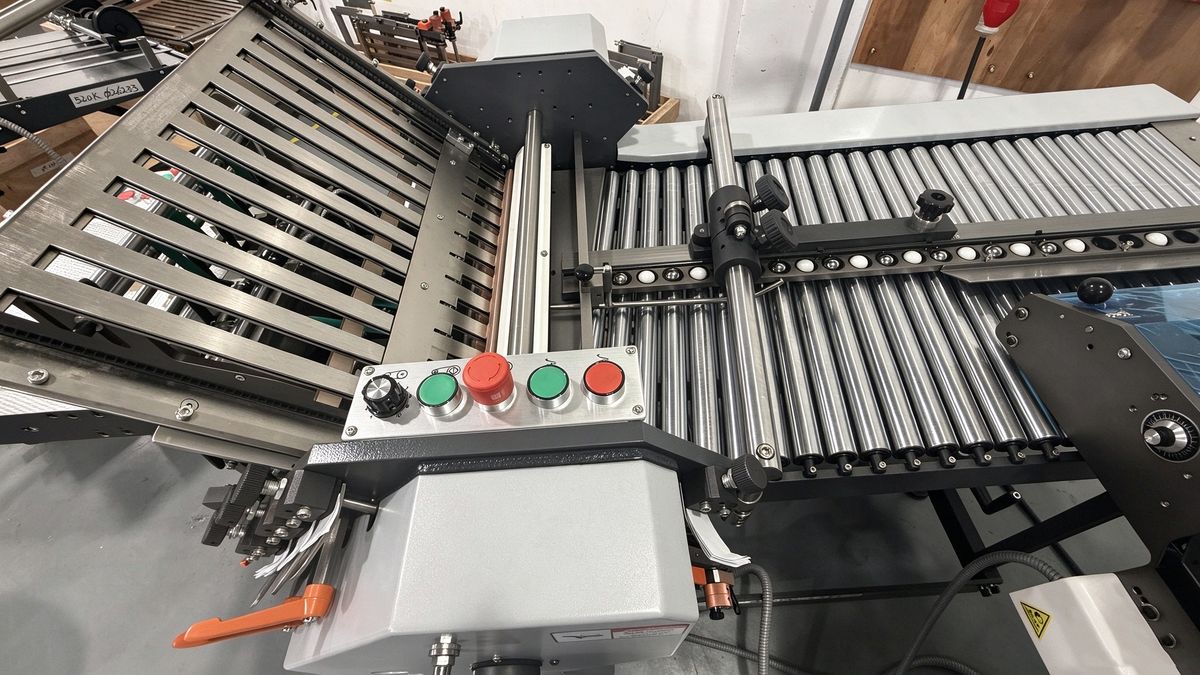
Integrated Delivery & Batch Stacking Module
After folding, finished products are transferred to a deceleration delivery system that stacks sheets neatly into uniform batches. High-volume models include automatic batch counting, preset batch separation and gentle sheet handling to prevent scuffing on coated or glossy stocks. This reduces downstream sorting labor and allows the folded output to feed directly into packaging or binding lines with minimal handling.
Technical Specifications Comparison & Interpretation
Choosing the right machine size and configuration starts with a clear understanding of specifications and how they map to your production needs. Below is a side-by-side comparison of two common industrial recirculating feeder folding machine formats, followed by a practical interpretation of each parameter for production planning.
Parameter | T600 Recirculating Feeder Folder | T780 Recirculating Feeder Folder |
|---|---|---|
Minimum Sheet Size | 60 × 100 mm | 150 × 150 mm |
Maximum Sheet Size | 600 × 1000 mm | 780 × 1200 mm |
Paper Weight Range | 35–200 gsm | 40–210 gsm |
Minimum Fold Width | 20 mm | 45 mm |
Maximum Operating Speed | 180 m/min | 210 m/min |
Feeding Mode | Continuous non-stop recirculating | Continuous non-stop recirculating |
Installed Power | 3.5 kW | 5.0 kW |
Voltage | 380V | 380V |
Net Weight | 1200 kg | 1560 kg |
Certification | CE | CE |
Parameters are for reference only. Final specifications are subject to confirmed customized orders.
How to Read Specs for Production Planning
- Sheet size range: Maximum sheet width determines the largest format you can process and directly impacts the types of orders you can accept. The 780mm format supports large-format brochures and multi-page signatures, while the 600mm format offers a smaller footprint for standard leaflet and insert production.
- Paper weight range: A 35–210 gsm range covers standard uncoated leaflet paper, coated marketing stocks and lightweight packaging insert boards. Verify the lower limit matches the thinnest stock you regularly run, especially for pharmaceutical leaflet production.
- Operating speed: Rated speed reflects maximum mechanical line speed. Actual effective output depends more on downtime reduction than top speed, which is why recirculating feeder models deliver higher net production even at the same rated speed as pile-fed machines.
- Net weight: Heavier, more rigid frame construction reduces vibration during continuous long runs, which preserves fold accuracy and extends the service life of moving components. It is a reliable indicator of industrial build quality.
Industry Applications & Supported Fold Formats
Recirculating feeder folding machines are optimized for scenarios where run lengths are large, consistency is critical and uptime directly drives revenue.
Target Use Cases for High-Volume Production
- Commercial print mass runs: Flyers, brochures, direct mail pieces and promotional leaflets produced in large batch sizes benefit directly from non-stop feeding and fast job changeover via recipe memory.
- Pharmaceutical patient information leaflets: PIL production involves very large batches and strict dimensional tolerances. The consistent register and stable feeding performance of recirculating systems ensures uniform fold dimensions that work reliably on high-speed cartoning lines.
- Packaging insert manufacturing: Electronics instruction manuals, cosmetics box inserts and consumer product information sheets often run on multi-shift schedules. Continuous feeding maximizes daily output and reduces per-unit production cost.
- Publication signature finishing: Textbook, catalog and trade paperback signature production requires consistent page register across long runs. Recirculating feeder systems maintain steady alignment with minimal drift, reducing binding errors downstream.
Available Fold Patterns for Mass Production
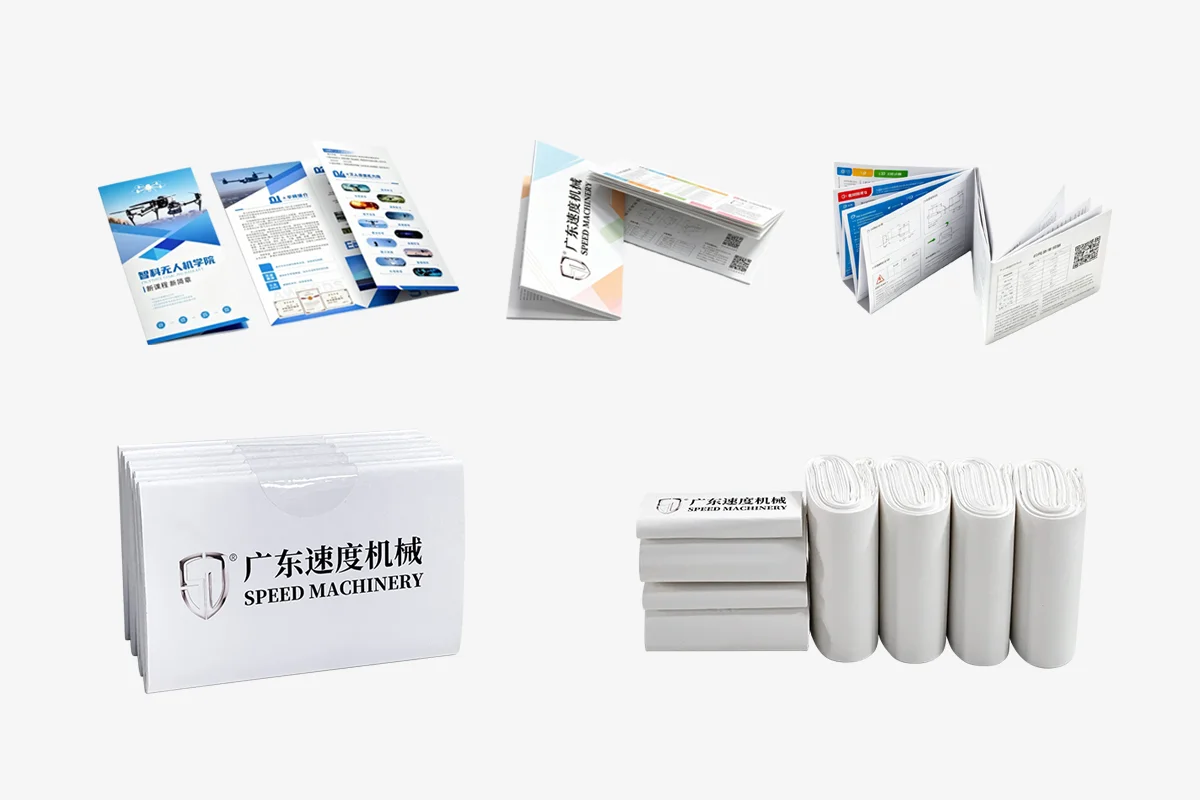
A standard recirculating feeder buckle folder supports all common parallel fold formats used in high-volume print and packaging:
- Half fold / single fold: Basic two-panel format for simple inserts and carded packaging
- Letter fold / tri-fold (C-fold): The most widely used format for product leaflets and flyers
- Accordion fold / Z-fold: Standard for instruction manuals and multi-panel information inserts
- Double parallel fold: Used for compact multi-page sheets and small booklets
- Roll fold / drum fold: Ideal for long-format documents and multi-page packaging inserts
- Gate fold: Premium presentation fold for high-end product packaging and promotional materials
With optional knife folding stations, cross folds and right-angle folds can also be produced in-line, expanding capability into compact pharmaceutical leaflet and book signature formats.
7-Step Selection Framework for Production Line Upgrades
Use this structured evaluation process to match a recirculating feeder folding machine to your current operations and future growth plans.
1. Evaluate Run Length & SKU Mix Profile
Start by analyzing your typical order structure. Recirculating feeder systems deliver the strongest ROI when a large share of your jobs are medium-to-long runs (20,000 sheets+). If your operation is dominated by very short, high-SKU jobs with frequent changeovers, a standard pile-fed folder with faster setup may be more cost-effective. For facilities with a mix of long and short runs, a recirculating feeder still works well as the primary high-volume production unit.
2. Match Sheet Format & Grammage to Your Product Range
List the full range of paper sizes and weights you process regularly. Ensure the machine’s minimum and maximum sheet dimensions cover all your job formats, and that the grammage range extends slightly beyond your current materials to accommodate future product lines.
3. Define Fold Complexity & Future Upgrade Headroom
Audit your most common fold types. For pure parallel fold work, a standard buckle configuration is sufficient. If you expect to add cross-folded leaflets or book signatures in the future, select a modular platform that supports later upgrade with knife folding stations.
4. Estimate Throughput Gains & ROI Payback Period
Calculate your current net output per shift on existing equipment, then estimate the efficiency gain from eliminating reload downtime. For most high-volume operations, the 15–25% output increase, combined with labor savings, delivers a measurable ROI payback period. Factor in reduced scrap from improved consistency to get a full picture of cost savings.
5. Audit Automation & Digital Control Capabilities
Prioritize machines with PLC control, touchscreen operation, fold recipe storage, double-sheet detection and automatic jam protection. These features reduce operator skill requirements, minimize human error and improve overall equipment effectiveness over long production runs.
6. Verify Compliance & Build Quality Standards
For export-oriented production, CE certification is mandatory for EU market access. ISO 9001 certification at the manufacturer level is a strong indicator of consistent build quality and process control. For pharmaceutical packaging customers, these certifications also support downstream regulatory audit requirements.
7. Assess After-Sales & Spare Parts Accessibility
Industrial folding machines are 10–15 year production assets. Confirm the supplier provides clear technical documentation, readily available wear parts, and responsive technical support — especially when sourcing from international manufacturers. Remote troubleshooting capability is particularly valuable for minimizing downtime on production-critical equipment.
Preventive Maintenance for Continuous High-Volume Operation
Disciplined preventive maintenance preserves feeding accuracy, fold quality and machine reliability during round-the-clock production. Follow this priority-based schedule and troubleshooting guide to minimize unplanned downtime.
Priority-Based Maintenance Schedule
- Daily pre-shift checks (10 minutes): Clean feed rollers and suction nozzles to remove paper dust; inspect double-sheet sensors; test safety guards and emergency stop; clear any debris from the paper path. This short routine prevents the majority of common run-time issues.
- Weekly in-depth maintenance: Lubricate guide rails and transmission bearings per manufacturer specifications; verify vacuum pump pressure and air flow; inspect drive belts for wear and correct tension; wipe down all optical sensors with compressed air.
- Monthly calibration & wear inspection: Calibrate side-lay registration and fold plate stop positions; inspect folding roller surface condition; check all electrical connections; clean electrical cabinet ventilation filters; run a full quality verification test run.
- Quarterly overhaul: Inspect gearbox oil level; check all frame fasteners for tightness; verify sensor calibration across the full machine; inspect wear parts and plan replacements before failure occurs.
Common Run-Time Issues & Root-Cause Solutions
- Gradual fold position drift over long runs: Most often caused by gradual wear on feed rollers or loosened side-lay guides. Inspect rollers for glazing and wear; recalibrate registration; ensure all adjustment locks are properly tightened after setup.
- Rising jam frequency as run length increases: Typically caused by paper dust buildup on suction nozzles or drifting air separation pressure. Clean nozzles and rollers; readjust vacuum and blow air pressure for the current stock; ensure paper stacks are properly fanned before loading.
- Double-sheet feeding on thin stock: Caused by excessive vacuum pressure or worn separation pads. Reduce suction pressure incrementally; inspect and replace worn separation components; verify paper is properly separated and fanned in the loading area.
Final Notes
For print houses, packaging converters and pharmaceutical leaflet manufacturers focused on scaling mass production capacity, a recirculating feeder paper folding machine is one of the highest-impact upgrades available for the finishing department. By eliminating paper-reload downtime, reducing per-unit labor cost and delivering more consistent fold quality across long runs, these systems directly improve OEE and lower production cost per thousand sheets.
SPEED Machinery is a specialized Chinese manufacturer of high-speed automatic paper folding equipment, supplying industrial-grade recirculating feeder folding machines to printing houses, packaging factories and pharmaceutical packaging enterprises worldwide. Our T-series recirculating feeder models are engineered for 24/7 mass production duty, with full CE certification and manufacturing under an ISO 9001 quality management system. We offer configurable buckle plate counts, optional knife folding stations and customized feeding solutions to match specific production layouts.
Every machine from SPEED Machinery is backed by technical consultation, installation guidance, global spare parts supply and remote troubleshooting support. If you are evaluating a capacity upgrade, replacing aging finishing equipment, or building a new high-volume production line, our engineering team can help you size the right configuration, estimate output gains and provide a detailed technical proposal with ROI projections.
Frequently asked
How much OEE gain can I expect from switching to a recirculating feeder folder?
For typical medium-to-long production runs, facilities typically see a 15–25% increase in net finished output per shift compared to an equivalent standard pile-fed paper folding machine running at the same rated speed. The exact gain depends on average run length: the larger the batch, the greater the efficiency improvement from eliminated reload downtime.
Is a recirculating feeder automatic paper folding machine a good fit for high-SKU operations?
A recirculating feeder automatic paper folding machine delivers its strongest ROI on longer production runs, but it can still work well in mixed-SKU environments if a significant share of orders are medium-to-large batches. For operations dominated by very short, frequent job changeovers, a standard quick-setup pile-fed folder may be more cost-effective. Many facilities use both: a recirculating feeder for high-volume core jobs and a compact pile-fed machine for small, quick-turn orders.
Does a recirculating feeder require more floor space than a standard paper folding machine?
Yes, recirculating feeder models require additional linear floor space for the extended loading table. The exact difference depends on the machine format, but plan for approximately 1–1.5 meters of additional length compared to a standard pile-fed folder of the same folding width. Most production facilities find the space investment is easily justified by the output gain.
Can existing pile-fed folders be upgraded with a recirculating feeding system?
In most cases, recirculating feeding is an integrated platform design rather than a simple bolt-on upgrade. The feeding system, frame structure and control system are all engineered as a matched system for continuous operation. For facilities with existing pile-fed machines, it is generally more cost-effective to add a dedicated recirculating feeder line for high-volume work rather than attempt a retrofit.
What certifications are required for industrial folding equipment in the EU?
For equipment sold and operated in the EU/EEA market, CE certification is the mandatory legal requirement, confirming compliance with health, safety and environmental standards. ISO 9001 certification at the manufacturing level is also widely expected by industrial buyers, as it demonstrates consistent quality management systems. For pharmaceutical and medical packaging suppliers, these certifications also support downstream GMP and regulatory audit requirements.
How much operator training is needed for a recirculating feeder folder?
For operators already familiar with industrial folding equipment, basic operation of a recirculating feeder model can be learned in 1–2 shifts. Full proficiency in setup, recipe management and basic troubleshooting typically takes 1–2 weeks. Modern PLC-controlled machines with intuitive touchscreen interfaces and stored recipes reduce training time significantly compared to fully manual machines.